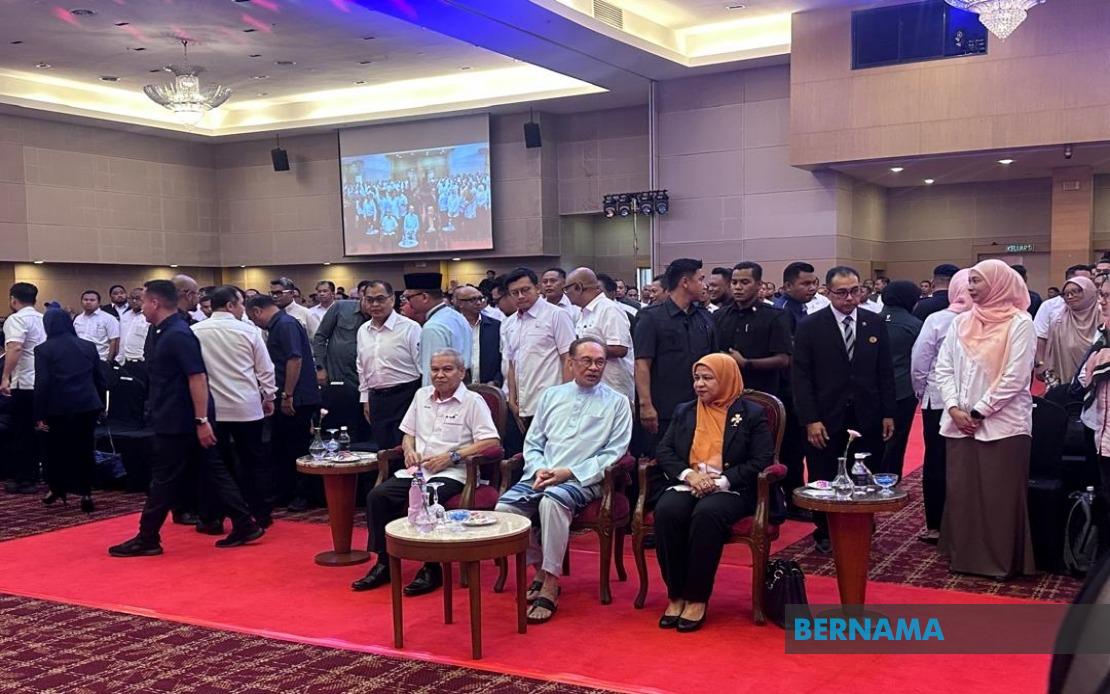
Prime Minister Datuk Seri Anwar Ibrahim has indicated that a comprehensive investigation into the Federal Land Development Authority's governance structure will be made public once the examining body concludes its examination. Speaking at Tenera Hotel in Bangi, the premier emphasised that the Special Task Force has already commenced its investigations and preliminary findings should emerge within the coming months, though he refrained from specifying an exact timeline for the formal announcement.
The FELDA probe represents part of a broader government initiative to scrutinise the operations of major state institutions that manage significant financial and land assets affecting millions of Malaysians, particularly rural communities dependent on the authority's schemes. The Federal Land Development Authority has long been a contentious institution, with historical concerns about resource allocation, settler welfare, and organisational transparency forming the backdrop to this formal investigation.
Anwar characterised the scope of the inquiry as encompassing multiple dimensions of institutional functioning, ranging from historical irregularities to present-day operational procedures and strategic direction. He indicated that while identifying past shortcomings remained part of the mandate, the investigation's primary value would lie in documenting current management standards and outlining a pathway for institutional reform. This framing suggests the government views the exercise not merely as a reckoning with historical grievances but as a foundation for modernising FELDA's governance frameworks.
The Prime Minister drew an explicit parallel between the forthcoming FELDA disclosures and the Royal Commission of Inquiry into Tabung Haji, which concluded a contentious examination of the Islamic pilgrimage fund's management. By invoking the Tabung Haji precedent, Anwar appears to signal that the FELDA report will receive similarly comprehensive public distribution, potentially establishing a benchmark for institutional transparency that could extend beyond these two entities. His promise to release findings "as soon as" the investigation concludes suggests an intention to avoid prolonged delays that might fuel speculation or undermine public confidence.
FELDA chairman Tan Sri Ahmad Badri Mohd Zahir and director-general Datuk Dr Suzana Idayu Wati Osman were present during the Premier's remarks, indicating that current leadership has been positioned within the investigative loop. This arrangement could facilitate smoother implementation of recommendations once the Task Force concludes its work, though it also raises questions about whether serving officials can fully cooperate in probing institutional failings that might implicate their predecessors or contemporary management structures.
The establishment of the Special Task Force itself reflects mounting pressure to address long-standing concerns within FELDA's settler communities and parliamentary oversight bodies. Settlers have periodically raised grievances regarding income sustainability, land productivity, and access to development resources, while critics have highlighted concerns about administrative efficiency and financial accountability. By commissioning this formal investigation, the government appears to acknowledge that incremental reforms have proven insufficient to restore confidence in the institution.
For Malaysian readers, particularly those with connections to FELDA schemes across the country, the investigation carries immediate implications for settlement viability and developmental support mechanisms. The rural communities served by FELDA remain economically vulnerable, and institutional dysfunction directly affects livelihood stability. Addressing systemic weaknesses identified in the Task Force report could influence everything from agricultural productivity support to settler credit facilities and housing maintenance programmes.
Regionally, Malaysia's approach to investigating troubled state enterprises may offer lessons for neighbouring countries grappling with similar governance challenges in agricultural development authorities and land settlement schemes. The transparency framework that Anwar has promised could establish a model for Southeast Asian governance, particularly as countries increasingly face pressure from civil society to improve institutional accountability.
The timing of the investigation also carries political significance. By demonstrating commitment to institutional reform, the government seeks to differentiate itself from predecessor administrations while building public confidence in governance improvements. However, the extended timeline for completing the investigation—with findings expected "in a few months"—suggests that comprehensive auditing of a sprawling institution managing thousands of settlers and substantial land holdings requires considerable time and resource allocation.
Anwar's insistence on awaiting the complete Task Force findings before making announcements reflects a measured approach to institutional disclosure, avoiding premature statements that might prove inconsistent with final investigative conclusions. This stance contrasts with political pressure to demonstrate swift action and may reflect lessons learned from previous governance inquiries that encountered credibility challenges when initial expectations diverged from final findings.
The eventual public release of the FELDA report will likely become a defining moment for the government's commitment to transparency and accountability. Settlers, parliamentarians, and civil society organisations will scrutinise both the investigation's scope and the government's willingness to implement substantive recommendations, particularly if these recommendations necessitate difficult personnel changes or resource reallocation within the institution.

