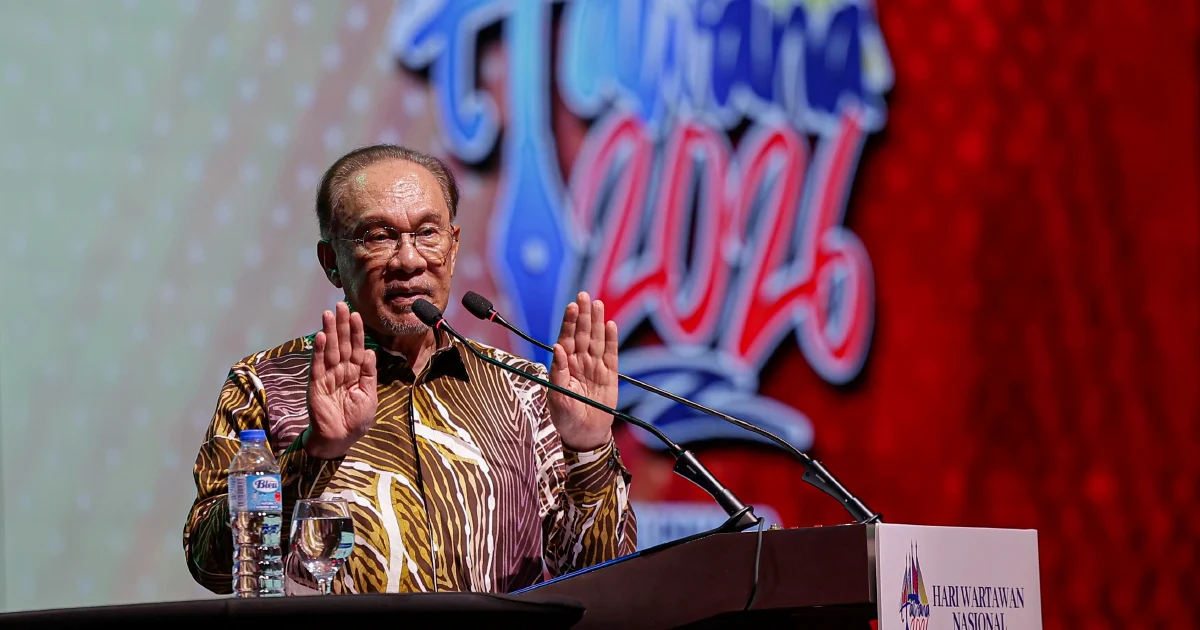
Prime Minister Datuk Seri Anwar Ibrahim has backed the appointment of Tan Sri Nallini Pathmanathan, a retired Federal Court judge, to lead the Malaysian Media Council, believing her elevation to the chairmanship will significantly enhance institutional credibility and rebuild public confidence in the media regulator. Speaking at an event in Butterworth, the premier expressed optimism about the distinguished legal professional's capacity to steer the council through an era demanding heightened transparency and accountability.
The choice of Nallini, a respected jurist with decades of experience on Malaysia's highest bench, represents a strategic move to address longstanding concerns about the council's independence and impartiality. Her appointment follows growing scrutiny of Malaysian media governance institutions and their ability to mediate disputes between press freedom and regulatory oversight. By selecting someone with an unimpeachable judicial pedigree, the government signals intent to reset the council's institutional standing after periods marked by criticism from media freedom advocates and industry practitioners.
Nallini's judicial tenure provides the MMC with a figure whose career has been defined by interpreting complex legal frameworks with consistency and restraint. Her background suggests familiarity with constitutional principles governing media expression and regulatory authority, knowledge increasingly vital as Malaysia navigates digital transformation and evolving information ecosystems. The appointment carries particular symbolic weight given regional trends toward tighter media controls and mounting pressure on traditional press institutions across Southeast Asia.
The Malaysian Media Council operates as a self-regulatory body tasked with upholding professional standards, adjudicating complaints, and maintaining ethical guidelines across print, broadcast, and digital platforms. Its effectiveness depends substantially on stakeholder perception of fairness—both among media organisations themselves and within the broader public sphere. When confidence erodes, the council risks becoming merely nominal, with outlets and readers increasingly dismissing its rulings as politically motivated or inadequately protective of journalistic independence.
Anwar's public endorsement underscores the government's awareness that media sector health constitutes a cornerstone of institutional credibility. A council perceived as captured by political interests struggles to mediate disputes impartially or establish industry standards with genuine buy-in from newsrooms. By installing a former chief justice, the administration implicitly acknowledges that public trust cannot be merely asserted through regulatory pronouncements but must be earned through appointments that signal genuine commitment to independence and rule-of-law principles.
For Malaysian journalists and editors, Nallini's appointment carries mixed implications. Her judicial temperament suggests someone unlikely to defer reflexively to government pressure, yet her age and background in constitutional rather than media law might reflect unfamiliarity with contemporary journalism's operational realities. The council's credibility ultimately depends on whether Nallini can bridge institutional gravitas with practical engagement across newsrooms dealing with immediate pressures from advertisers, commercial competition, and political sensitivity.
Regionally, Malaysia's media governance structure faces scrutiny amid broader Southeast Asian trends. Thailand's and Myanmar's crackdowns, together with Vietnam's and Cambodia's tightening restrictions, have rendered Malaysia's comparative openness noteworthy. Yet the appointment of a judicial figure to lead the media council—rather than, for instance, a respected journalist or media scholar—might signal preferences for legal formality over sectoral dialogue. How Nallini balances judicial reserve with the collaborative ethos media regulation demands will substantially influence the council's future effectiveness.
The MMC's recent years have witnessed criticism regarding both its independence and its responsiveness to legitimate industry concerns. Cases involving editorial disputes, advertising standards, and digital content governance have occasionally provoked claims that the council prioritises political accommodation over professional principles. Restoring credibility requires not merely symbolic appointments but substantive reforms to investigative procedures, appeals processes, and transparency in decision-making. Nallini's judicial background might facilitate such structural improvements if she champions procedural rigour and reasoned written judgments.
Anwar's public confidence in the appointment reflects broader positioning within Malaysia's competitive political landscape. By publicly endorsing a figure associated with institutional integrity rather than party loyalty, the government advances claims to democratic commitment and rule-of-law respect. Such positioning matters not only domestically, where media coverage shapes electoral narratives, but internationally, where Malaysia's governance reputation affects investor confidence, diplomatic standing, and soft power in regional forums.
Implementing media regulation that maintains public confidence while protecting legitimate editorial autonomy remains perpetually contested territory across democracies. Nallini's task requires reconciling sometimes irreconcilable pressures: media organisations seeking maximum operational freedom, commercial interests demanding predictable content standards, political figures expecting sympathetic coverage, and citizens wanting reliable information. Her judicial background suggests comfort with adversarial processes and principled disagreement, attributes potentially valuable for navigating such competing claims.
The coming months will test whether Nallini's appointment translates into substantive institutional renewal. Should the MMC develop more transparent complaint-handling procedures, publish detailed reasonings for significant decisions, and establish clearer boundaries between regulatory guidance and political interference, the move may genuinely strengthen the council's standing. Conversely, if patterns of governance persist unchanged despite the new leadership, the appointment risks becoming merely cosmetic—a symbolic gesture masking unchanged institutional dynamics.
For Malaysian newsrooms and media professionals, the appointment offers opportunity to engage with a leader potentially more receptive to sectoral perspectives than previous council management. Building that collaborative relationship will require patience, clear communication about journalistic standards and pressures, and mutual acknowledgment that media regulation serves broader social interests beyond either government preferences or commercial media interests. Whether Nallini can catalyse such partnership will ultimately determine whether the MMC emerges as a genuinely respected institution or remains peripheral to actual editorial decision-making across Malaysian journalism.

