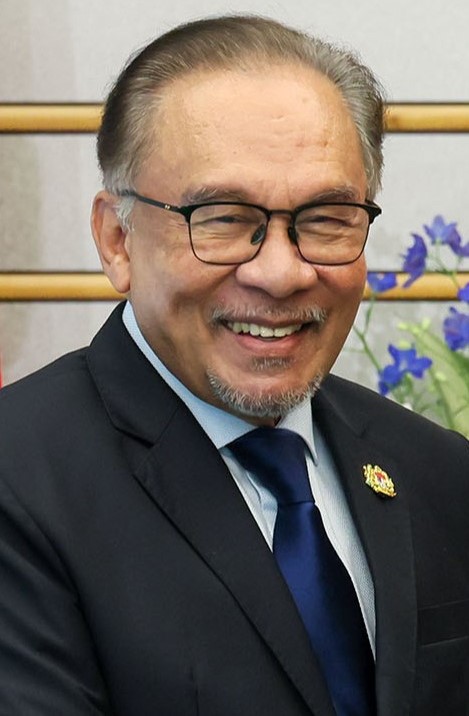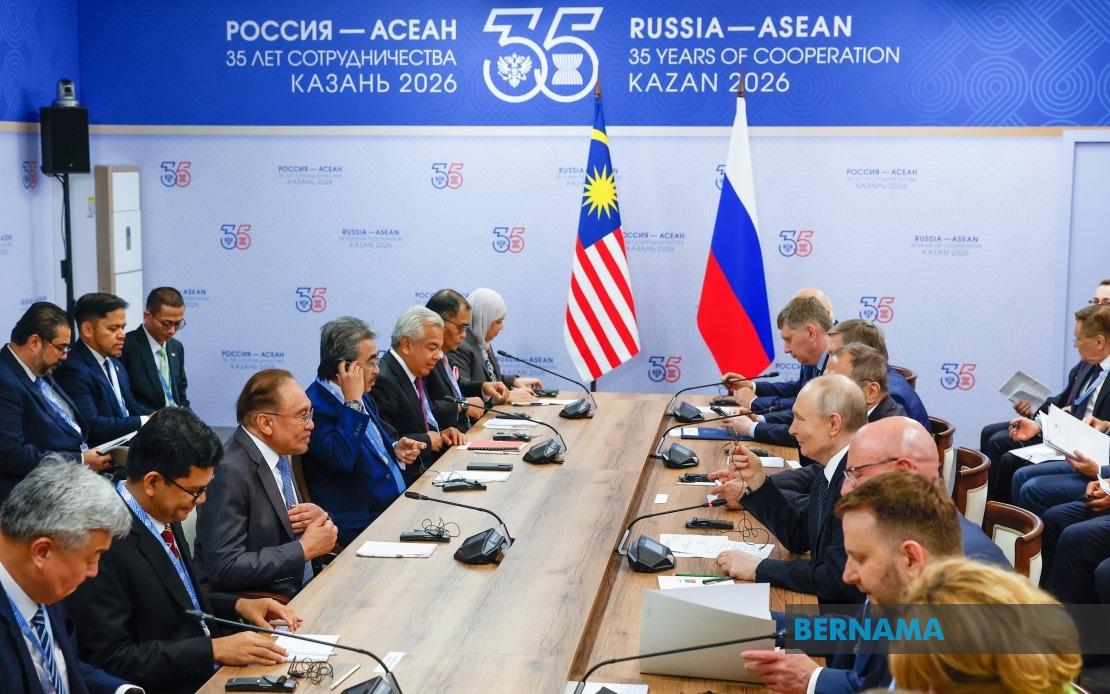
Prime Minister Datuk Seri Anwar Ibrahim has publicly acknowledged Russian President Vladimir Putin and Chinese President Xi Jinping for their advocacy of peaceful resolution to the ongoing Middle Eastern crises, specifically their condemnation of actions affecting Gaza, Iran and Lebanon. The comments, delivered during an exclusive interview with RT television while Anwar was on an official visit to Kazan, underscore Malaysia's independent diplomatic positioning on regional conflicts despite mounting international pressure from competing superpowers.
The prime minister's remarks came during his attendance at a commemorative summit celebrating 35 years of ASEAN-Russia diplomatic relations. This timing is significant, as it demonstrates Malaysia's willingness to articulate its foreign policy priorities in direct dialogue with Russian state media, reflecting the country's broader effort to maintain constructive engagement across multiple international actors. Anwar's decision to grant the exclusive interview signals Malaysia's intent to communicate its nuanced position on geopolitical matters beyond traditional Western-aligned platforms.
Anwar emphasised that Malaysia has consistently maintained a principled stance against military aggression in the region, particularly opposing initial Israeli attacks backed by the United States. He highlighted that Parliament had adopted a bipartisan approach to the matter, reflecting genuine consensus among Malaysian lawmakers regardless of political affiliation. This cross-party agreement is noteworthy in the Malaysian context, where domestic political divisions often prevent unified foreign policy positions on contentious international matters.
Central to Anwar's diplomatic narrative is Malaysia's conceptual distinction between what the country terms centrality and neutrality. This deliberate terminological choice reflects ASEAN's broader approach to managing great power competition without appearing to abandon core principles regarding human rights and humanitarian concerns. By rejecting the language of neutrality, Malaysia positions itself as an active participant in global conversations about justice and accountability, rather than a passive observer indifferent to the suffering of affected populations.
The prime minister stressed that centrality allows Malaysia and ASEAN to take forceful positions on atrocities and human rights violations without being perceived as ideologically aligned with any particular superpower bloc. This framework enables the region to criticise Israeli military operations and American support for such operations while simultaneously engaging with Moscow and Beijing. The approach reflects the practical constraints facing mid-sized powers navigating a world where strategic autonomy requires careful rhetorical and diplomatic balancing.
Apart from his engagement with Russian and Chinese leadership, Anwar revealed that Malaysia has actively pursued dialogue with an expansive range of actors to advance peaceful resolution. These discussions have included leaders from Gulf states, Pakistan, Turkey and Iran, demonstrating a deliberate effort to build consensus among diverse stakeholders with competing interests and regional influence. Such multi-directional diplomacy underscores Malaysia's conviction that sustainable peace in West Asia requires inclusive dialogue rather than alignment with one camp against another.
An important dimension of Anwar's critique concerns what he characterises as Western double standards in addressing Middle Eastern conflicts. He questioned the logical consistency of the international community's willingness to condemn aggression in certain contexts while overlooking or minimising similar actions elsewhere. The prime minister specifically highlighted what he views as selective silence regarding Iranian sovereignty and territorial integrity, suggesting that different standards are applied depending on the actor committing the alleged violation and the geopolitical alignments involved.
An articulate concern raised by Anwar involves the ripple effects of West Asian instability across global economic and security systems. While acknowledging the immediate humanitarian costs and economic hardships resulting from continued conflict, he broadened the critique to encompass fundamental questions about international law, sovereignty and the system of principles governing relations between nations. This framing attempts to elevate the discussion beyond narrow economic calculations to foundational matters of international governance and systemic credibility.
An underlying tension in Anwar's position involves navigating justified criticism of Iran's military responses while simultaneously refusing to be silent on aggression directed against Iranian interests. This nuanced stance reflects an attempt to move beyond simplistic narratives where one side bears sole responsibility for regional instability. By acknowledging legitimate concerns across multiple stakeholders while maintaining criticism of what he views as disproportionate force, Anwar positions Malaysia as a voice for proportional and measured responses rather than escalatory cycles.
The prime minister's public commendation of Putin and Xi reflects Malaysia's calculation that Beijing and Moscow have demonstrated greater consistency in their rhetorical positions regarding Palestinian and Iranian rights compared to Western powers. Whether this assessment aligns with actual policy conduct or represents a narrower evaluation of statements and votes in international forums remains a subject for analytical scrutiny, but Anwar's framing clearly reflects Malaysia's perception of international alignments and credibility within developing nation constituencies.
For Malaysian audiences and broader Southeast Asian observers, Anwar's intervention signals a leadership conviction that ASEAN nations must articulate positions on major global conflicts despite the risks involved. The willingness to grant interviews to Russian media and explicitly praise Beijing and Moscow's stated positions carries domestic political implications within Malaysia, where foreign policy choices influence perceptions of government alignment and leadership ideology among various voting constituencies.
The diplomat's emphasis on centrality over neutrality represents an attempt to develop conceptual language that allows ASEAN to maintain agency in global affairs while resisting great power pressure to choose sides. However, the consistent messaging favourable to Beijing and Moscow may itself be interpreted by Western observers as indicating ideological preference, even as Malaysian leadership argues otherwise. This persistent perception gap between Malaysia's self-image as an independent actor and external interpretations of its alignment choices remains a continuing challenge for Southeast Asian diplomatic strategy.