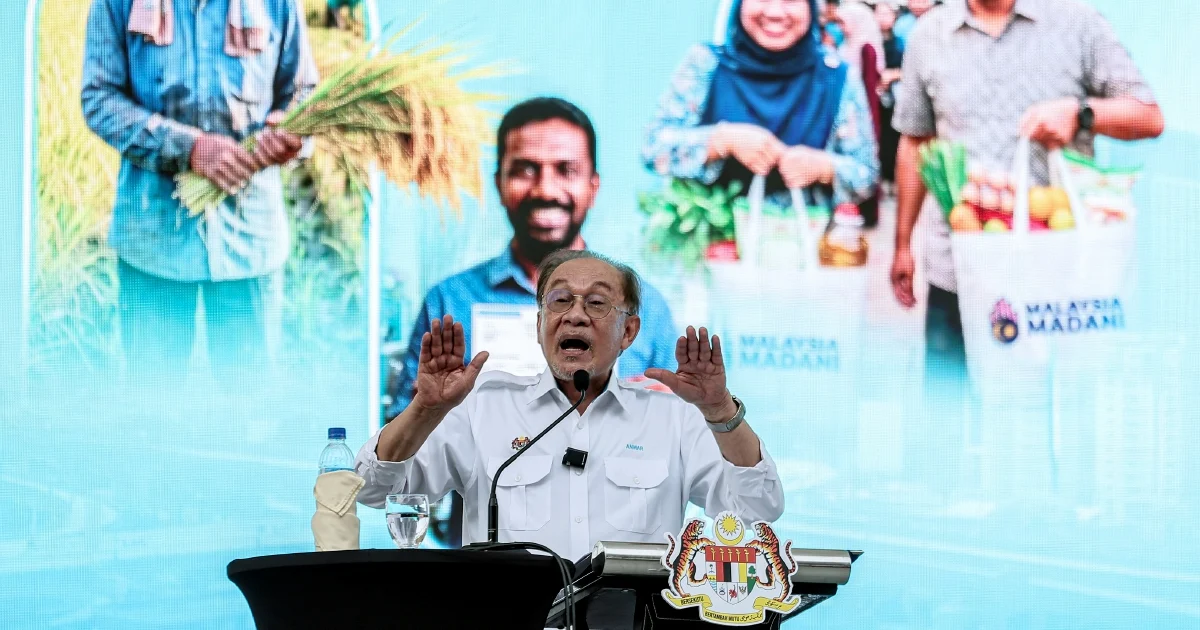
Prime Minister Anwar Ibrahim has committed the federal government to a substantial boost in grassroots community safety funding, announcing that Neighbourhood Watch Areas across the country will receive enhanced annual grants beginning January 1, 2027. The decision represents a 67 per cent increase from the current RM6,000 allocation, bringing the new annual grant to RM10,000 per participating community group. The announcement was made in Segamat, reflecting the government's broader push to strengthen volunteer-led policing initiatives at the neighbourhood level.
The elevation of funding signals ministerial recognition that Neighbourhood Watch Areas have become integral to Malaysia's community policing architecture. These grassroots organisations, typically composed of local residents coordinating with police to monitor their areas, have proliferated across both urban and rural districts. The additional resources will enable neighbourhood groups to invest in equipment, training programmes, and outreach activities that strengthen connections between residents and official law enforcement.
This financial commitment arrives at a moment when local communities across Malaysia are increasingly seeking to take ownership of security matters. Rather than relying solely on police deployment, neighbourhood watch schemes distribute responsibility for vigilance and reporting across residential clusters. The enhanced budget allows these volunteer networks to purchase items such as communication equipment, signage, and visibility materials that enhance their operational capacity. Groups can also allocate funds toward educational campaigns addressing specific safety concerns identified by their members.
For neighbourhood leaders and coordinators who volunteer their time without compensation, the increase offers meaningful recognition of their contributions to public safety. Many of these individuals spend considerable effort organising patrols, liaising with police, documenting suspicious activities, and building trust within their communities. The expanded grant acknowledges that sustained community engagement requires adequate resourcing, moving beyond purely voluntary labour to support administrative and practical expenses that programmes inevitably incur.
The timing of the disbursement—January 1 each year—establishes a predictable funding cycle that simplifies planning and budgeting for neighbourhood groups nationwide. Administrators can reliably anticipate the arrival of resources at the beginning of each financial year, allowing them to design annual programmes with confidence. This structured approach contrasts with sporadic or irregular allocations that force community organisations to operate reactively rather than strategically.
Malaysian states with varying crime patterns stand to benefit differently from enhanced neighbourhood watch capacity. Urban areas experiencing property crime and traffic safety concerns can deploy resources toward surveillance coordination and awareness initiatives. Rural and semi-urban regions might prioritise community liaison activities and training that improve detection of unusual activity. The universality of the grant means all communities, regardless of geographic location or demographic composition, receive equal baseline support to customise their approaches.
The government's decision also reflects broader policy evolution regarding shared responsibility for public order. Rather than attempting to address all security challenges through expanded police forces—a costly and sometimes inefficient approach—the administration increasingly embraces the concept that residents themselves constitute a crucial defence line. When communities develop internal monitoring and reporting mechanisms, information reaches authorities more rapidly and accurately, enabling preventive intervention before problems escalate.
Neighbourhood Watch Areas function as information channels that supplement official policing. When residents develop trust in their local coordinators, they report incidents and concerns more readily than they might to distant police stations. This intelligence gathering capacity, supported by properly resourced groups, generates actionable leads that enhance police effectiveness. The expanded budget therefore indirectly strengthens law enforcement capability by improving the quality and flow of ground-level information.
Regional administrators overseeing community safety programmes throughout Peninsular Malaysia, Sabah, and Sarawak will need to communicate the new grant arrangements to eligible organisations. Many neighbourhood groups operate without robust administrative infrastructure, meaning federal and state-level officials must ensure that information reaches even remote communities. This dissemination process becomes critical to realising the intended benefits of the funding increase across diverse regional contexts.
The announcement also carries implications for municipal and town councils that often coordinate with neighbourhood watch organisations in their jurisdictions. Councils can leverage increased grant availability to encourage broader participation in community policing, knowing that participating groups will possess adequate resources to sustain activities. This creates positive incentives for communities currently operating watch schemes informally or at minimal scale to formalise their structures and access government support.
Looking ahead, the success of this initiative will depend partly on how effectively neighbourhood groups utilise expanded funding and how well they coordinate with police departments. Training programmes financed through the grants should emphasise proper legal boundaries, ensuring volunteer monitors understand their role as auxiliary to rather than replacement for professional law enforcement. Regular feedback mechanisms will help authorities assess whether the funding translates into tangible improvements in community safety perception and incident prevention.
The decision positions Malaysia within a broader regional context where community policing models are gaining prominence across Southeast Asia. As nations grapple with urbanisation and resource constraints on formal security infrastructure, distributed community responsibility emerges as practical policy. Malaysia's commitment to upgrading neighbourhood watch funding demonstrates confidence in this model while signalling sustained governmental investment in civilian participation in public safety governance.

