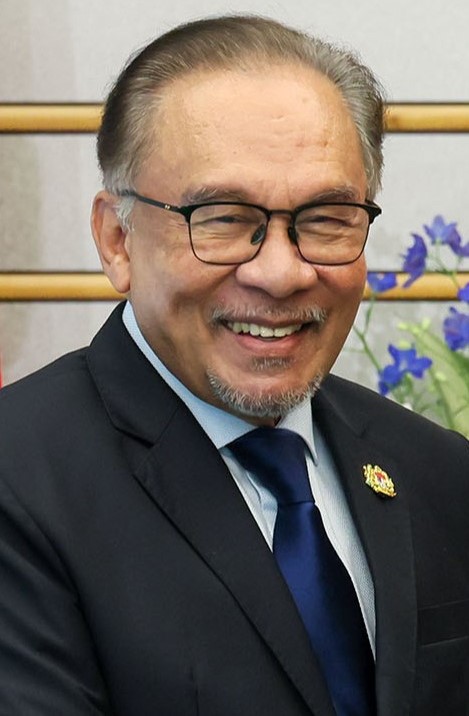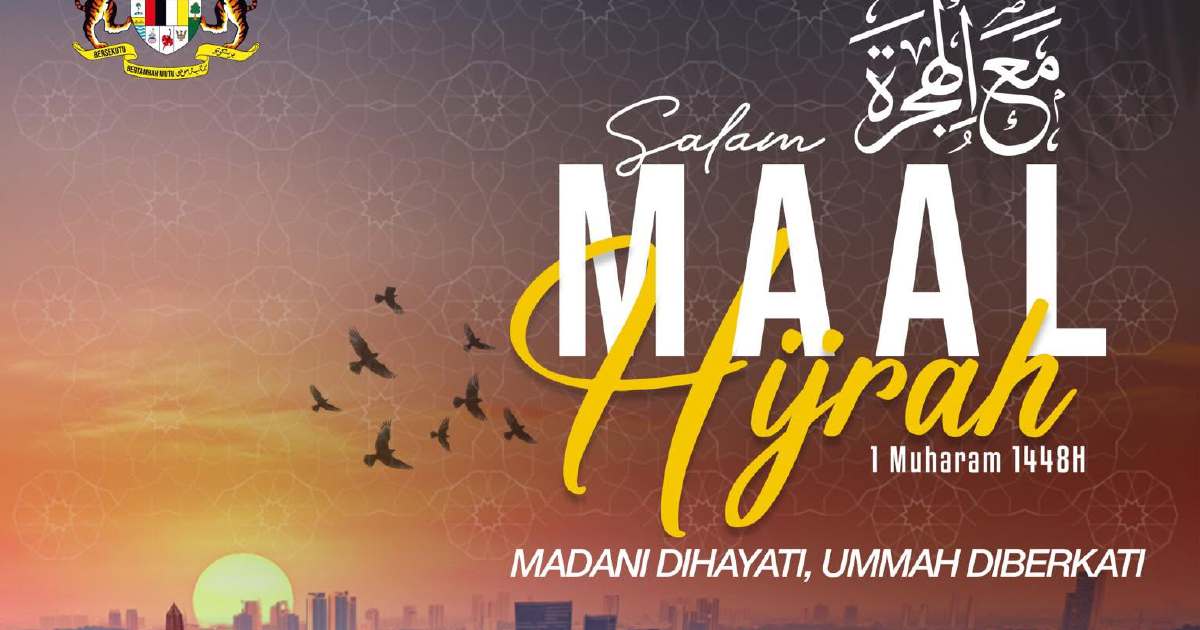
Prime Minister Datuk Seri Anwar Ibrahim has made a fresh appeal to the Malaysian public to embrace the principles of Hijrah, casting the concept as a framework for building a nation anchored in truth, prosperity and security. The invocation of Hijrah—the migration of Prophet Muhammad and his followers from Mecca to Medina in Islamic history—represents an attempt by Anwar to ground contemporary governance and societal progress in spiritual and moral foundations that resonate deeply with Malaysia's Muslim-majority population.
The concept of Hijrah extends far beyond its historical religious context. In the contemporary Malaysian political discourse, particularly as articulated by Anwar, it has evolved to encompass a broader philosophy of transformation and renewal. By framing national development through the lens of Hijrah, the Prime Minister is invoking a narrative of meaningful change that moves away from divisive practices and unsustainable policies toward a more principled governance model. This rhetorical positioning reflects an ongoing effort to establish a unifying national vision that can transcend the political fractures that have characterised Malaysian public life in recent years.
Truth, as invoked in this framework, carries particular significance given Malaysia's recent political history. The nation has grappled with high-profile corruption cases, allegations of financial mismanagement, and public scepticism toward governmental institutions. By emphasising truth as a cornerstone of the Hijrah spirit, Anwar appears to be signalling a commitment to transparency and accountability as non-negotiable principles. This messaging may be designed to rebuild public trust and distinguish the current administration from its predecessors, particularly in the context of the 1Malaysia Development Berhad scandal and other governance failures that have eroded confidence in state institutions.
Prosperity, the second pillar of Anwar's formulation, addresses the economic dimensions of national renewal. Malaysia faces mounting challenges including rising living costs, stagnant wage growth for many workers, and concerns about the sustainability of traditional economic sectors. The invocation of shared prosperity under the Hijrah framework suggests a vision where economic development benefits extend broadly across society rather than concentrating among elite groups. This resonates with growing public demands for more equitable distribution of economic gains and greater attention to the struggles of lower and middle-income households.
Security, as articulated in this context, encompasses both national security and the broader sense of safety and stability that underpins public confidence. Malaysia has confronted challenges ranging from terrorism and extremism to cyber threats and transnational crime. The Hijrah spirit's emphasis on security may also implicitly address concerns about social cohesion and religious harmony—matters of heightened sensitivity in a multicommunal nation where tensions over religious boundaries and constitutional arrangements have periodically erupted into public controversy.
Anwar's invocation of Hijrah carries particular weight given his personal trajectory. As a former opposition leader who spent years in prison and subsequently returned to prominence within the political mainstream, his narrative of personal transformation mirrors the concept he is now promoting to the nation at large. This alignment between personal history and political messaging creates a certain authenticity and symbolic power, though observers have noted that translating inspirational rhetoric into substantive policy remains the critical challenge for the government.
The timing of this appeal also warrants examination. Malaysia's political landscape remains fractious, with competing coalitions and internal tensions within the governing alliance. Beyond partisan concerns, the nation faces structural economic challenges, regional geopolitical pressures, and demographic shifts that will define the coming decade. By appealing to shared moral and spiritual principles through the Hijrah framework, the Prime Minister may be attempting to create a higher common ground above the fray of day-to-day political contestation.
For Southeast Asian observers, Anwar's emphasis on grounding governance in culturally resonant spiritual principles reflects a broader regional trend. Other nations in the region have similarly attempted to frame national development around indigenous or religious values—a strategy that reflects both the deep role of belief systems in Asian societies and the search for alternatives to purely technocratic governance models. Whether such framing can successfully mobilise public support and generate genuine policy change remains an open question across the region.
The practical implications of embracing the Hijrah spirit will ultimately depend on implementation. Governmental policies spanning anti-corruption measures, economic redistribution mechanisms, and security sector reforms will need to demonstrate concrete alignment with the principles Anwar has articulated. The Malaysian public, having witnessed numerous initiatives launched with ambitious language only to encounter implementation challenges, will likely assess the government's commitment through observable outcomes rather than rhetoric alone. The challenge facing Anwar's administration is converting the ideational power of Hijrah into tangible improvements in governance, economic opportunity, and social stability that register meaningfully in the lived experience of ordinary Malaysians.