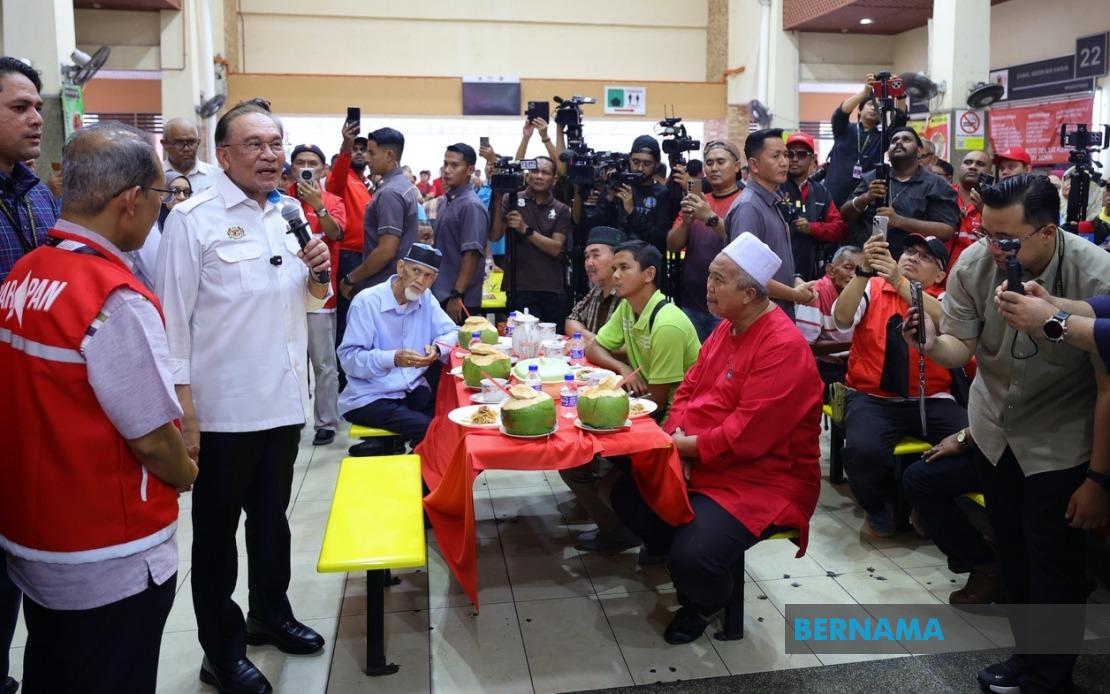
Prime Minister Datuk Seri Anwar Ibrahim has made a direct appeal to voters in Negeri Sembilan to maintain their support for Pakatan Harapan, framing the upcoming state election as a referendum on political continuity and effective administration. Speaking during a campaign visit to Seremban, Anwar emphasised that a strengthened mandate for the coalition would be essential for sustaining the momentum of development and welfare initiatives across the state, particularly through enhanced coordination between the state and federal governments.
The political calculation underlying Anwar's campaign message reflects a broader strategy by PH to position itself as a stabilising force in Malaysian politics. By anchoring his appeal to voters on themes of consistency and institutional coherence, the Prime Minister is attempting to differentiate PH from potential alternative coalitions that might offer less predictable governance. This framing carries particular resonance in Negeri Sembilan, where the coalition has governed without major upheaval under the leadership of Menteri Besar Datuk Seri Aminuddin Harun.
Anwar highlighted the administrative track record of the PH-led state government over the past three years, crediting both his own leadership as party chairman and Aminuddin's stewardship of the Negeri Sembilan administration. He emphasised that political stability has emerged as a competitive advantage for the state, enabling it to pursue long-term development plans without the disruption that might result from frequent changes in government or coalition realignment. The message implicitly acknowledges the concerns among some voters about the fragility of Malaysia's political landscape, where coalition governments have proven susceptible to defections and reconfiguration.
However, Anwar's acknowledgement that the state administration remains imperfect reveals the delicate balance PH must strike in its campaign messaging. Rather than claiming flawless governance, the coalition is positioning itself as a work in progress that remains receptive to public feedback and willing to make course corrections. This approach serves multiple purposes: it pre-empts criticism that might otherwise damage PH's credibility, while simultaneously inviting voters to view their electoral choice as an ongoing partnership rather than a definitive judgment on past performance.
The composition of PH's candidate list for the election reflects the coalition's internal power dynamics and its attempt to maintain broad-based representation. With PKR fielding 16 candidates, DAP contributing 11, and Amanah providing nine across the 36 state seats, the distribution demonstrates the continued dominance of Anwar's party within PH while preserving meaningful participation for its partners. This internal balance is critical to maintaining coalition cohesion, particularly as PH navigates the challenges of governing simultaneously at state and federal levels across multiple jurisdictions with varying political conditions.
For Malaysian observers and investors monitoring political risk, the Negeri Sembilan election represents a litmus test of PH's capacity to retain voter confidence outside its traditional strongholds. The state's economic importance, including its position as a transportation and logistics hub, means that political uncertainty could carry tangible economic consequences. A decisive victory for PH would signal that the coalition retains capacity to renew its mandate through the ballot box rather than through backroom negotiations, potentially strengthening investor confidence in Malaysia's political stability more broadly.
The Election Commission's scheduling of the election for August 1, with early voting on July 28, follows the standard procedures established for state elections in Malaysia. The compressed campaign period between the announcement and polling day places particular emphasis on the effectiveness of parties' ground campaigns and media messaging. Anwar's personal engagement in Negeri Sembilan underscores the national leadership's view that the state election carries implications beyond its immediate scope, potentially influencing perceptions of PH's political momentum heading into future electoral contests.
The regional dimension of this election should not be overlooked by Malaysian policymakers and observers. Negeri Sembilan sits within the broader context of governance across the Klang Valley and Peninsular Malaysia's central region, where PH's performance directly affects the coalition's capacity to deliver on development and welfare commitments that have been central to its political messaging since 2018. A strong showing would vindicate PH's approach to governance and provide political capital for federal initiatives; a weaker performance might necessitate tactical reassessment and renewed coalition-building efforts.
Anwar's campaign rhetoric also reflects the broader challenge facing Malaysian political parties in a context where voter expectations have risen and patience for incremental progress has diminished. By acknowledging imperfection while requesting continued support, the Prime Minister is attempting to navigate between complacency and defensiveness, a positioning that will determine whether PH can successfully mobilise its base and retain persuadable swing voters. The degree to which this messaging resonates with Negeri Sembilan voters will offer valuable insights into broader patterns of political realignment and voter behaviour that extend well beyond the state itself.
The election comes at a moment when Malaysia's political landscape continues to evolve following the 2022 federal election and subsequent formation of the current federal government. PH's performance in state contests provides ongoing feedback on its political health and the sustainability of its coalition arrangements. For the coalition's partners, particularly DAP and Amanah, maintaining meaningful representation and visible success in state governance remains essential to justifying their continued participation in a coalition where PKR and Anwar hold dominant positions. Negeri Sembilan thus becomes not merely a state election but a test of PH's internal cohesion and external credibility.

