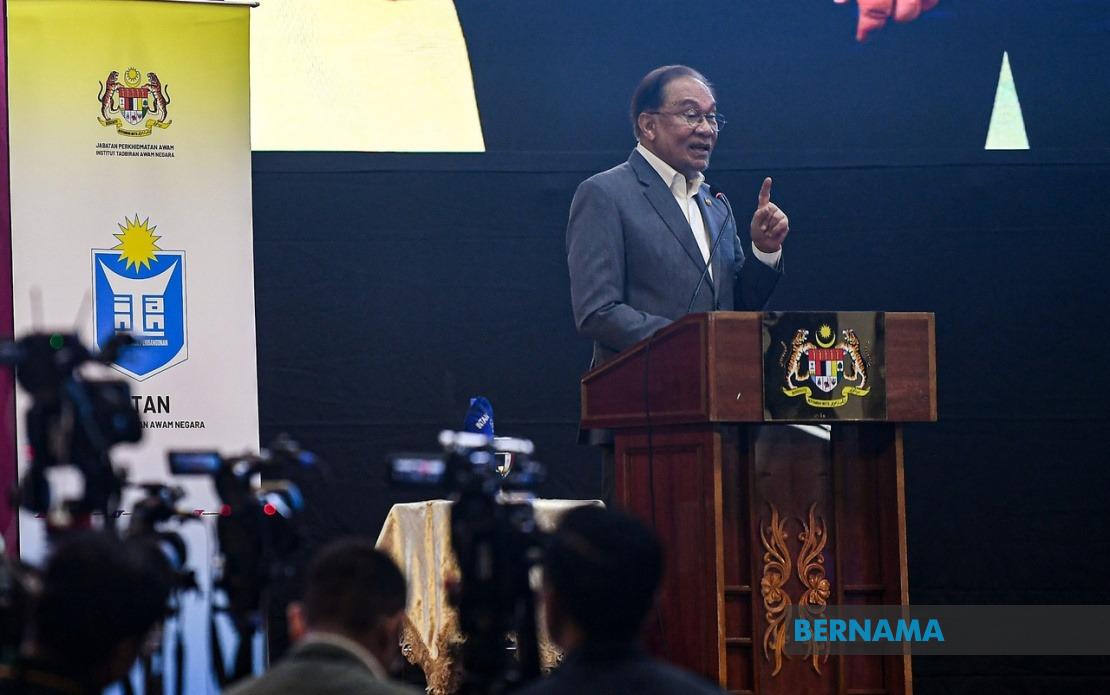
Prime Minister Datuk Seri Anwar Ibrahim has offered an apology to those who felt uncomfortable with his firm manner when interacting with the civil service, clarifying that his intensity stems from genuine passion for the nation's development agenda. Speaking during an engagement with Central Zone civil servants at Universiti Islam Selangor on July 20, Anwar acknowledged feedback from associates who have counselled him to moderate his public demeanour, noting that many have suggested a Prime Minister should maintain a measured and courteous tone during public appearances.
The head of government disclosed that he has been making a conscious effort to adjust his communication style following these suggestions, recognising the expectations attached to high office. However, he emphasised that certain matters cut so deeply into his convictions that maintaining complete emotional detachment becomes difficult. Anwar framed his apology not as an admission of wrongdoing but rather as a recognition that his passionate delivery might diverge from the polished image some expect from Malaysia's top leader.
In articulating his position, Anwar questioned the logic of restraining himself when addressing the very institution—the civil service—tasked with translating government vision into reality. He stressed that the machinery of state depends on public servants who are fully cognisant of the government's expectations and the stakes involved in successful policy implementation. His forceful rhetoric, he suggested, serves as an emphatic reinforcement of how seriously he regards their contribution to national objectives.
The remarks were delivered during a gathering with civil servants from the Central Zone alongside Chief Secretary to the Government Tan Sri Shamsul Azri Abu Bakar. Anwar used the platform to explain that if his conduct falls short of conventional Prime Ministerial decorum, he sought forgiveness, but he would not compromise on authenticity. This dual message—apology coupled with justification—reflects the delicate balance leaders must strike between managing public perception and remaining true to their convictions.
Anwar's clarification carries broader implications for how Malaysia's government communicates with its vast bureaucracy. The civil service, numbering over a million employees across federal and state levels, forms the operational backbone of any administration. When the Prime Minister addresses these officials with particular intensity, it typically signals priorities he considers non-negotiable. His willingness to speak candidly about emotions overriding protocol suggests he views such moments as necessary corrections or motivational injections into an institution he believes needs galvanising.
The incident also underscores the ongoing challenge facing contemporary leaders in balancing authenticity with institutional expectations. In an age of video sharing and social media scrutiny, leaders face pressure to project composure at all times, yet voters and stakeholders increasingly expect transparency and genuine conviction. Anwar's approach—acknowledging both the critique and his resistance to it—attempts to navigate this tension, though it remains to be seen whether such candour strengthens or complicates his relationship with civil servants.
For the Malaysian civil service specifically, the Prime Minister's message carries weighty implications. Public sector reform remains a central government priority, with initiatives targeting efficiency, accountability, and modernisation. When Anwar speaks with passionate intensity to these officials, he signals that improvement in these areas is not merely desirable but existential for the government's success. The apparent contradiction between his apologetic framing and his defensive explanation suggests he may view strict performance expectations as inseparable from his leadership style.
The video shared on Facebook, capturing the Central Zone gathering, became a medium through which Anwar could clarify his intentions beyond the immediate audience. By releasing it publicly, he ensured that reactions to his firm tone could be contextualised for broader consumption. This strategic use of digital platforms reflects how contemporary political communication operates—a speech becomes a news story, which then prompts a clarification that itself generates further commentary.
Regional observers have noted that Southeast Asian leaders often employ more direct communication styles than their Western counterparts, though expectations around Prime Ministerial deportment remain formal. Anwar's balancing act reflects a tension between maintaining these formal expectations and advocating for a leadership approach grounded in emotional transparency. His comments suggest a philosophy that dismisses false politeness when genuine urgency requires candid intervention.
Looking forward, Anwar's remarks establish a framework for understanding his administrative style. Civil servants should expect that when the Prime Minister adopts a stern tone, it reflects conviction about the matter at hand rather than personal displeasure. Simultaneously, his acknowledgment of feedback indicates receptiveness to how his communication is received. This nuanced positioning may help reconcile the apparent contradiction between his apology and his justification, presenting his leadership as both principled and responsive to legitimate concerns about tone and presentation.

