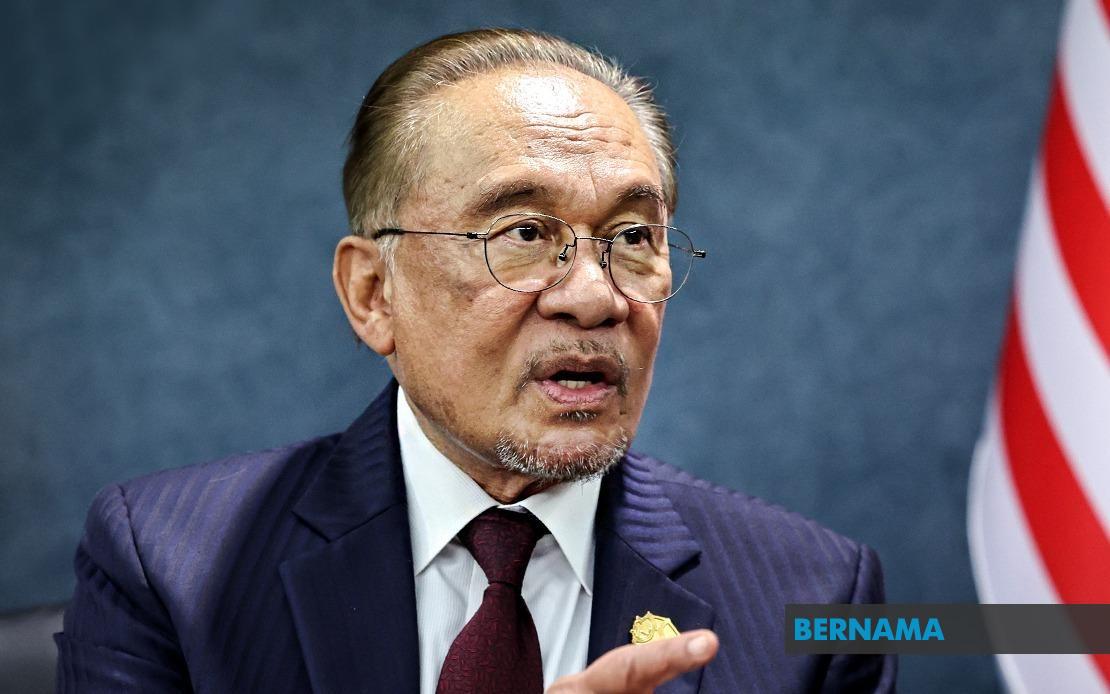
Prime Minister Datuk Seri Anwar Ibrahim offered his formal congratulations to Senator Datuk Nur Jazlan Mohamed on July 20 following the latter's reappointment as Deputy Senate President for a fresh term. The recognition came during parliamentary proceedings at the Dewan Negara, where Anwar extended warm wishes to both Nur Jazlan and fellow reappointed senator Musoddak Ahmad before the commencement of Question Time. Both officials had moments earlier completed their ceremonial oaths of office before Senate President Datuk Awang Bemee Awang Ali Basah, formally commencing their new tenures in Malaysia's upper chamber.
Nur Jazlan's reappointment represents continuity in the legislative leadership structure at a time when the government continues to navigate complex parliamentary dynamics. The Deputy Senate President's role carries significant responsibility for steering business within the Dewan Negara and supporting the Senate President in maintaining order and facilitating legislative proceedings. His retention for a second term signals confidence from the administration in his handling of the position and suggests stability in parliamentary management as the government advances its legislative agenda.
The reappointment of Musoddak Ahmad alongside Nur Jazlan underscores the government's strategy of maintaining experienced hands within the upper chamber. Both senators bring established parliamentary experience, which proves valuable given the technical and procedural complexities that characterise work within Malaysia's bicameral legislature. The Dewan Negara, comprising appointed and elected senators, plays a crucial constitutional role in reviewing and deliberating over legislation passed by the lower house.
Beyond the formal parliamentary business, Anwar injected a moment of levity into proceedings by referencing international football. The Prime Minister remarked that he is a devoted admirer of Spain's national team, channelling the celebratory mood following Spain's triumph at the 2026 FIFA World Cup. In the tournament's final held at MetLife Stadium in East Rutherford, Spain dispatched defending champions Argentina with a decisive 1-0 victory. Spanish forward Ferran Torres proved the match's decisive figure, netting the winning goal deep into extra time during the 106th minute.
Argentina's campaign ended in disappointment, compounded by disciplinary troubles when midfielder Enzo Fernández received a straight red card, reducing the South American side to ten players during the latter stages of the contest. The expulsion proved a turning point in an intensely contested encounter, effectively tilting momentum decisively towards the Spanish contingent. Spain's victory marked the nation's second World Cup triumph, cementing their place among football's elite and adding another chapter to their illustrious tournament pedigree.
Anwar's casual reference to the World Cup outcome, though lighthearted, reflects the universal passion that major sporting events generate across political and social lines. In Malaysia, where football commands a devoted following, such references resonate with the broader population and demonstrate a leader's willingness to engage with shared cultural touchstones beyond the corridors of power. The remark provided a brief respite from the weightier matters of governance that typically dominate parliamentary sessions.
The parliamentary session itself represented routine business in Malaysia's legislative calendar, yet the formal recognition of Nur Jazlan and Musoddak's continuations in their respective roles carried organisational significance. Stability within parliamentary structures proves essential for effective governance, particularly in Malaysia's complex constitutional framework where the Senate serves as an important check and balance mechanism. The Dewan Negara's role includes reviewing legislation for constitutional compliance and protecting the interests of states and minority communities.
Nur Jazlan's previous tenure as Deputy Senate President had established him as a familiar figure within the chamber, capable of managing its procedural intricacies whilst maintaining decorum during heated debates. His reappointment suggests that stakeholders within government viewed his stewardship as sufficiently effective to warrant another term. This decision also reflects broader confidence in the coherence of the current government's parliamentary strategy during a period when maintaining legislative discipline remains a priority.
The ceremonial aspects of oath-taking before the Senate President serve important constitutional functions beyond mere formality. These rituals reinforce the solemnity of parliamentary office and the commitments that senators undertake to serve Malaysia's democratic institutions impartially. The presence of the Senate President during these proceedings emphasises the hierarchical structure and ceremonial dimensions that characterise the upper chamber's operations.
Moving forward, Nur Jazlan and Musoddak will continue their work within an institution that increasingly faces scrutiny regarding its relevance and effectiveness in contemporary governance. The Dewan Negara has undergone various reform discussions over recent years, with observers debating whether the chamber's composition and powers adequately serve modern parliamentary requirements. The reappointment of experienced senators like Nur Jazlan suggests the government remains committed to strengthening institutional capacity rather than pursuing radical restructuring.
The broader context of these appointments reflects Malaysian politics' emphasis on maintaining institutional continuity whilst managing coalition complexities. With multiple parties participating in the governing arrangement, careful attention to parliamentary representation and leadership roles proves essential for maintaining stability. The distribution of key parliamentary positions between coalition partners serves both symbolic and practical functions in demonstrating equitable participation in government structures.

