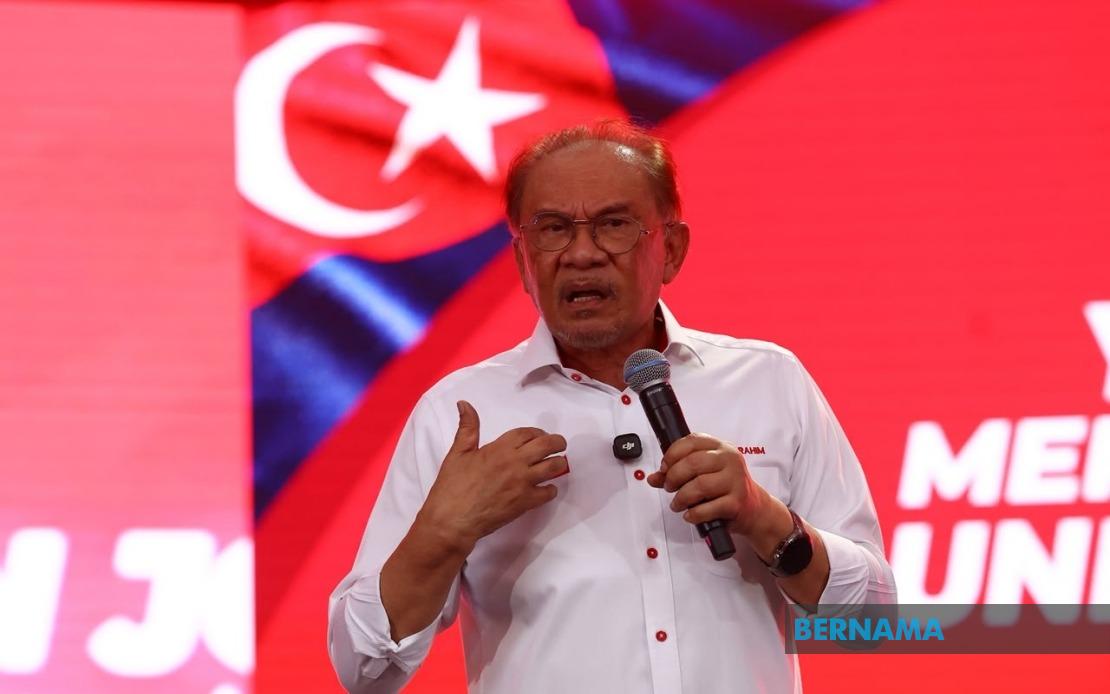
Prime Minister Datuk Seri Anwar Ibrahim has firmly rejected accusations circulating on social media that he acquired a luxury BMW vehicle for his personal use, addressing the controversy during a campaign event in Johor on July 9. Speaking at the 'Yok! Meriahkan Johor! Undi Harapan' programme in Senggarang, Anwar dismissed the allegations as baseless claims designed to undermine his public messaging around poverty alleviation and governance.
The Prime Minister characterised the vehicle in question as an existing government asset rather than a recent purchase, describing it as old and already in the government fleet. He expressed frustration at what he termed deliberate misinformation, questioning why such false narratives were being spread when the facts could be easily verified. His response came as part of broader campaign activities ahead of the 16th Johor state election, underscoring how personal conduct accusations have become entangled with electoral politics in Malaysia.
Anwar also took the opportunity to clarify the status of the Mercedes-Benz he currently uses, emphasising that this vehicle was not acquired through his own initiative or funds. The Prime Minister explained that the luxury car was a gift bestowed upon him by His Majesty Sultan Ibrahim, King of Malaysia, marking an important distinction between personal ownership and government provision. This distinction carries significant weight in Malaysian politics, where perceptions of ministerial conduct and the use of state resources remain matters of intense public scrutiny.
Crucially, Anwar stressed that he deliberately chose not to register the Mercedes-Benz under his personal name, instead placing it under the Prime Minister's Department. This administrative decision reflects a deliberate effort to maintain clear boundaries between personal assets and government property, a practice that resonates with public expectations about ministerial accountability. By contrast, he implied that other political figures had engaged in questionable practices involving state resources, using this moment to position himself as adhering to higher standards of transparency.
The controversy had prompted an official statement from the Prime Minister's Department and the Ceremonial and International Conference Secretariat Division earlier in the week. Both entities clarified that the BMW vehicle in question constituted existing government property under the management of BIUPA, not a newly acquired official vehicle as some social media users had suggested. This clarification attempted to cut through the misinformation by establishing that the vehicle's presence in the Prime Minister's fleet reflected longstanding government logistics arrangements rather than recent extravagant purchases.
The incident reflects the broader Malaysian political context where social media-driven accusations regarding ministerial lifestyles and resource allocation can rapidly gain traction among the public. Vehicle ownership and usage by high-ranking officials has historically been a sensitive political issue in Malaysia, given public concerns about governance standards and equitable distribution of state resources. The controversy surrounding the BMW represents one among many similar incidents where allegations of government excess or personal enrichment have become weaponised during electoral campaigns.
Anwar's campaign appearance in Senggarang brought together several key figures from the Pakatan Harapan coalition, including Datuk Fahmi Fadzil, the Communications Minister and PH communications director. The coalition's state election candidates for the Senggarang, Semerah, and Penggaram constituencies—Onn Abu Bakar, Mohd Khuzzan Abu Bakar, and Felicia Poh Rui Ling respectively—were also present, indicating the strategic importance of the event within the broader election campaign framework.
The 16th Johor state election, scheduled for polling day on Saturday, represents a critical test for Pakatan Harapan's electoral prospects and governing narrative. The coalition is contesting all 56 state seats, signalling its commitment to achieving comprehensive representation in the state assembly. Against this backdrop, addressing accusations about ministerial conduct becomes not merely a matter of personal reputation but rather a question that affects the coalition's broader campaign messaging around integrity and good governance.
The vehicle controversy underscores a recurring challenge for Malaysian political leaders navigating the intersection of official duties and public perception. While government officials require vehicles and resources befitting their constitutional roles, the Malaysian electorate remains deeply concerned about distinguishing between legitimate official provision and inappropriate personal acquisition of state assets. Anwar's emphasis on transparent registration and royal gifting rather than personal purchase appears designed to position himself within acceptable bounds of executive privilege.
Moreover, this incident demonstrates how quickly allegations can proliferate through digital channels, particularly during election periods when political competitors and partisan actors have strong incentives to amplify negative narratives. The rapid official response from the Prime Minister's Department suggests heightened awareness of the political costs associated with allowing such accusations to circulate unchallenged, even when they may lack substantial foundation.
For Malaysian and Southeast Asian observers, the episode illustrates enduring tensions within democratic governance around resource allocation, official privilege, and public accountability. While ministerial vehicles and perquisites remain necessary for executive functioning, establishing clear protocols and transparent oversight mechanisms helps maintain public confidence in government institutions. Anwar's administrative choice to register the royal gift through the Prime Minister's Department rather than personally reflects an attempt to navigate these competing pressures while projecting an image of conscientious stewardship.

