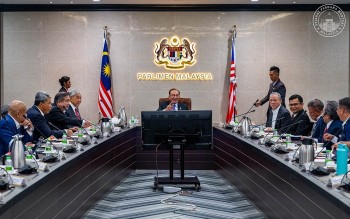
Prime Minister Datuk Seri Anwar Ibrahim has tasked the Ministry of Investment, Trade and Industry and the Ministry of Economy with directly engaging manufacturers to address mounting cost burdens stemming from persistent disruptions in global supply networks. The directive comes as Malaysia's industrial base confronts intensifying pressures that threaten the competitiveness of multiple downstream sectors critical to the nation's economic health.
Anwar, who additionally serves as finance minister, announced the instruction following a National Economic Action Council meeting that examined ways to fortify Malaysia's manufacturing resilience. The Prime Minister underscored the government's commitment to resolving industry concerns by ensuring ministerial engagement produces concrete remedies rather than mere acknowledgement of difficulties. The focus reflects recognition that supply chain vulnerabilities can cascade through interconnected sectors, multiplying the initial impact.
The plastics industry emerged as a particular priority during these deliberations, reflecting its foundational importance across Malaysia's most strategically significant manufacturing clusters. This sector operates as a critical backbone supporting food packaging operations, electrical and electronics manufacturing, automotive production, and medical device fabrication—industries that collectively represent substantial portions of Malaysia's export revenue and employment base. The government's targeted attention signals awareness that strain on plastics manufacturers could trigger broader industrial slowdowns affecting multiple value chains simultaneously.
Economy Minister Akmal Nasrullah Mohd Nasir provided quantified context for the sector's significance, noting that the plastics industry generated RM62.69 billion in sales value during 2025, representing a decline from RM64.78 billion recorded in 2024. This contraction, even as nominal figures, underscores the sector's vulnerability to external pressures and the urgency surrounding government intervention. The market composition reveals heavy concentration in packaging applications, which alone account for nearly half of total output, while electrical and electronics applications constitute a substantial secondary segment at approximately 29 percent of sales.
The ripple effects of plastics industry stress extend well beyond the sector itself, touching nearly every major Malaysian manufacturing domain. When plastics producers face elevated costs or supply constraints, the immediate impact flows directly to food packaging manufacturers who depend on reliable input supply. The electrical and electronics sector, which employs hundreds of thousands of Malaysian workers and represents a cornerstone of high-value manufacturing, becomes equally vulnerable. Automotive producers relying on plastic components for vehicles destined for export markets face similar transmission mechanisms.
Medical device manufacturers operating in Malaysia's growing healthcare technology segment also depend substantially on plastics supply stability, particularly as this sector expands in serving regional and global health markets. Construction sector applications and agricultural machinery components represent additional exposure points where plastics cost increases translate into broader inflationary pressures across the economy. These interconnected dependencies mean that what appears as a sector-specific problem rapidly becomes a systemic challenge affecting multiple industries simultaneously.
The government's strategy represents a departure from passive monitoring toward proactive intervention designed to maintain industrial momentum despite external headwinds. By directing MITI and the Economy Ministry to formulate collaborative solutions with manufacturers, the approach acknowledges that manufacturers themselves possess crucial insight into implementable remedies. This engagement model can identify whether relief requires tariff adjustments, supply diversification support, financing assistance, or structural reforms to reduce input costs without compromising quality standards.
For Malaysian manufacturers competing in regional and global markets, timely government support carries particular significance given that supply chain disruptions affect all producers but can prove especially damaging to smaller firms lacking financial buffers. The engagement process may surface opportunities to strengthen supplier networks, reduce import dependencies through domestic substitution, or negotiate better terms with international suppliers by leveraging Malaysia's collective purchasing power. Such outcomes would enhance long-term resilience beyond temporary relief measures.
The timing of this initiative reflects broader economic management challenges confronting the government as it navigates competing pressures of maintaining growth, controlling inflation, and protecting employment. Manufacturing sectors, while facing cost pressures, represent crucial employment sources and foreign exchange generators that warrant strategic attention. By addressing supply chain vulnerabilities now, the government aims to prevent cascading failures that could accelerate job losses and reduce Malaysia's competitive position in regional manufacturing hierarchies.
The plastics industry's particular vulnerability underscores how specialised upstream sectors can disproportionately influence broader economic performance. Southeast Asia's manufacturing ecosystem depends on stable input supply and predictable cost structures, conditions increasingly difficult to maintain amid global disruptions. Malaysia's approach of combining direct ministerial engagement with industry consultation suggests recognition that sustainable solutions require understanding specific operational challenges manufacturers face and identifying interventions tailored to Malaysian production contexts.
As implementation proceeds, the effectiveness of this initiative will depend on whether enhanced engagement translates into measurable relief for manufacturers struggling with compressed margins and uncertain demand conditions. Success metrics might include restoration of plastics industry growth rates, stabilisation of downstream manufacturing costs, and retention of skilled manufacturing employment across affected sectors. The broader message indicates government determination to protect Malaysia's industrial foundation during a period when supply chain reliability remains contingent and global economic conditions unpredictable.

