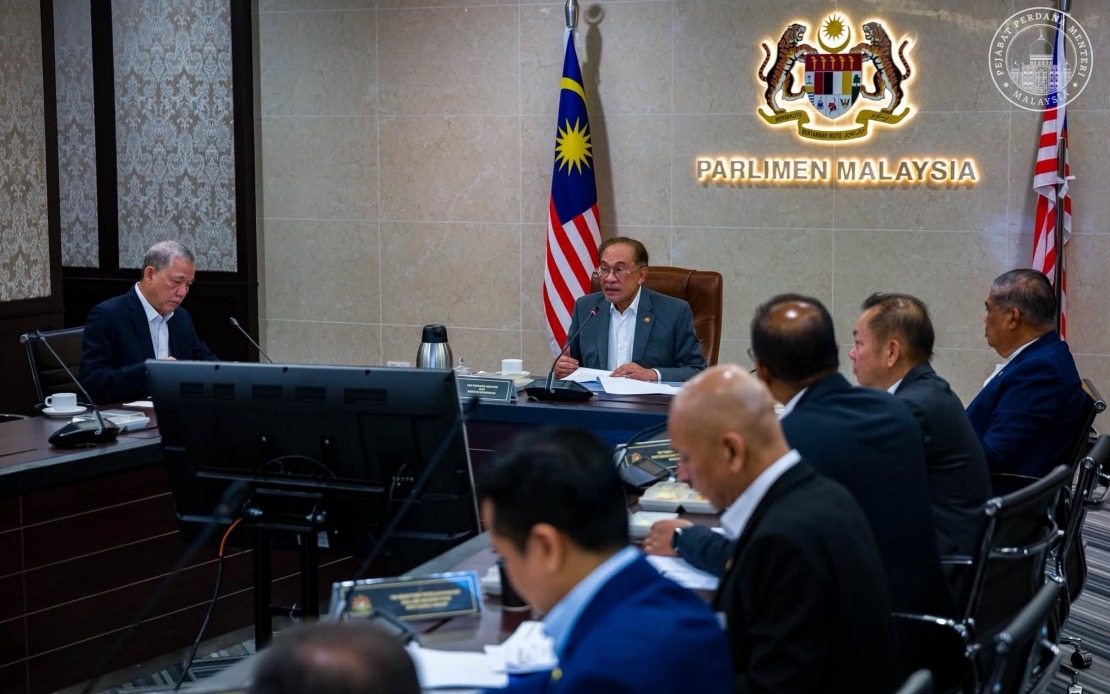
Prime Minister Datuk Seri Anwar Ibrahim has directed the Ministry of Agriculture and Food Security (KPKM) to swiftly develop and implement mitigation strategies designed to counteract the forecasted impact of Super El Niño weather patterns, which meteorologists predict will begin affecting Malaysia in November. The directive underscores the government's recognition that this climate phenomenon poses a material threat to the nation's agricultural output and the economic wellbeing of farming families across the country. The Prime Minister issued these instructions during the inaugural National Food Security Council Meeting, signalling that food supply resilience has become a paramount governance priority amid escalating climate uncertainty.
The emergence of Super El Niño conditions typically brings prolonged drought periods and altered rainfall patterns, creating challenging growing conditions for Malaysia's rice paddies, vegetable farms, and other critical agricultural segments. These climatic disruptions risk reducing yields precisely when domestic food demand remains steady, potentially forcing the country to increase expensive food imports and exposing consumers to price volatility. By moving decisively now, the government aims to position local agricultural enterprises with contingency planning and resource allocation that could absorb or minimize production losses during the vulnerable months ahead.
Anwar emphasized that the protective measures must strike a careful balance between maintaining agricultural productivity and upholding the stringent food safety and quality benchmarks that protect Malaysian consumers. KPKM has been instructed to expedite the finalisation process through proper institutional channels, ensuring that any new protocols or interventions undergo appropriate scrutiny before implementation. This measured approach reflects acknowledgment that hastily adopted agricultural measures could inadvertently compromise product standards or create unintended supply chain complications.
The council's deliberations extended beyond climate adaptation to encompass regional fisheries cooperation with Thailand, recognising that aquatic food sources represent a substantial component of Malaysia's protein security. The government has emphasized the importance of maintaining continuous dialogue with fishing communities to ensure their catch meets prescribed export and domestic consumption standards. Such engagement demonstrates that food security strategy increasingly involves coordination across borders and sectors, acknowledging that Malaysia's food supply depends partly on regional trade relationships and the ability of local producers to maintain international market access through compliance with quality requirements.
Simultaneously, the council reviewed broader initiatives aimed at bolstering the competitiveness of Malaysia's agrifood sector against regional and global competitors. Policymakers recognize that strengthening local agricultural and fishing industries through sustained investment creates a more resilient food system capable of withstanding both climate shocks and market pressures. The focus encompasses farmers cultivating vegetables and fruits, padi growers producing rice, livestock breeders raising poultry and cattle, and fishermen operating in Malaysian waters—collectively representing the backbone of domestic food production.
The government has committed to advancing the agrifood sector through targeted adoption of modern technology, innovation, and evidence-based agricultural practices. This multi-pronged approach acknowledges that Malaysia's farming communities, many of whom operate with inherited traditional methods, require access to improved tools, training, and market information to remain economically viable. Technologies ranging from precision irrigation systems to pest management innovations could substantially enhance productivity while reducing resource wastage during periods of environmental stress such as the approaching El Niño episode.
For Malaysian consumers, these governmental interventions carry direct implications for food affordability and availability throughout the November-to-December period and potentially beyond. El Niño-induced production shortfalls in Southeast Asia historically triggered food price spikes that disproportionately affected lower-income households already spending substantial portions of their incomes on groceries. By fortifying domestic production capacity in advance, the government seeks to maintain competitive domestic food prices and reduce dependency on imports during peak disruption periods.
Regionally, Malaysia's proactive stance on food security mirrors growing concerns across Southeast Asia about climate vulnerability in an increasingly integrated food supply system. Neighbouring countries face similar meteorological forecasts, suggesting potential region-wide agricultural stress that could disrupt traditional trade flows and create competition for available supplies. Malaysia's advance planning could position the nation as a more stable food supplier within the Association of Southeast Asian Nations, enhancing its strategic relevance and trade relationships with regional partners.
The National Food Security Council's establishment as a formal coordinating mechanism indicates the government's determination to treat food security as a strategic national priority equivalent to defence or public health. By centralizing decision-making and resource allocation under prime ministerial oversight, the government aims to ensure rapid implementation of mitigation measures without bureaucratic delays that might otherwise compromise their effectiveness. The council structure enables whole-of-government coordination across multiple agencies responsible for agriculture, fisheries, food safety, and trade regulation.
Stakeholders within Malaysia's agricultural sector will now await detailed specifications regarding the promised mitigation measures, including potential government support mechanisms such as subsidised inputs, crop insurance schemes, or emergency purchasing commitments. Farmers and fishermen require clear communication regarding what protective measures they can anticipate, enabling them to adjust planting schedules, invest in water management infrastructure, or explore supplementary income sources. The credibility of the government's food security commitment will ultimately be judged by whether announced strategies translate into tangible support reaching the agricultural frontline communities before El Niño disruptions materialise.

