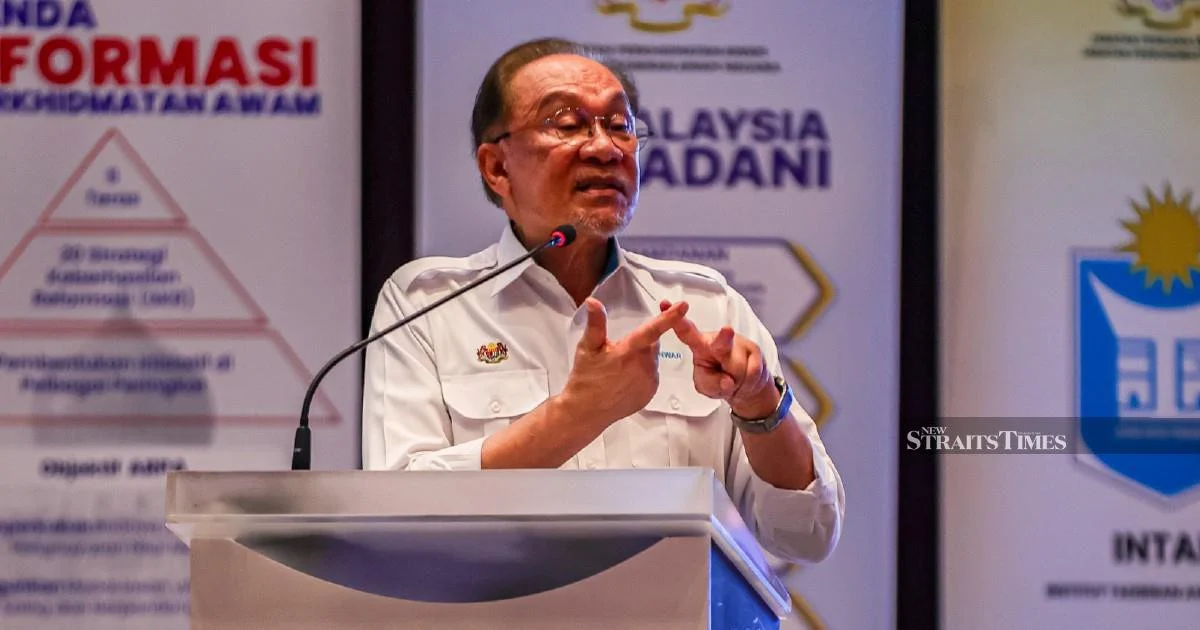
Prime Minister Datuk Seri Anwar Ibrahim moved swiftly to defuse political tensions on Friday, characterizing remarks made by Parti Amanah Negara president Datuk Seri Mohamad Sabu as uncontroversial and misunderstood by critics. Speaking in Alor Gajah, Anwar emphasised that the Amanah leader had not intended to ridicule or demean any political party during his address at a Pakatan Harapan candidate announcement ceremony held in Tangkak the previous day. His intervention represents a carefully calibrated effort to prevent internal coalition friction from escalating into a public dispute that could undermine the ruling alliance's electoral prospects.
The controversy surrounding Mat Sabu's comments highlights the delicate balancing act required to maintain cohesion within Pakatan Harapan, a multiparty coalition that brings together ideologically diverse partners. Amanah, the Democratic Action Party, the Malaysian United Democratic Alliance, and the People's Justice Party must constantly negotiate competing interests and sensitivities while presenting a unified front to voters. Such incidents, however minor they may initially appear, carry the potential to reopen old wounds and expose fault lines that opposition parties exploit during election campaigns.
Anwar's statement carries particular weight given his role as both coalition chairman and prime minister. His public endorsement of Mat Sabu effectively shields the Amanah president from further criticism and signals to coalition members that party leaders will not tolerate inflammatory rhetoric or accusation trading. This approach reflects lessons learned from previous coalition crises where perceived slights or perceived disloyalty escalated into full-blown political feuds with devastating electoral consequences. By framing the incident as a simple misunderstanding, Anwar attempts to reset the narrative and redirect coalition attention toward shared electoral objectives.
The Tangkak candidate announcement itself represented a significant moment for Pakatan Harapan, as the coalition laid out its slate of candidates for what observers expect will be hotly contested parliamentary and state contests. The ceremony served as a platform for coalition partners to demonstrate unity and articulate joint campaign messaging. Mat Sabu's remarks, whatever their precise content or intended meaning, occurred within this context of political theatre where symbolic messaging carries outsized importance. Words spoken by senior politicians at such events undergo intense scrutiny from rival parties, loyal party members, and online observers eager to identify anything that might be weaponised for partisan advantage.
The broader political environment in which this incident unfolded remains characterised by significant uncertainty about electoral timing and composition. Government officials have repeatedly indicated that general elections could occur within the coming months, intensifying pressure on coalition members to demonstrate loyalty and avoid public disputes. Each statement, gesture, and perceived slight becomes magnified through the lens of electoral anxiety. Senior politicians understand that their every utterance faces potential reinterpretation by hostile parties and suspicious supporters seeking signals of coalition instability.
Mat Sabu's position within Amanah and the coalition carries particular significance given his high public profile and outspoken nature. As a former Defence Minister and prominent party figure, his remarks influence broader perceptions about coalition relations. Amanah itself occupies a relatively modest position within the coalition structure compared to larger partners like the Democratic Action Party and the People's Justice Party, which increases sensitivity around how its representatives are portrayed and whether they receive equitable treatment within the alliance framework. Any perception that Amanah leaders face disproportionate criticism or that their words are being weaponised could fuel resentment and test the party's commitment to the broader partnership.
Anwar's swift intervention reflects the premium placed on damage control in contemporary Malaysian politics. Coalition leaders recognise that allowing negative narratives to develop unchecked provides opposition parties with ammunition for their messaging campaigns and potentially demoralises coalition supporters. The Prime Minister's decision to personally defend Mat Sabu demonstrates his commitment to maintaining internal discipline and preventing tit-for-tat accusations from consuming coalition energy. Such actions also signal to rank-and-file party members that their leaders stand together, which matters greatly in maintaining party morale during demanding election cycles.
The incident also underscores the challenging environment facing coalition partners as they attempt to differentiate themselves from rivals while maintaining public unity with allies. Each party within Pakatan Harapan seeks to establish distinct policy positions and appeal to particular voter constituencies. However, internal differentiation can easily be misinterpreted as criticism of coalition partners, creating tension between the legitimate desire for individual party identity and the necessity of coalition cohesion. Politicians must navigate this terrain carefully, crafting statements that speak to their base without providing ammunition for opposition attacks on the broader alliance.
Looking forward, the pattern evident in this incident suggests that Pakatan Harapan's internal management mechanisms will face continued testing as electoral contests approach. Coalition leaders will need to invest considerable energy in smoothing over misunderstandings and preventing isolated incidents from ballooning into significant disputes. Anwar's response to the Mat Sabu situation demonstrates one approach to crisis management, but sustained coalition stability will require ongoing communication, mutual respect, and shared commitment to collective success. For Malaysian voters and Southeast Asian observers, the coalition's ability to hold together will significantly influence the trajectory of national politics and potentially the broader region's political development in the coming years.

