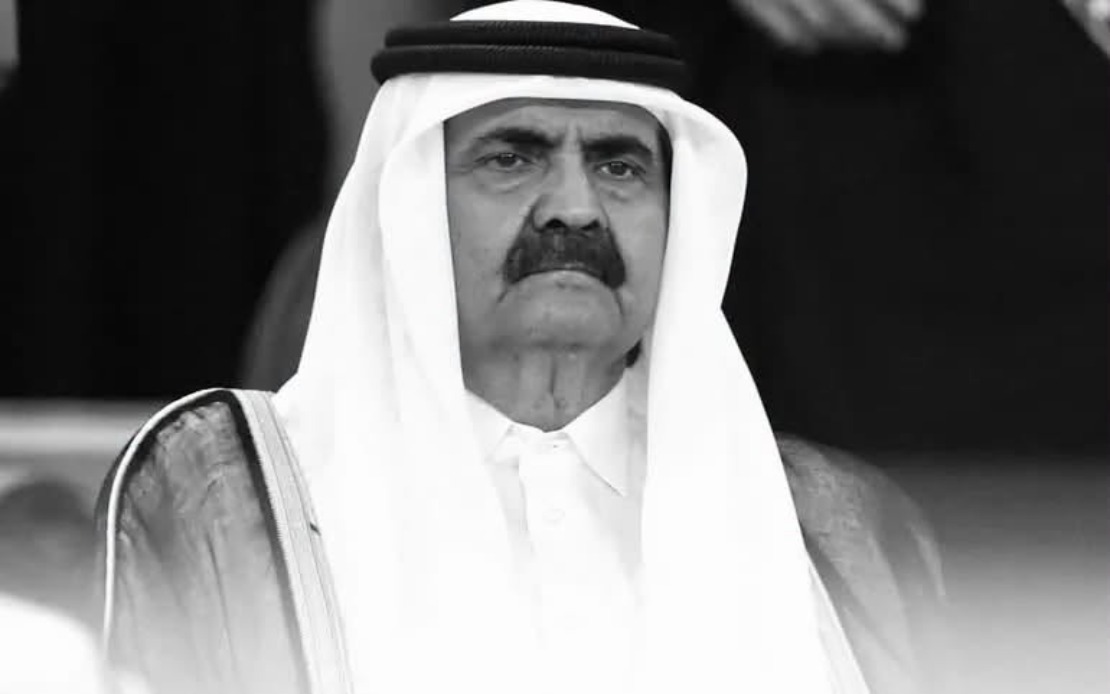
Prime Minister Datuk Seri Anwar Ibrahim has conveyed Malaysia's formal condolences to Qatar's current Amir Sheikh Tamim bin Hamad Al Thani, the broader royal family, and the Qatari population following the death of Sheikh Hamad bin Khalifa Al Thani, the Father Amir. The former leader passed away on Sunday morning at the age of 74, according to an announcement from Qatar's official Amiri Diwan.
In a statement posted on Facebook, Anwar took the opportunity to reflect on the substantial legacy left by the late Father Amir, whose reign fundamentally reshaped Qatar's position on the global stage. During his eighteen-year tenure as Amir between 1995 and 2013, Sheikh Hamad presided over a period of extraordinary economic expansion that positioned Qatar among the world's wealthiest nations. Under his stewardship, the country leveraged its vast hydrocarbon reserves to diversify its economy, establish world-class educational and cultural institutions, and secure hosting rights for major international events.
Beyond economic metrics, Sheikh Hamad's leadership elevated Qatar's diplomatic standing significantly throughout both the Middle East and beyond. The nation became recognised as an influential actor capable of shaping regional discussions and exercising meaningful influence in international forums. Anwar specifically acknowledged this achievement, noting how Qatar emerged as a respected voice in matters concerning global significance during this transformative period. The country's growing soft power extended from hosting prestigious sporting events to establishing itself as a centre for Islamic and Arabic scholarship and cultural preservation.
What Anwar identified as particularly noteworthy was Sheikh Hamad's decision in 2013 to voluntarily hand over authority to his son, Sheikh Tamim bin Hamad Al Thani. This transfer of power, according to the Prime Minister, represented an exceptionally rare demonstration of political sagacity—a deliberate choice to entrust the nation to a younger generation rather than cling to authority indefinitely. Such peaceful succession planning stands in marked contrast to patterns observed elsewhere in the region and underscores a philosophy prioritising institutional continuity and national stability over personal perpetuation of rule.
Anwar's characterisation of Sheikh Hamad extended beyond formal diplomatic courtesy, positioning the late Father Amir as a steadfast ally to Malaysia throughout decades of bilateral relations. This framing reflects the genuine engagement between Kuala Lumpur and Doha across multiple sectors including trade, investment, defence cooperation, and cultural exchange. Qatar's substantial economic interests in Malaysia, combined with shared Islamic heritage and values, have created foundations for enduring partnership that transcend individual leaders but are nonetheless enriched by personal relationships between heads of state.
The late Amir also commanded significant respect across the broader Muslim world, a dimension particularly relevant for a Malaysian Prime Minister drawing upon Islamic legitimacy and seeking to strengthen bonds within the ummah. Sheikh Hamad's contributions to supporting Islamic education, heritage preservation, and interfaith dialogue resonated beyond Qatar's borders. His philanthropic and cultural initiatives, including the establishment of the Qatar National Library and investments in museums and educational facilities, demonstrated a vision of Islamic modernity that appealed to Muslim-majority nations across diverse regions.
Anwar concluded his condolence message with a prayer for the repose of Sheikh Hamad's soul and invoked Islamic blessings for the grieving royal family and Qatari people. The invocation of Quranic supplications—specifically the reference to Al-Fatihah, the opening chapter of the Quran traditionally recited for the deceased—underscored the Islamic dimension of the tribute and reflected customary expressions of grief within Muslim protocol.
Sheikh Hamad's passing represents a significant moment for the Gulf state and wider region, occurring at a time when Qatar continues navigating complex geopolitical dynamics in the Middle East. Despite his retirement from formal governance more than a decade ago, the late Father Amir's institutional innovations and policy frameworks continue shaping Qatar's approach to governance and international engagement. His role in establishing institutions of higher learning and cultural prominence has created enduring legacies that influence contemporary decision-making in Doha.
For Malaysia specifically, the death of this respected regional figure carries broader significance beyond bilateral relations. It marks the passing of a generation of Gulf leaders who were instrumental in establishing cooperative frameworks between Southeast Asia and the Middle East during pivotal decades. The relationships and trust-building that leaders like Sheikh Hamad cultivated with Southeast Asian nations created diplomatic capital that subsequent generations continue drawing upon in pursuing shared interests in security, economics, and religious affairs.
The transition of power from Sheikh Hamad to his son Sheikh Tamim in 2013 itself represented a modernisation of governance in the Gulf and demonstrated the possibility of managed succession within dynastic systems. This model has attracted studied attention from observers across the Muslim world interested in balancing traditional hereditary authority with contemporary institutional demands and generational renewal.

