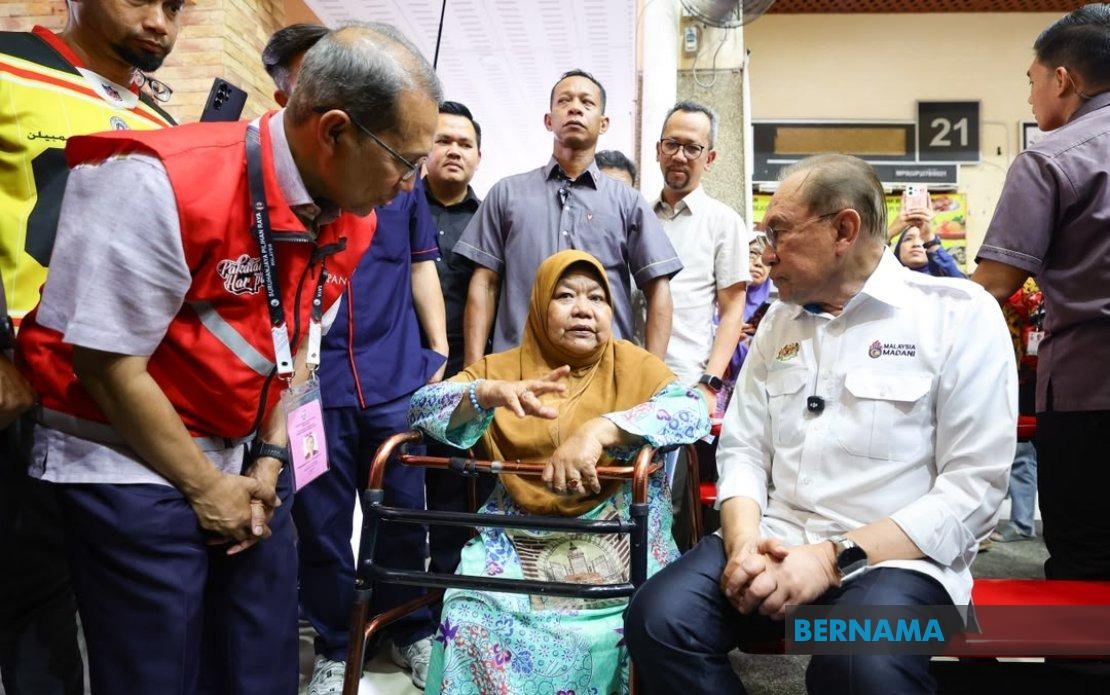
Prime Minister Datuk Seri Anwar Ibrahim has pointed to river widening and deepening initiatives across Negeri Sembilan as evidence of the Pakatan Harapan administration's commitment to channelling state resources back to ordinary citizens. Speaking at a community engagement event in Ampangan, the PH chairman argued that these infrastructure projects demonstrate the coalition's capability to deliver tangible development whilst maintaining rigorous accountability standards that distinguish it from previous governance models in the state.
The reciprocal approach underpinning these river projects illustrates a resource-efficient strategy that creates multiple public benefits from a single initiative. Sand extracted during the deepening process, for instance, generates income that finances ongoing maintenance and improvements to riverine infrastructure, thereby establishing a self-sustaining cycle. This model contrasts with conventional development approaches where excavated materials are often discarded or sold without channelling profits back into community welfare. By reimagining project byproducts as revenue sources, the administration demonstrates how creative governance can maximise returns on public investment.
The Ampangan river project serves as the flagship example of this philosophy. Beyond its primary function of mitigating flood risk—a persistent challenge in low-lying areas throughout Selangor and adjacent states—the initiative ensures that extracted resources directly support the communities most affected by inundation. This targeting of flood-prone regions aligns with broader Southeast Asian priorities, as climate change intensifies rainfall volatility across the region, making robust drainage infrastructure increasingly vital for economic stability and public safety.
Anwar's emphasis on integrity-based governance carries particular resonance in Malaysian politics, where corruption concerns have historically undermined public confidence in state administrations. By repeatedly stressing that development must prioritise citizens' interests and operate transparently, the Prime Minister is attempting to differentiate PH's stewardship from the administrations it has replaced. This positioning becomes especially important as voters prepare for the 16th Negeri Sembilan State Election on August 1, where the coalition faces pressure to demonstrate concrete achievements justifying continued support.
Drawing parallels to his own involvement in Port Dickson development negotiations, Anwar illustrated how stakeholder-centred planning can reconcile economic growth with social equity. His reference to accommodating fishing communities' concerns—encompassing education, housing, and livelihood protection—underscores an approach that treats local populations as active participants in development rather than passive recipients. Such inclusive frameworks reflect evolving expectations across Southeast Asia, where communities increasingly demand meaningful consultation before large-scale projects proceed.
The Pakatan Harapan electoral strategy in Negeri Sembilan encompasses all 36 state seats, with seat allocations reflecting coalition composition: PKR contests 16 constituencies, DAP 11, and Amanah nine. This distribution signals internal agreement on candidate viability and geographic strengths, though PH's challenge lies in converting campaign promises into measurable improvements that resonate with voters across different demographic groups. The coalition's performance in Negeri Sembilan will carry significance beyond the state itself, offering insights into whether PH can maintain political momentum heading into future federal contests.
The timing of Anwar's Ampangan visit underscores PH's campaign priorities. By concentrating on community-level engagement rather than exclusively large rallies, the coalition is attempting to rebuild grassroots connections that strengthen during election periods but often atrophy between campaigns. This ground-level approach acknowledges that state elections, whilst overshadowed by federal politics in national discourse, directly determine service delivery quality for residents navigating daily governance challenges ranging from drainage management to land administration.
Anwar's appeal to voters to select trustworthy candidates across all ethnic communities reflects PH's broader positioning as a multiethnic coalition committed to merit-based governance. His explicit reference to finding capable individuals among Malay, Indian, and Chinese populations addresses communal anxieties that sometimes animate Malaysian politics, attempting instead to frame election choice around competence and integrity rather than communal interest. Whether this framing resonates will depend partly on whether voters perceive tangible improvements in their living standards under PH administration.
The underlying tension in Anwar's messaging involves reconciling ambitious developmental aspirations with limited state resources. Negeri Sembilan, whilst economically significant due to its manufacturing and agricultural sectors, lacks the fiscal capacity of Selangor or Penang. Demonstrating that reciprocal project approaches can generate sustainable revenue streams becomes strategically important for justifying PH's continued governance, as the coalition must show it can deliver services without excessive debt accumulation or neglect of rural constituencies that often feel marginalised in development planning.
Election mechanics favour early assessment of voter sentiment, with early voting scheduled for July 28 preceding general polling on August 1. This compressed timeline means PH's campaign messaging must crystallise quickly into voter preference, leaving limited opportunity for narrative adjustment if initial reception proves lukewarm. The coalition's emphasis on specific, locally relevant projects like the Ampangan river initiative suggests a deliberate strategy of grounding abstract governance principles in visible infrastructure that residents encounter daily.
Looking beyond the immediate Negeri Sembilan contest, the state election carries implications for Malaysia's broader political trajectory. If PH consolidates support across multiple state governments, it strengthens the coalition's capacity to implement coordinated national policies and demonstrates governing competence that could influence future federal elections. Conversely, setbacks would embolden opposition narratives questioning PH's administrative effectiveness and potentially fracture the coalition through recriminations over resource allocation and candidate selection decisions.

