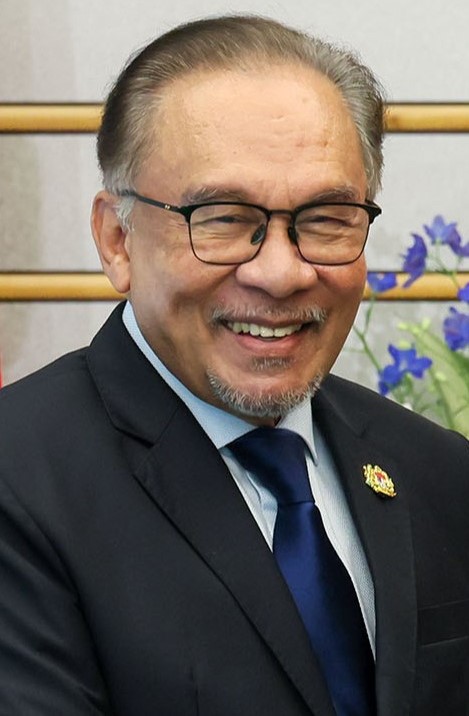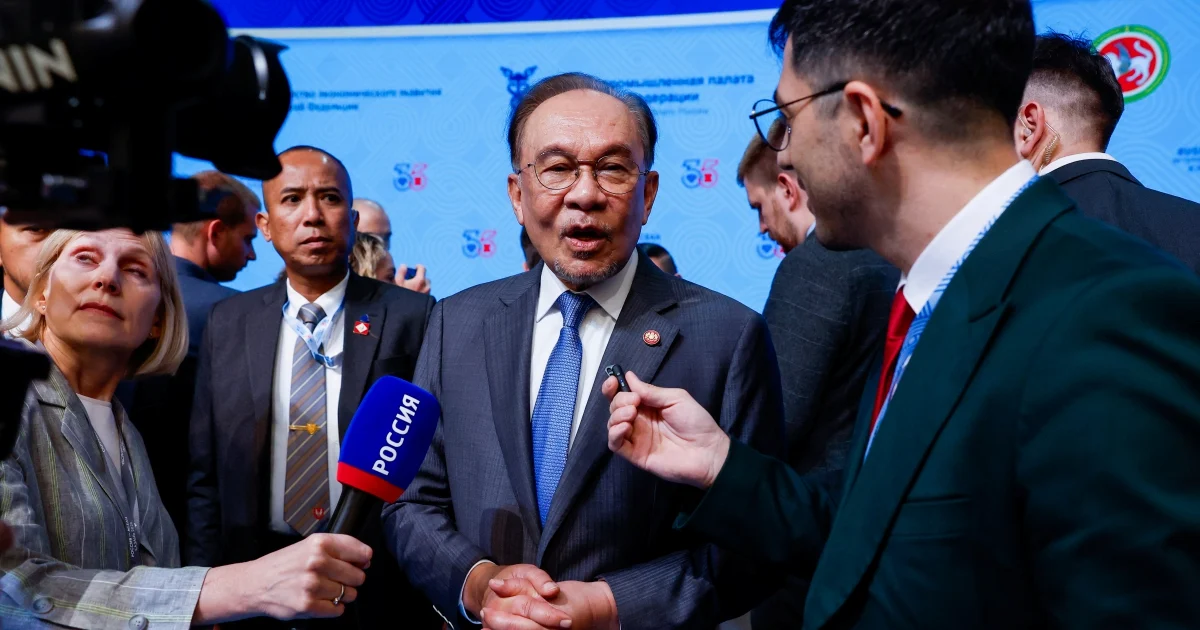
Prime Minister Datuk Seri Anwar Ibrahim has opened up about his personal appreciation for Russian music and literary traditions, underscoring a perspective that often goes overlooked in diplomatic discourse: the fundamental importance of cultural exchange in bilateral relations. Speaking in Kazan, a major cultural hub in the Russian Federation, Anwar articulated a vision of international engagement that extends well beyond trade figures and investment flows, positioning artistic and intellectual pursuits as cornerstones of meaningful nation-to-nation cooperation.
The Prime Minister's remarks reflect a broader understanding of how nations build lasting partnerships. While Malaysia and Russia have long maintained economic and diplomatic relations, Anwar's emphasis on cultural ties suggests a desire to deepen the human and intellectual dimensions of the bilateral relationship. This approach resonates particularly in a region where Southeast Asian nations are increasingly seeking multifaceted engagements with major powers, moving beyond transactional relationships toward more holistic forms of cooperation.
Russian literature and music occupy distinguished positions in global culture, with centuries-old traditions that continue to influence artistic movements worldwide. By publicly acknowledging his enjoyment of Russian songs and literary works, Anwar signals an appreciation for intellectual heritage and creative expression—elements that shape how populations perceive one another and foster mutual understanding. For Malaysia, a multicultural nation with its own rich literary and musical traditions, such recognition of Russian cultural achievements demonstrates openness to diverse artistic influences and a commitment to cosmopolitan values.
The setting of Anwar's comments in Kazan carries particular significance. The city, straddling Europe and Asia, embodies cultural synthesis and represents a microcosm of Eurasian exchange. Kazan's own multicultural character—home to both Orthodox Russian and Islamic Tatar communities—mirrors Malaysia's own pluralistic society. By making these statements in such a symbolically resonant location, Anwar implicitly draws parallels between societies that have navigated religious and cultural diversity, suggesting common ground that extends beyond economic calculations.
From a diplomatic standpoint, Anwar's remarks serve multiple functions. They humanise official relations by introducing personal dimensions to state-to-state engagement. Rather than presenting bilateral ties as merely technical arrangements between governments, he frames them as connections between peoples who share appreciation for beauty, literature, and artistic expression. This rhetorical shift can help reshape public perceptions of Russia among Malaysians and, conversely, Russian understanding of Malaysia's leadership as culturally sophisticated and intellectually engaged.
The emphasis on cultural exchange also carries strategic implications for Southeast Asia. As the region navigates complex geopolitical dynamics involving major powers, fostering people-to-people connections through cultural and educational exchanges can build resilience against purely transactional or adversarial relationships. When governments actively promote understanding of each other's artistic and intellectual traditions, they create constituencies within their societies—scholars, artists, students, and cultural enthusiasts—who naturally advocate for constructive bilateral ties.
Anwar's perspective aligns with Malaysia's own cultural diplomacy efforts over recent years. The nation has invested in promoting Malay literature, Islamic art, and contemporary Malaysian music on the international stage. By reciprocating interest in Russian cultural achievements, the Prime Minister demonstrates a willingness to engage authentically with other nations' civilisations rather than approaching cultural exchange as a one-directional export of Malaysian products. This mutuality tends to generate more genuine respect and understanding than asymmetric cultural relations.
The practical implications of elevating cultural exchange are substantial. Educational partnerships focused on literature, music, and the arts can introduce thousands of young Malaysians to Russian perspectives and creative traditions, while Russian students gain exposure to Southeast Asian thought and expression. Such exchanges often prove more transformative than policy dialogues, shaping individuals' worldviews during formative years and creating networks of cultural ambassadors who maintain connections throughout their careers.
Anwar's comments also reflect recognition that soft power—the ability to attract and persuade through culture, values, and ideas—increasingly matters in international relations. In an era when military power alone cannot resolve complex global challenges, nations invest heavily in cultural projection because it generates goodwill, influence, and the kind of trust that facilitates cooperation on concrete issues. By cultivating appreciation for Russian culture among Malaysia's leadership and, through publicising such appreciation, among the broader Malaysian public, both nations position themselves for deeper cooperation across multiple domains.
Looking forward, these statements create space for expanded cultural programming between Malaysia and Russia. Whether through literary translations, musical performances, academic exchanges, or film collaborations, the foundation of top-level appreciation provides political cover and public enthusiasm for such initiatives. Malaysian universities might expand Russian language and literature programmes; cultural organisations could facilitate performances by Russian artists in Malaysia; government-supported scholarships could enable Malaysian students to study in Russian institutions focused on the arts and humanities.
The Prime Minister's remarks also carry implications for how Malaysia positions itself within broader Asian regional diplomacy. By demonstrating interest in non-Asian, non-Islamic cultural traditions, Anwar reinforces Malaysia's identity as a globally engaged nation rather than one defined primarily by regional or religious boundaries. This positioning strengthens Malaysia's claim to be a cosmopolitan bridge between East and West, a nation comfortable engaging authentically with diverse civilisations.
Ultimately, Anwar Ibrahim's openness about his appreciation for Russian songs and literature serves as a reminder that diplomacy functions most effectively when it engages not just governments but the full spectrum of human experience—including aesthetic appreciation, intellectual curiosity, and cultural affinity. In deepening Malaysia-Russia relations, such intangible elements may ultimately prove as valuable as any trade agreement or investment framework.