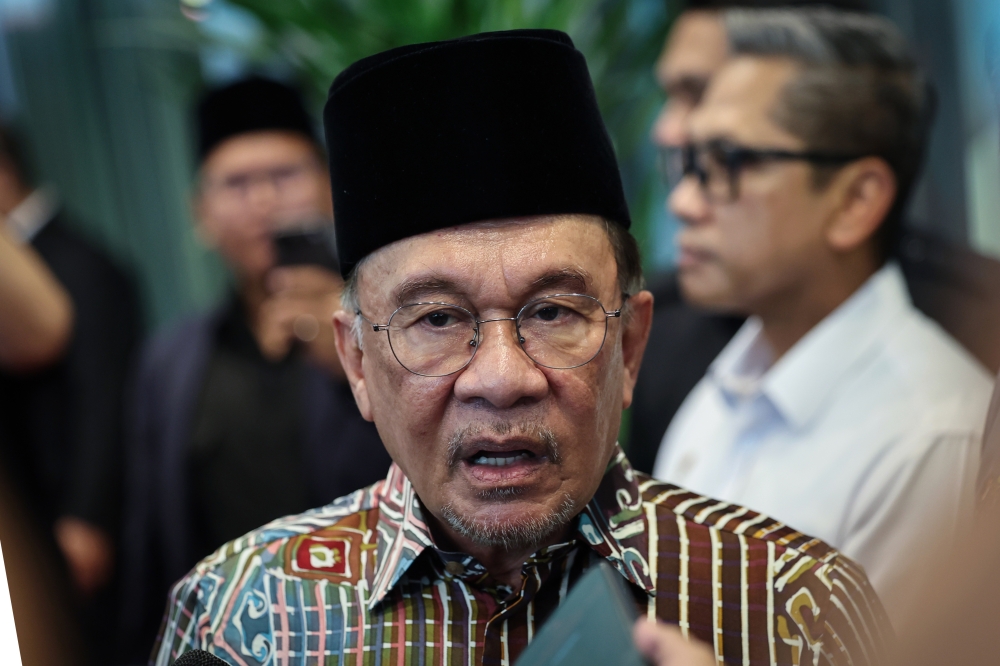
Prime Minister Datuk Seri Anwar Ibrahim has directed a comprehensive investigation into the circumstances surrounding the deaths of three policemen in Beaufort, underscoring his administration's commitment to transparency and accountability in a matter that has raised significant public concern. The directive, issued on August 7, signals the federal government's determination to establish the full facts and ensure that the inquiry proceeds without obstruction or delay.
The deaths of the three officers have sparked considerable attention across Sabah and beyond, with observers closely monitoring how authorities handle the sensitive matter. Beaufort, a town in the southwestern region of Sabah, has been thrust into the spotlight as questions mount regarding the circumstances and official response. The Prime Minister's personal intervention at this early stage indicates the gravity with which the federal leadership views the incident and the need to maintain public confidence in the integrity of law enforcement investigations.
Anwar's instruction for a thorough examination reflects broader concerns about police conduct, institutional accountability, and the rule of law in Malaysia. By explicitly calling for both transparency and expediency, the Prime Minister has established clear benchmarks for how the investigation should proceed—avoiding protracted delays that might fuel speculation or erode public trust, while simultaneously ensuring that proper procedures are followed and all relevant evidence is examined. This dual emphasis addresses a persistent tension in Malaysian governance where speed must be balanced against thoroughness.
The involvement of three uniformed personnel in a single incident within a localized area presents distinctive investigative challenges. Authorities will need to examine multiple dimensions of the case, from immediate circumstances to broader contextual factors that may have contributed to the tragic outcome. The fact that all three were serving officers means their families, colleagues within the Royal Malaysia Police force, and the wider public will scrutinize how the investigation is conducted and what conclusions emerge.
Sabah, as an eastern Malaysian state with its own distinct political and administrative dynamics, has frequently faced challenges in maintaining consistent governance standards across its diverse districts. Beaufort, while not typically at the centre of national media attention, has experienced various developmental and administrative issues that reflect broader patterns across parts of Sabah. The incident involving three policemen thus intersects with existing conversations about service delivery, institutional capacity, and oversight mechanisms in the state.
The Prime Minister's order underscores the federal government's role in ensuring that accountability extends across all states, including those in East Malaysia. While the Royal Malaysia Police operates under federal authority, the specific dynamics of how investigations proceed on the ground can vary significantly depending on local factors, personnel availability, and coordination between state and federal authorities. Anwar's directive serves to elevate the matter and ensure that senior leadership is monitoring progress.
Transparency in such investigations carries particular weight in Malaysia's political context. Citizens have grown increasingly demanding of accountability from government institutions, particularly regarding incidents involving armed or uniformed personnel. Public disclosure of investigation findings, where security and privacy considerations permit, has become an expected feature of modern governance. The Prime Minister's emphasis on this aspect acknowledges these evolved expectations and signals that his administration intends to meet them.
The investigation will likely require coordination among multiple agencies, from the police's internal affairs division to potential involvement of other bodies depending on what the preliminary findings suggest. External oversight or involvement from independent entities might also be considered, as such measures can bolster public confidence that the inquiry has not been compromised by institutional self-interest or pressure to reach predetermined conclusions.
For Malaysia's law enforcement establishment, the investigation represents both a challenge and an opportunity. A thorough and credible examination of what occurred can strengthen institutional credibility if findings are communicated clearly and any necessary reforms are implemented. Conversely, any perception that the inquiry has been compromised or hastily concluded without adequate examination of evidence could deepen existing concerns about police accountability and oversight within the broader Malaysian public.
The implications extend beyond Beaufort and Sabah to the national conversation about police reform and institutional governance. Malaysia has witnessed periodic calls for stronger oversight mechanisms, improved training standards, and clearer protocols for incident investigation. High-profile cases involving police deaths or conduct—particularly when multiple officers are involved—often catalyze such discussions and sometimes lead to policy adjustments. How the government handles this investigation may set precedents for similar cases in future.
Regional observers across Southeast Asia will also watch closely, as Malaysia's handling of sensitive law enforcement matters can influence perceptions of institutional strength and democratic governance in the wider region. Southeast Asian governments face persistent challenges in maintaining public confidence in police institutions while managing operational demands, and regional learning often occurs through observation of how neighbouring countries address significant incidents.
The Prime Minister's intervention also reflects awareness of the human dimension—the families of the deceased officers, their colleagues in the force, and the local community in Beaufort all require clarity and closure. A properly conducted investigation, with results communicated respectfully and timeously, serves not only procedural justice but also the social healing process that communities require following tragedy within their public institutions.

