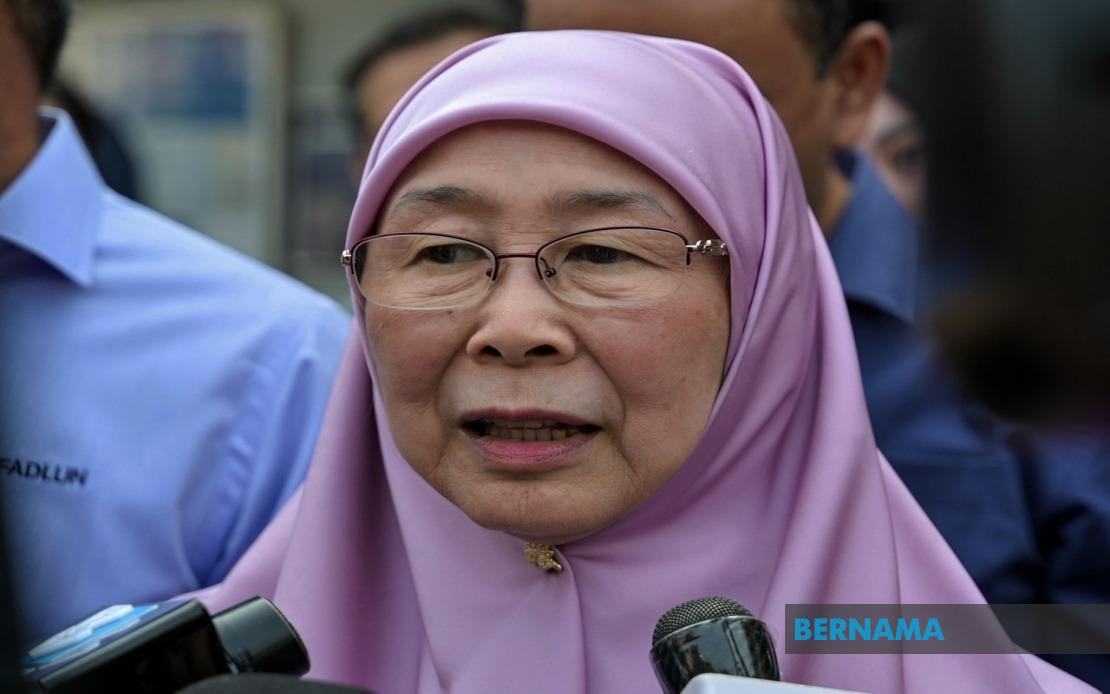
Prime Minister Datuk Seri Anwar Ibrahim was expected to leave hospital on August 12 after completing treatment for a surgical condition, according to an announcement by his wife Datuk Seri Dr Wan Azizah Wan Ismail. The timing of the discharge came just days after the head of government underwent a planned laparoscopic intervention earlier in the week, signalling a smooth recovery trajectory from the minimally invasive procedure.
Dr Wan Azizah relayed her husband's sentiments to the media, emphasizing that Anwar had expressed gratitude toward those who had offered prayers and well-wishes during his hospitalisation. The Prime Minister's acknowledgment of public support underscored the significance placed by his office on maintaining transparency regarding his health status, particularly given the sensitive nature of any medical developments affecting national leadership during a period of active governance.
The announcement was made following Dr Wan Azizah's appearance at the Semarak Merdeka programme, a community engagement initiative organised by Kuala Lumpur City Hall at its Bandar Tun Razak office. The event formed part of the broader 2026 National Month celebrations, reflecting Malaysia's ongoing commemorations of independence milestones. By coinciding her statement with this patriotic occasion, Anwar's family demonstrated their continued participation in national observances despite the Prime Minister's medical absence.
The surgical intervention Anwar underwent—specifically described as an elective laparoscopic procedure targeting a para-umbilical hernia—represents a relatively common abdominal condition requiring corrective surgery. Laparoscopic techniques, which utilise small incisions and specialised instruments rather than traditional open surgery, typically permit faster recovery periods and reduced hospitalisation stays. The classification of the procedure as elective rather than emergency indicated that the condition, while requiring intervention, had not posed an acute risk necessitating urgent action.
Paraumblical hernias occur in the vicinity of the navel when tissue protrudes through a weakness in abdominal muscle layers. Although such conditions are usually manageable and not life-threatening, they can present discomfort and carry the theoretical risk of complications if left untreated over extended periods. The timing of Anwar's surgical intervention suggested a deliberate administrative decision to address the matter during a controlled timeframe, rather than allowing it to potentially develop into a more complicated situation.
For Malaysian observers and regional stakeholders, the straightforward nature of both the medical condition and its treatment carries implications for political stability and government continuity. Leadership transitions or prolonged absences at the executive level can occasionally create uncertainty in policy implementation and decision-making processes. The apparent efficiency of Anwar's hospital stay and the expected swift return to duties indicated minimal disruption to the administration's functioning, though specific details regarding the delegation of responsibilities during his absence were not immediately disclosed.
The Prime Minister's appreciation extended publicly through his wife reflected diplomatic sensitivity to the concerns of ordinary citizens and international observers following any national leader's health complications. Such acknowledgments serve both to reassure the population of continued engagement and to demonstrate that leadership remains attuned to public sentiment even during periods of temporary withdrawal from immediate operational duties. The explicit thanks transmitted through Dr Wan Azizah maintained the visibility of the office despite physical absence from public-facing responsibilities.
Dr Wan Azizah's role as the designated spokesperson for her husband's medical situation represents a continuation of established protocol within Malaysian government circles, where family members occasionally serve as official communicators regarding sensitive personal matters. Her presence at the public event and willingness to address media enquiries suggested a measured approach to the disclosure of health information, balancing transparency with appropriate privacy considerations for an individual holding the nation's highest elected office.
The discharge announcement came at a juncture when Malaysia continues navigating complex governance challenges and regional developments. The swift resolution of Anwar's health matter through successful surgical intervention and rapid recovery reinforces perceptions of institutional stability at the apex of government. As Malaysia progresses through its political calendar and regional geopolitical landscape, the absence of prolonged health-related uncertainties surrounding the Prime Minister facilitates more focused attention on substantive policy matters and international relations.
Looking ahead, the successful completion of Anwar's recovery process and return to full operational status would permit uninterrupted engagement with pending government initiatives and legislative priorities. The relatively routine nature of the medical situation, combined with its effective resolution through modern surgical techniques, demonstrates the accessibility of quality healthcare infrastructure available to national leaders and, by extension, reflects the broader capacity of Malaysia's medical establishment. The incident underscores how even individuals occupying the highest political offices remain subject to ordinary health considerations, a reality that resonates with broader public experiences of medical intervention and recovery.

