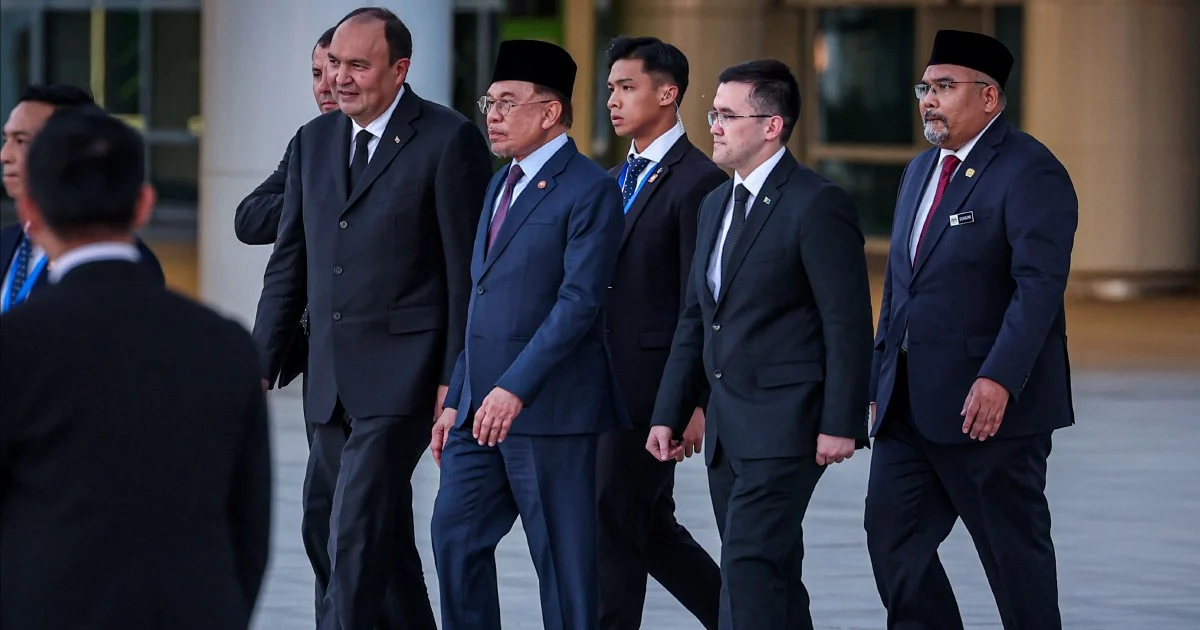
Prime Minister Datuk Seri Anwar Ibrahim is set to conclude his official visit to Turkmenistan with an intensive schedule of top-tier diplomatic engagements designed to chart a new course for economic cooperation between Malaysia and the Central Asian nation. The culmination of the two-day mission will see the premier participate in several key discussions focused on expanding bilateral trade, attracting investment flows, and establishing stronger institutional frameworks for sustained partnership.
Turkmenistan, strategically positioned along the Caspian Sea's eastern shoreline, occupies a crucial geographic position in Central Asia that increasingly matters for Malaysia's broader trade and investment strategy in the region. The country has emerged as a significant player in energy sectors, particularly oil and natural gas production, while also developing infrastructure and manufacturing capabilities. For Malaysia, engaging with Turkmenistan opens pathways to access Central Asian markets and diversify trading partners beyond traditional Southeast Asian networks.
The timing of Anwar's visit reflects Malaysia's growing recognition of Central Asia's economic potential and geopolitical significance. As regional tensions simmer and global supply chains continue shifting, Malaysian policymakers are actively seeking partnerships in lesser-explored markets. Turkmenistan's strategic location makes it a gateway for Malaysian businesses seeking to establish footholds in the Caucasus and Central Asian region, particularly in sectors such as energy, petrochemicals, and infrastructure development.
At the heart of these discussions will be efforts to identify concrete opportunities for Malaysian companies to invest in Turkmenistan's ongoing development projects. The Central Asian nation has substantial infrastructure ambitions, and Malaysian firms with expertise in construction, engineering, and project management could find viable opportunities. Similarly, Turkmen enterprises may discover potential partners for resource-based ventures and technology transfers that could accelerate their industrial modernisation efforts.
Bilateral trade between the two nations remains modest compared to Malaysia's engagement with other regions, yet there exists untapped potential. Malaysian exports of manufactured goods, palm oil derivatives, and processed foods could find receptive markets in Turkmenistan, while Malaysian importers might benefit from accessing Turkmen hydrocarbon resources and minerals. The talks will likely explore mechanisms to reduce trade barriers, harmonise standards, and establish preferential arrangements that facilitate greater commercial exchange.
Institutional cooperation will form another critical pillar of discussions. The establishment or strengthening of joint business councils, sector-specific task forces, and regular dialogue mechanisms can provide structured platforms for sustained engagement between Malaysian and Turkmen private sectors. Such frameworks often catalyse genuine commercial relationships by reducing information asymmetries and providing credible dispute-resolution mechanisms that foreign investors require before committing significant capital.
Cultural and educational exchanges often accompany such high-level economic missions. Malaysia's universities and vocational institutions could develop partnerships with Turkmen counterparts, enhancing human capital development and fostering people-to-people connections that underpin long-term bilateral relationships. Scholarship programmes and student exchange initiatives can create networks of professionals familiar with both countries' business environments, facilitating future commercial dealings.
The broader Southeast Asian context matters here. Malaysia's engagement with Central Asia complements ASEAN's own diplomatic overtures toward the region. As ASEAN seeks to diversify its external partnerships and expand its strategic autonomy, individual member states like Malaysia pursuing bilateral relationships with Central Asian countries strengthen the bloc's overall connectivity and influence. This aligns with Malaysia's articulated vision of positioning itself as a bridge between Southeast Asia and other emerging regions.
Turkmenistan's energy resources also align with Malaysia's energy security interests. While Malaysia itself is not energy-deficient, developing reliable supply relationships and investment partnerships in gas-producing nations provides alternatives to traditional suppliers and reduces geopolitical vulnerabilities. Malaysian energy companies have demonstrated capability in upstream operations, and partnerships with Turkmen counterparts could create mutually beneficial arrangements in exploration, production, and technology development.
The diplomatic visit also carries symbolic significance, demonstrating Malaysia's commitment to diversifying its international engagement beyond traditional Western and Asian partners. Central Asia remains underdeveloped in many Southeast Asian governments' strategic calculus, yet its growing economic importance and geopolitical salience warrant greater attention. Anwar's presence in Ashgabat signals that Malaysia recognises this shifting landscape and intends to position itself advantageously.
For Malaysian businesses, particularly mid-sized enterprises seeking international expansion, such high-level diplomatic missions often unlock doors that would otherwise remain closed. Government-to-government relationships frequently precede and facilitate private-sector engagement, as they establish political goodwill and institutional pathways that reduce transaction costs. Companies following in Anwar's diplomatic wake may find more receptive partners and smoother regulatory processes in Turkmenistan.
The visit underscores a broader Malaysian foreign policy trajectory emphasising pragmatic economic engagement across diverse regions and cultures. Rather than limiting partnerships to geographically proximate nations or ideologically aligned states, Malaysia is strategically cultivating relationships in areas offering genuine commercial prospects. This approach diversifies Malaysia's economic portfolio and reduces dependence on any single regional bloc or trading partner, thereby enhancing national resilience and bargaining power in international negotiations.

