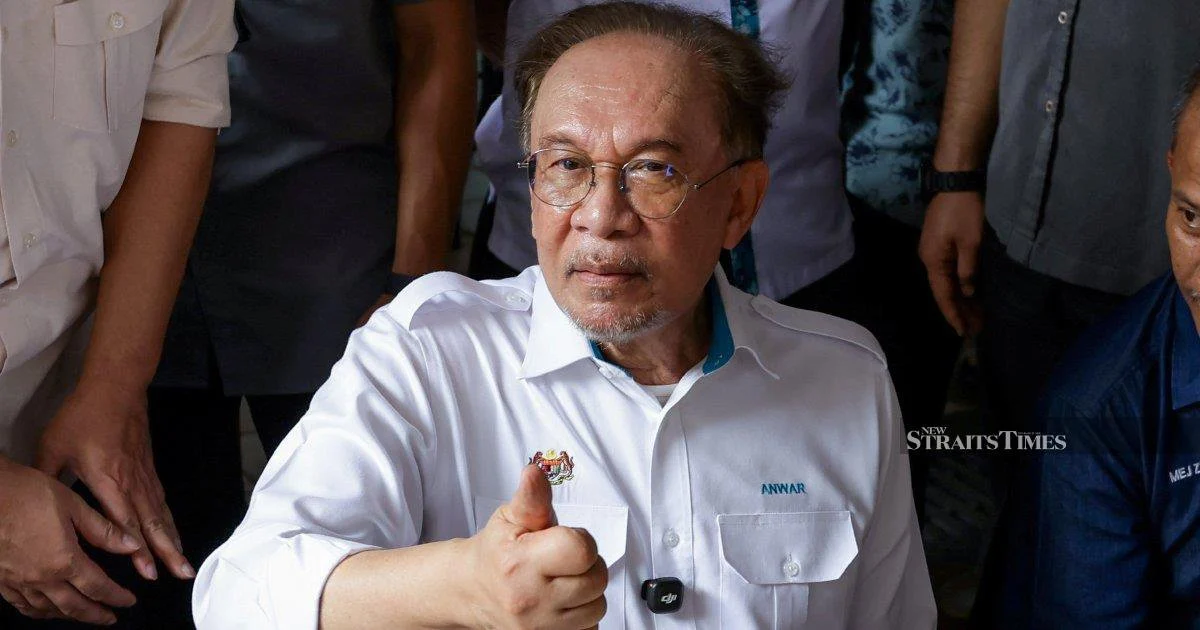
Prime Minister Datuk Seri Anwar Ibrahim has consolidated his position as Malaysia's most favoured political leader, according to the latest public sentiment tracking conducted by the Merdeka Centre. The survey results reflect a significant endorsement of his leadership from the Malaysian electorate, positioning him well ahead of other senior figures in the nation's political landscape.
The Merdeka Centre, widely regarded as one of the country's most credible independent polling organisations, has long served as a barometer for measuring public confidence in Malaysia's political establishment. Its surveys are closely monitored by political analysts, policymakers, and observers seeking to understand shifts in the national mood. The latest findings suggest that Anwar Ibrahim has managed to sustain and possibly strengthen his appeal across the Malaysian electorate since assuming the premiership.
Anwar's commanding lead in the approval rankings underscores the electoral endorsements he received through the coalition arrangements that formed the current government. The Prime Minister has pursued a governance agenda that has attempted to balance the demands of multiple coalition partners while managing expectations across diverse demographic groups. His ability to maintain high popularity ratings even amid the inevitable challenges of governing Malaysia's complex political landscape demonstrates a level of public acceptance for his administration's direction.
In sharp contrast to Anwar's strong showing, Zahid Hamidi registered the lowest approval rating among the surveyed political leaders, reflecting considerable challenges in his public standing. Zahid, who serves in the administration, has faced various controversies and political complications that appear to have affected his credibility with the broader public. The disparity between the Prime Minister and other senior figures suggests that voter preference remains concentrated at the apex of the political hierarchy.
The Merdeka Centre survey provides crucial insights into how Malaysians assess their political leaders, particularly during a period when coalition dynamics remain volatile and political realignments continue to reshape the nation's governance structure. Public approval ratings carry significant weight in Malaysia's parliamentary system, where political stability often depends on maintaining support from diverse constituencies and managing intra-coalition relationships. A Prime Minister with strong popularity numbers possesses greater latitude in negotiating with coalition partners and implementing policy initiatives.
Anwar's popularity surge can be attributed to multiple factors, including his long political history and the circumstances surrounding his rise to the premiership after the November 2022 general elections. Many Malaysians viewed his ascension as marking a significant generational transition within the political establishment. Moreover, his administration's early messaging around economic management, anti-corruption initiatives, and efforts to stabilise the ringgit appear to have resonated with portions of the electorate.
The gap between Anwar and other leaders, including Zahid, also reflects the personalisation of politics that characterises contemporary Malaysian electoral behaviour. Voters increasingly make decisions based on individual leadership qualities rather than purely party affiliation, a trend that has steadily gained momentum over successive election cycles. This shift places greater emphasis on a leader's public image, perceived integrity, and communication skills—factors that appear to favour the sitting Prime Minister.
For regional observers, Malaysia's political popularity metrics offer insights into the broader stability of a nation that serves as a significant economic and geopolitical anchor in Southeast Asia. A Prime Minister commanding substantial public approval generally faces fewer obstacles in pursuing foreign policy initiatives, maintaining currency stability, and attracting investment. Conversely, political leaders with weak ratings may struggle to implement necessary reforms or manage fiscal challenges effectively.
The survey results also carry implications for Malaysia's coalition government's durability. Anwar's strong standing provides him with resources to manage potential challenges from within his own alliance, where tensions periodically surface over ministerial appointments, policy direction, and resource allocation. Political parties within the coalition monitor such polls closely when calculating their own negotiating power and determining their continued participation in the government.
Zahid Hamidi's comparatively weak showing raises questions about his continued influence within the administration and the United Malays National Organisation (UMNO). Political fortunes can shift rapidly in Malaysian politics, and low approval ratings at one point may change substantially depending on circumstances, policy successes, or shifting public narratives. Nevertheless, his current standing suggests that voters maintain reservations about his leadership capabilities or personal character.
The Merdeka Centre survey methodology and sample sizes remain important considerations when interpreting these results. Public opinion research in Malaysia, while generally reliable, can reflect various methodological choices that influence outcomes. Nonetheless, the organisation's reputation for independence and consistency makes its surveys valuable reference points for understanding electoral sentiment.
Looking forward, successive Merdeka Centre surveys will merit close attention as they track whether Anwar's popularity sustains or fluctuates in response to economic conditions, policy outcomes, and political developments. Malaysian voters frequently adjust their assessments based on tangible improvements or deterioration in living standards, employment opportunities, and government service delivery. The Prime Minister's challenge lies in converting current approval ratings into demonstrated achievements that justify the public's confidence.
The political implications of these popularity rankings extend beyond Malaysia's borders, particularly for neighbouring countries and international investors concerned with Malaysia's stability. Leaders with strong domestic support possess greater credibility in regional and global forums, and their negotiating positions strengthen accordingly. Anwar Ibrahim's standing thus carries relevance not merely for Malaysian domestic politics but for Malaysia's positioning within the Southeast Asian region during a period of significant geopolitical transition.

