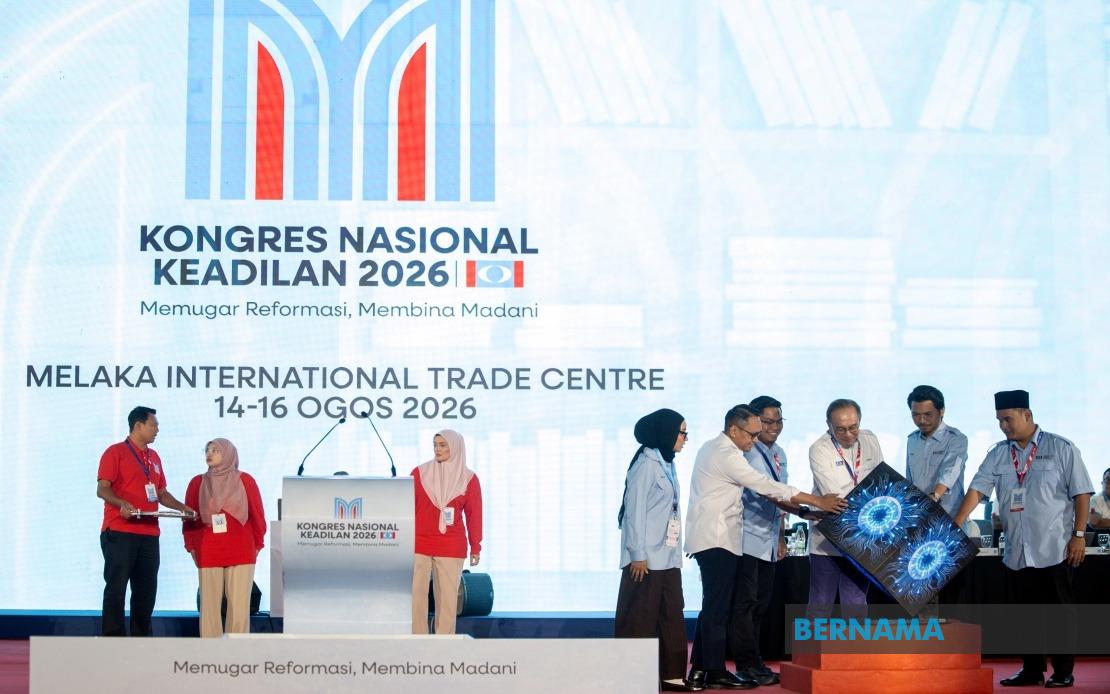
Prime Minister Datuk Seri Anwar Ibrahim launched a comprehensive manifesto for the youth wing of his party, Parti Keadilan Rakyat, in Melaka on August 16, positioning the 113-page document as a foundational guide for young party members navigating Malaysia's complex contemporary landscape. The publication, authored by AMK chief Muhammad Kamil Ahmad Munim and executive committee member Ashraf Ahmad Hadi, represents a deliberate attempt to ground youth activism in ideological substance rather than surface-level political messaging.
Anwar's framing of the manifesto carries significant symbolic weight, particularly his insistence that the initiative transcends conventional technocratic governance or seasonal political campaigns. By invoking the concept of "civilisational renewal," the Prime Minister signals a deeper philosophical commitment to reorienting national development away from purely economic metrics towards a more holistic understanding of progress that incorporates humanistic values and ethical governance. This rhetorical positioning distinguishes PKR's youth strategy from transactional politics and appeals to idealistic younger voters increasingly sceptical of conventional party structures.
The timing of this launch merits careful consideration within Malaysia's broader political context. Coming as Anwar consolidates his position as Prime Minister and navigates the complexities of a multi-ethnic coalition government, the manifesto serves multiple audiences simultaneously. For PKR members, it reinforces the party's reformist credentials and Anwar's personal commitment to the "Reformasi" movement that defined his earlier political struggles. For the broader electorate, it projects an image of systematic governance grounded in principle rather than pragmatism.
Central to Anwar's message was an uncomfortable reminder directed at young party members themselves. Rather than celebrating youth engagement as an inherent good, he reframed the responsibility entrusted to younger Malaysians as a serious moral and spiritual test. This emphasis on accountability and ethical conduct carries particular weight in a nation where youth political engagement has sometimes been criticised as superficial or driven by patronage networks rather than genuine ideological commitment. By demanding intellectual courage and spiritual resilience from the next generation, Anwar positioned PKR youth activism as demanding personal transformation, not merely political participation.
The manifesto's explicit focus on addressing "past injustices and leakages" speaks to Malaysia's ongoing reckoning with corruption and governance failures that undermined national development over several decades. The acknowledgment that the nation bears "scars" from these experiences validates public frustration while suggesting that remedying this damage requires extraordinary effort and moral clarity from younger Malaysians. This framing converts generational responsibility into a form of national healing, elevating youth political engagement beyond routine party activity into a civilisational project.
The document itself functions as a cadre-building instrument, designed to cultivate party members who understand both the historical foundations of PKR's struggle and the philosophical underpinnings of Reformasi. By encouraging members to "internalise the meaning" of these concepts rather than merely absorbing slogans, the party attempts to develop a base of activists grounded in substantive political thought. This approach reflects recognition that sustainable political movements require ideological depth, particularly when confronting entrenched interests and navigating Malaysia's competitive political landscape.
For Malaysian readers, this initiative carries implications beyond PKR's internal dynamics. The manifesto represents one major coalition party's comprehensive attempt to engage youth voters at a moment when political participation among younger Malaysians remains inconsistent and sometimes disconnected from institutional structures. Whether such ideological appeals resonate with a generation increasingly informed by social media and non-traditional political channels remains an open question. The manifesto's success will depend partly on whether PKR can translate philosophical commitments into tangible policy outcomes that directly improve younger Malaysians' economic and social circumstances.
Regionally, Anwar's emphasis on values-based governance and civilisational renewal reflects broader debates across Southeast Asia concerning the proper relationship between economic development, ethical leadership, and cultural identity. Malaysia's experience navigating these tensions offers lessons for neighbouring states grappling with similar governance challenges. The manifesto implicitly argues that sustainable development requires grounding economic policies in moral frameworks and historical consciousness, a perspective increasingly relevant as Southeast Asian nations confront environmental challenges, inequality, and questions of political legitimacy.
The document's intended audience extends beyond PKR loyalists to encompass uncommitted younger voters potentially receptive to appeals rooted in principle rather than patronage. By systematically articulating PKR's vision for addressing contemporary challenges, the party creates a reference point for political discourse and potentially differentiates itself from competitors perceived as offering only narrow sectional interests. Whether this philosophical positioning translates into increased youth electoral support will become apparent in future electoral cycles, but the strategic intent is clear: establishing PKR as the repository of serious, ethically grounded political thought for Malaysian youth.
Anwar's personal investment in this youth initiative underscores his recognition that PKR's long-term viability depends on successful generational renewal and ideological transmission. As Prime Minister, he occupies a position to shape national conversation around youth engagement, governance standards, and Malaysia's developmental trajectory. The manifesto represents a concrete expression of these aspirations, though its ultimate significance will be measured not merely by its philosophical content but by the extent to which PKR's youth movement actually internalises and implements its principles in navigating Malaysia's complex political terrain.

