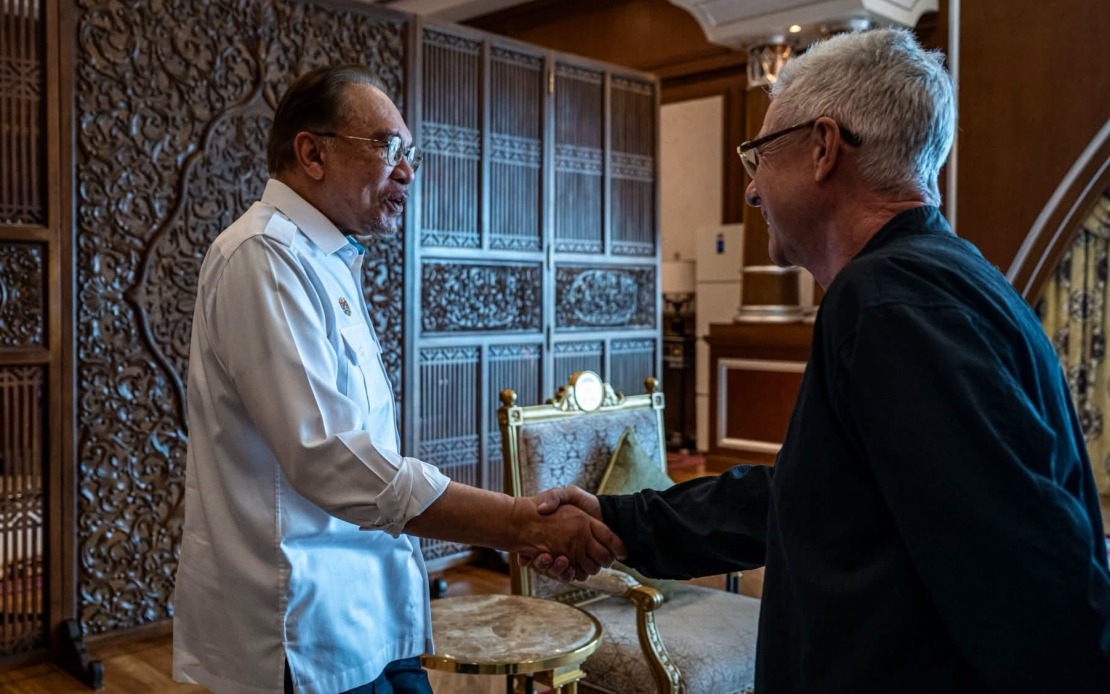
Prime Minister Datuk Seri Anwar Ibrahim has held discussions with Singapore Grand Prix Executive Director Michael Roche as Malaysia gears up to host a major Formula 1 event, marking a significant return for the country's motorsports industry after a nine-year absence from the international racing calendar. The meeting took place as preparations intensify for the Formula 1 Gulf Air Bahrain Grand Prix, scheduled to take place at Sepang International Circuit from October 2 to 4 this year under a unique arrangement involving both Malaysia and Bahrain.
Anwar's engagement with Roche underscores the Malaysian government's determination to extract valuable lessons from Singapore's proven expertise in staging world-class motorsports events. Singapore's Grand Prix, held annually along the Marina Bay Street Circuit since 2008, has become one of Asia's most prestigious racing spectacles and a significant draw for global tourists and business delegates. By studying Singapore's organisational framework and operational strategies, Malaysia aims to replicate that success and ensure the Sepang event meets rigorous international standards that Formula 1 audiences expect.
The political dimension of this gathering cannot be overlooked. Malaysia hosted the Malaysian Grand Prix consistently from 1999 to 2017 at the same Sepang venue, during which the race became emblematic of the nation's economic development and technological advancement. The cancellation of the race over a decade ago, attributed to mounting hosting costs and escalating licensing fees imposed by Formula 1's governing structure, represented a setback for Malaysia's regional standing in motorsports. Anwar's proactive approach to securing the Bahrain Grand Prix signals a reversal of that trajectory and reflects his administration's commitment to restoring Malaysia's presence on the global sporting stage.
The postponement of the Bahrain Grand Prix from its original April date at the Bahrain International Circuit to October at Sepang occurred due to geopolitical instabilities affecting West Asia. This shift, while prompted by external circumstances, presents Malaysia with an unexpected opportunity to demonstrate its capacity to host major international events at short notice. The relocation also carries geopolitical significance, positioning Malaysia as a stable and capable alternative venue within the broader Asian region and potentially enhancing the country's diplomatic standing.
Economically, the implications extend far beyond the racing weekend itself. Anwar emphasises that such world-class events generate substantial economic ripple effects throughout multiple sectors of the economy. The influx of international visitors, estimated to number in the tens of thousands based on Singapore's experience, drives revenue across tourism, hospitality, retail, and transportation industries. Moreover, the global television audience reaching hundreds of millions worldwide provides unparalleled marketing exposure for Malaysia as a destination and investment hub. The event is explicitly positioned as a catalyst for the government's Visit Malaysia 2026 campaign, which seeks to attract 100 million visitor arrivals during that year.
Job creation represents another dimension of the economic argument. The preparation, staging, and aftermath of a Formula 1 event requires thousands of temporary and permanent positions across security, hospitality, construction, logistics, and administration. These employment opportunities extend throughout the supply chain, from local vendors supplying materials to international contractors managing technical aspects of the event. Beyond immediate employment, the event attracts business delegations and investors who use the occasion to explore Malaysian market opportunities, potentially catalysing foreign direct investment flows into various sectors.
The symbolic importance of Sepang's return to Formula 1 carries broader implications for Malaysia's positioning as a regional motorsports hub. The circuit itself represents over two decades of investment in sporting infrastructure and human expertise. By hosting the Bahrain Grand Prix, Malaysia reasserts its credentials as a venue capable of managing Formula 1's demanding technical and logistical requirements. This positioning has cascading effects: it attracts other international motor racing events, supports the development of local motorsports talent and industries, and reinforces Malaysia's profile as a nation committed to world-class sporting experiences.
The collaboration between Malaysia and Bahrain in hosting the 2026 Grand Prix introduces an innovative partnership model that differs from the traditional single-country hosting arrangement. This arrangement may reflect practical considerations regarding Bahrain's circumstances while simultaneously offering Malaysia enhanced prestige through an official co-hosting arrangement with another nation. The partnership demonstrates how regional countries can pool resources and capabilities to deliver world-class events, a model potentially replicable for other major international competitions.
The government's emphasis on meeting international standards reflects awareness that Malaysia's ability to compete globally depends on delivering experiences indistinguishable from those in developed nations. Formula 1, with its exacting safety protocols, technical specifications, and hospitality expectations, serves as a benchmark for organisational excellence. Successfully executing the Sepang event would validate Malaysia's capacity to manage complexity at the highest international level, benefiting the country's reputation across multiple domains beyond motorsports.
From a regional perspective, Malaysia's return to Formula 1 influences the broader Asian motorsports landscape. Singapore has dominated regional motorsports prestige for over a decade; Malaysia's reentry challenges that dominance and suggests regional competition remains healthy and vibrant. The event also captures Asian audiences' attention, reinforcing the region's importance to Formula 1's commercial strategy and potentially influencing future calendar decisions in Malaysia's favour.
The consultation with Singapore's executive director demonstrates sophisticated governance practice. Rather than relying solely on internal planning, Anwar's administration recognises that learning from successful counterparts accelerates development and reduces implementation risks. This collaborative approach, even among competitive neighbours, reflects mature governance attitudes focused on delivering excellence to citizens regardless of whether credit accrues domestically.
Moving forward, the success or difficulties encountered in organising the 2026 event will significantly influence Malaysia's motorsports future. A smoothly executed Grand Prix would position Malaysia strongly for hosting the Malaysian Grand Prix permanently on future calendars, reversing the sporting downgrade that occurred in 2017. Conversely, organisational challenges could reinforce perceptions of decline, making future reinstatement difficult.

