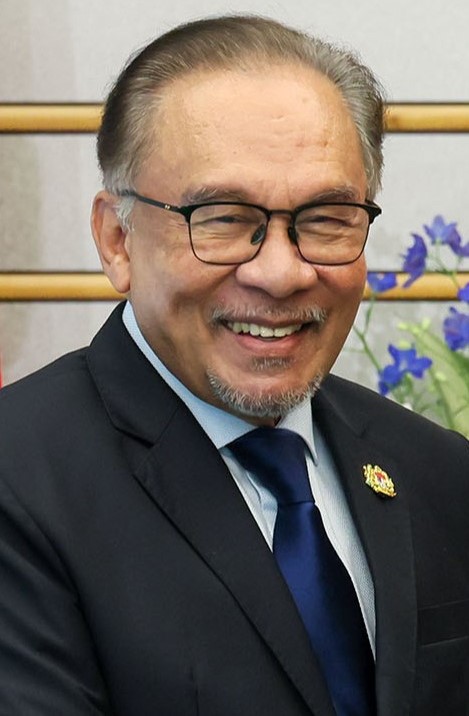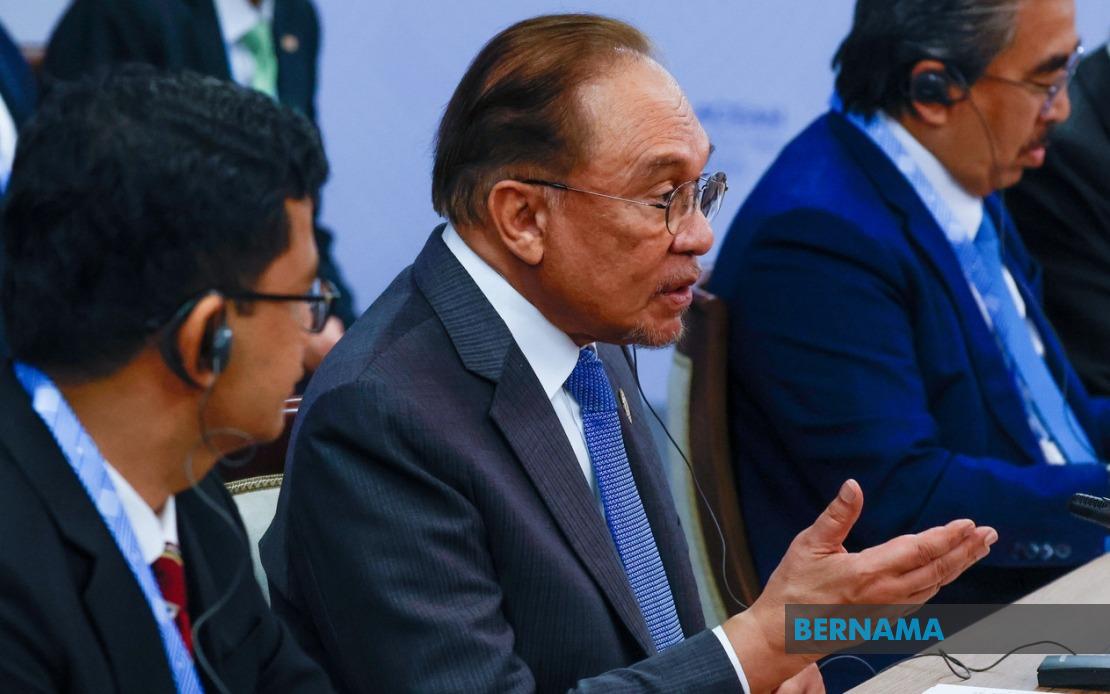
Prime Minister Datuk Seri Anwar Ibrahim used a high-level bilateral engagement with Russian President Vladimir Putin in Kazan on Wednesday night to publicly acknowledge Russia's diplomatic consistency on two of the most contentious geopolitical issues currently confronting the international community. Speaking during opening remarks at the meeting, Anwar expressed Malaysia's gratitude for what he characterised as Russia's principled approach to both the Palestinian-Israeli conflict in Gaza and the broader Iranian question that continues to shape regional and global power dynamics.
Anwar's remarks reflect Malaysia's own positioning within regional geopolitics, where the Southeast Asian nation has long maintained a vocal stance supporting Palestinian rights while advocating for diplomatic rather than military solutions to regional disputes. By publicly endorsing Russia's consistency on these matters, the Malaysian leader was effectively signalling alignment with Moscow's international posture at a time when Middle Eastern tensions remain elevated and great-power competition continues to reshape global alignments. The timing of these comments underscores how Middle Eastern conflicts have become increasingly internationalised, with major powers from Europe to Asia maintaining significant interests in the region's trajectory.
The Malaysian Prime Minister specifically highlighted what he views as the steadfastness demonstrated by Putin in maintaining Russia's positions despite international pressure and shifting circumstances. This characterisation appears significant given that Russia's foreign policy operates within a complex web of sanctions, diplomatic isolation in Western circles, and the ongoing conflict in Ukraine. By praising Russian consistency, Anwar was acknowledging Moscow's willingness to invest political capital in Middle Eastern positions even while facing considerable constraints elsewhere on the global stage.
Regarding Gaza specifically, Russia has consistently advocated for immediate ceasefires and has called for unimpeded humanitarian access to Palestinian civilians caught in the conflict. Moscow's position has emphasised the necessity of protecting civilian populations and has framed military escalation as counterproductive to long-term regional stability. This stance aligns broadly with positions held by many non-aligned nations, including Malaysia, which have grown increasingly vocal about the humanitarian dimensions of the conflict. Russia's framing of the issue emphasises the principle of civilian protection and humanitarian law rather than taking explicitly one-sided political positions.
On Iran, Russia has maintained a multifaceted approach that combines strategic partnership with Tehran while simultaneously advocating for dialogue-based solutions to international concerns about nuclear programmes and regional behaviour. Moscow has resisted the logic of military confrontation over diplomatic engagement, positioning itself as a counterbalance to what it perceives as excessive external pressure on Tehran. Russia's approach reflects its broader strategic interest in maintaining influence within the Middle Eastern power structure and preventing any single power from achieving hegemonic dominance in the region.
Anwar's public acknowledgment of these positions carries implications for Malaysia's own foreign policy trajectory. As a Muslim-majority nation with significant economic interests across the Middle East and an aspirational role as a voice for developing countries, Malaysia has consistently sought to balance relationships across competing power blocs. By commending Russia's approach, Anwar was reinforcing Malaysia's own preference for principled non-alignment and its commitment to supporting international positions grounded in humanitarian law and diplomatic resolution rather than military solutions.
The bilateral meeting itself occurred within the context of broader Malaysia-Russia relations, which have expanded beyond traditional diplomatic channels into areas including economic cooperation, defence ties, and energy partnerships. Russia remains an important energy supplier and defence partner for Southeast Asian nations, and Malaysia has maintained pragmatic engagement with Moscow despite international pressures emanating from Western capitals. The Kazan meeting thus served multiple purposes: advancing bilateral issues while simultaneously positioning Malaysia within the broader landscape of international diplomacy concerning the Middle East.
From a Southeast Asian perspective, Malaysia's willingness to publicly associate itself with Russian foreign policy positions on the Middle East reflects the region's increasingly complex diplomatic calculations. As geopolitical competition intensifies between the United States, China, and Russia, Southeast Asian nations including Malaysia are navigating a landscape where traditional Cold War alignments have given way to more fluid, issue-specific partnerships. On the question of Middle Eastern conflicts, Malaysia has consistently aligned itself with positions emphasising multilateralism, civilian protection, and diplomatic solutions—values that coincide with Russia's publicly articulated stances.
The emphasis on consistency in Anwar's remarks deserves particular attention, as it suggests Malaysia values predictability and principle in international relations. In a world where policies often shift based on temporary strategic calculations, Russia's maintenance of its positions on Gaza and Iran—despite significant international pressure and changing circumstances—appears to resonate with Malaysia's own diplomatic philosophy. This consistency potentially provides a foundation for expanding bilateral cooperation between the two nations across multiple domains.
Anwar's comments also indirectly highlight the limitations of Western pressure on regional issues. By praising Russia's refusal to waver on positions concerning Gaza and Iran, the Malaysian Prime Minister was implicitly challenging the notion that international consensus should automatically reflect Western preferences. This reflects a broader sentiment among many non-aligned nations that Western-dominated international institutions and narratives do not adequately represent the perspectives and interests of developing countries, particularly those in Asia and Africa.
Looking forward, the public nature of Anwar's remarks suggests Malaysia intends to deepen its diplomatic engagement with Russia on Middle Eastern questions. This could potentially extend to coordinated positions within multilateral forums, joint statements on regional issues, or expanded consultation mechanisms on matters of mutual concern. For Malaysia, such engagement reflects both principled positioning on issues affecting the broader Muslim world and strategic calculations about maintaining useful relationships with major powers outside traditional Western-led structures.
The meeting in Kazan also occurred at a moment when regional powers across the Middle East and Asia are reassessing their alignments in response to evolving global circumstances. Malaysia's explicit support for Russia's diplomatic approach on these key issues positions the country as an independent actor making deliberate choices based on principle rather than pressure. This stance reinforces Malaysia's brand within international diplomacy as a voice supporting multilateralism, civilian protection, and negotiated solutions to regional conflicts—values that hold particular resonance within the non-aligned movement and among developing nations seeking greater agency in shaping global outcomes.