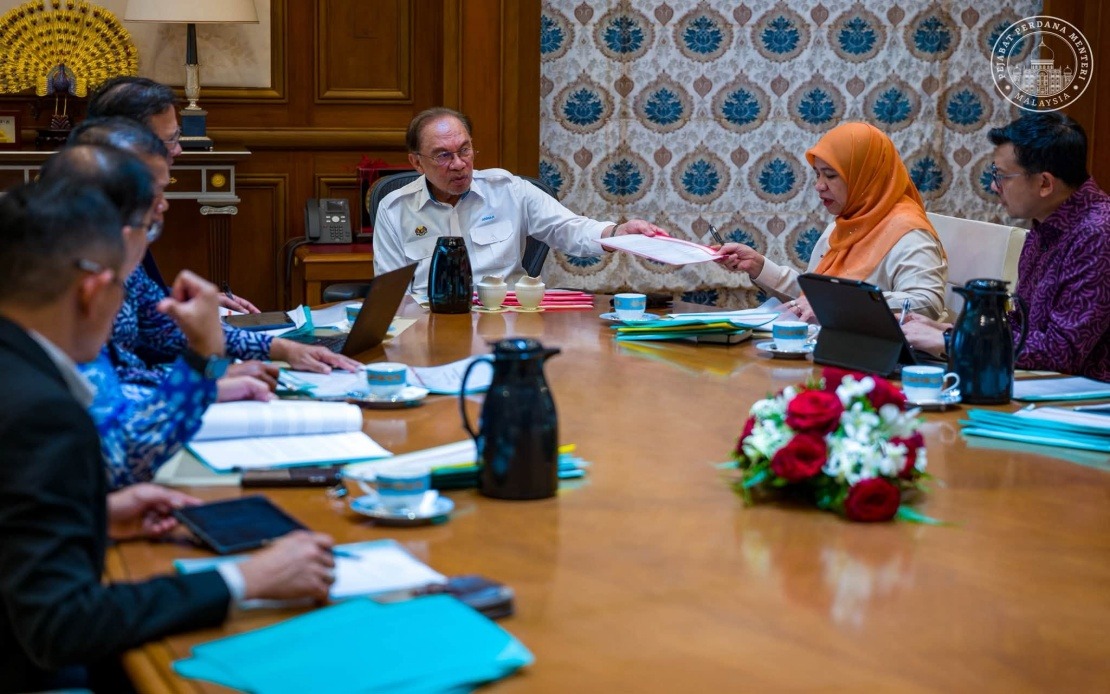
Prime Minister Datuk Seri Anwar Ibrahim has intensified pressure on the Federal Land Development Authority to tackle deep-rooted grievances among its settler communities, signalling that government patience with prolonged delays on housing and land ownership matters has expired. Speaking through a Facebook announcement, the Prime Minister underscored the urgency of action, rejecting a status quo that has allowed difficulties to accumulate across generations of FELDA residents.
The issues confronting FELDA settlers represent a microcosm of broader rural development challenges that have festered for decades. Second-generation settlers—those inheriting land and housing from their parents—have encountered systematic obstacles when attempting to formalize ownership, access development financing, or make infrastructure improvements. These complications arise from unclear titling mechanisms, bureaucratic overlap, and funding constraints that the original authority structure was never designed to handle with such complexity.
Anwar's intervention reflects growing political sensitivity around FELDA constituencies, constituencies that have historically delivered strong support to the ruling coalition but whose residents increasingly feel abandoned by government institutions. The settlers' frustrations centre on the disconnect between FELDA's original mandate—to develop and settle land for disadvantaged Malaysians—and its present capacity to resolve intergenerational property and tenure complications. Many second-generation residents find themselves trapped in legal and administrative limbo, unable to leverage their inherited assets for personal advancement.
The Prime Minister's demand for careful problem-solving represents an implicit acknowledgement that the FELDA bureaucracy has struggled to innovate responses proportionate to the scale of the challenge. By insisting on methodical examination coupled with actionable solutions, Anwar appears to be signalling that vague promises and incremental adjustments will no longer satisfy affected communities. This recalibration matters because FELDA settlements span multiple states and encompass hundreds of thousands of individuals, making their grievances a significant political flashpoint.
Within the MADANI Government's broader policy framework, FELDA revitalization carries symbolic weight beyond its direct constituency. Rural development and land governance remain central to Malaysia's socioeconomic inequality conversation, particularly as agricultural sectors face mounting pressures from climate change, labor shortages, and market volatility. If FELDA can demonstrate effective institutional renewal—particularly in modernizing its land administration systems and clarifying ownership structures—it could provide a template for broader public sector reform addressing legacy governance gaps.
The housing dimension of FELDA's difficulties intersects with Malaysia's wider affordable housing crisis. Second-generation settlers often lack the capital accumulation to construct new dwellings or substantially renovate inherited structures, yet simultaneously cannot access conventional financing because property rights remain contested or uncertified. This creates a perverse situation where potentially valuable landholdings remain underutilized, dragging down community development metrics and economic participation rates in rural zones.
Anwar's intervention also carries implicit pressure on FELDA leadership to demonstrate responsiveness and competence. Institutional inertia and bureaucratic risk-aversion have historically insulated FELDA from accountability pressures, allowing problems to compound across electoral cycles. By publicly demanding expedited resolution, the Prime Minister has essentially signalled that leadership turnover, resource reallocation, or structural reorganization remains on the table if the authority cannot deliver tangible improvements.
From a regional Southeast Asian perspective, Malaysia's struggle with land governance and rural settler schemes mirrors challenges confronting other nations with comparable histories of directed agricultural development. Countries like Indonesia and the Philippines have grappled with analogous issues regarding second-generation tenure rights and formalization of customary arrangements. Malaysia's approach to resolving these matters could offer instructive lessons—positive or cautionary—for neighbouring economies wrestling with similar institutional legacies.
The MADANI Government's broader development agenda depends partly on rebuilding trust in state institutions among communities that have been historically marginalized. Rural settlers and smallholder farmers represent constituencies capable of swaying electoral outcomes in competitive margins, yet their policy priorities often receive insufficient attention during prosperity cycles. By repositioning FELDA reform as a urgent priority rather than a routine maintenance issue, Anwar attempts to signal that his administration takes rural grievances seriously and will deploy resources accordingly.
Resolution will demand more than administrative recalibration. Genuine progress requires legislative amendments to clarify ownership succession mechanisms, dedicated financing for second-generation housing initiatives, and potentially fiscal transfers to FELDA to enable comprehensive cadastral surveys and titling updates. Without such substantive interventions, rhetorical commitments risk dissipating into hollow promises that further erode institutional credibility.
The timeline for demonstrable results remains unclear, but political momentum appears to favour acceleration. Settlers have waited decades for systemic solutions; further postponement would contradict the Prime Minister's public assertion that problems cannot be allowed to persist indefinitely. How FELDA responds to this pressure will reveal whether Malaysia's public institutions can adapt nimbly enough to address accumulated structural deficits.

