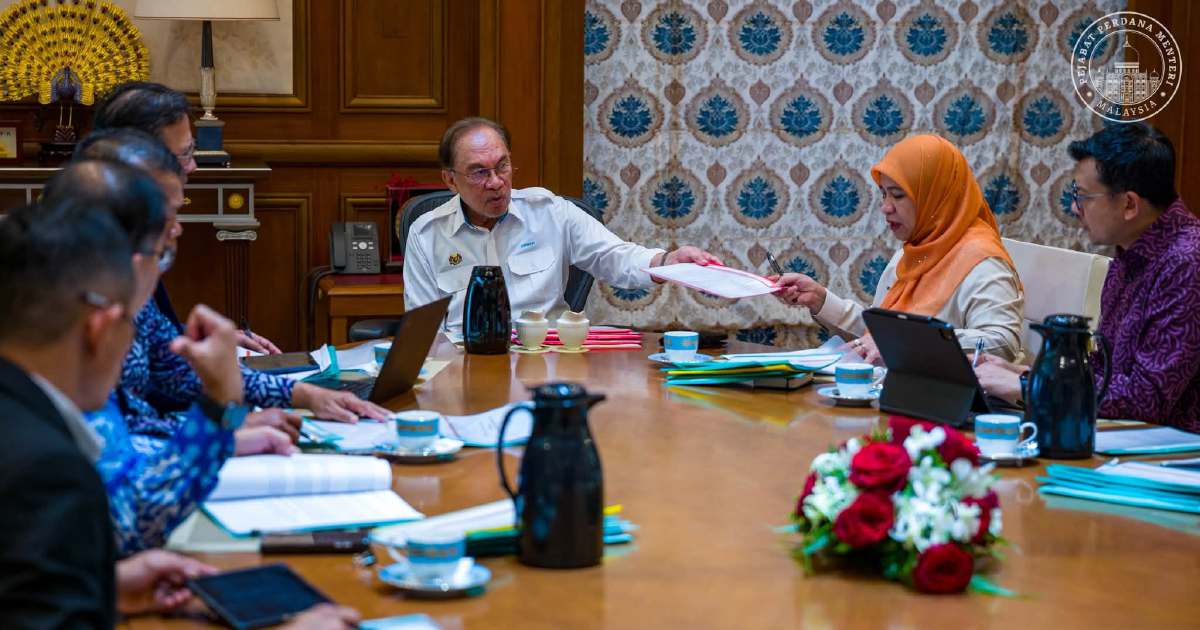
Prime Minister Datuk Seri Anwar Ibrahim has made clear that the government must act decisively to address the accumulating hardships of Federal Land Development Authority (Felda) settlers, signalling that land ownership disputes and inadequate housing for second-generation families represent a pressing policy priority requiring immediate government attention and structured reform.
The Felda scheme, launched in the 1950s as an ambitious rural development initiative, established settlements across Peninsular Malaysia where families were granted land use rights to develop agricultural estates. Decades on, many original settlers and their descendants face uncertain tenure arrangements and overcrowded family situations, as the original housing stock proves inadequate for natural population growth. These challenges have festered in recent years as economic pressures mount on farming communities and younger family members struggle to establish independent livelihoods on inherited plots.
Anwar's intervention reflects growing political pressure to address what successive administrations have deferred, treating Felda grievances as a persistent but compartmentalised issue rather than a systemic crisis. The settlers represent a significant electoral constituency, particularly in rural heartland constituencies where government support remains crucial. By prioritising swift and equitable solutions, the Prime Minister is signalling that his administration views Felda renewal as integral to broader rural development strategy rather than a legacy problem to be managed quietly.
The land ownership question cuts to the fundamental security of settler livelihoods. Many families operate on use-rights rather than full ownership, creating a precarious relationship with their primary productive asset. This arrangement limits their ability to secure bank financing, transfer holdings to heirs with legal certainty, or respond flexibly to economic pressures. Without clear pathways to ownership or enhanced tenure guarantees, settlers remain vulnerable to policy shifts or administrative decisions beyond their control.
Housing shortages for second and third-generation family members compound this instability. Original settlement designs accommodated individual settler families, but natural family expansion has left many households overcrowded or forced younger members into precarious off-farm arrangements. The scarcity of affordable housing options in rural areas means many young people cannot establish families within their home settlements, prompting rural-to-urban migration that drains communities of human capital and disrupts social cohesion.
The broader economic context intensifies these pressures. Agricultural commodity prices have stagnated while input costs rise, squeezing profit margins and forcing many settlers into supplementary income-seeking. Second-generation members increasingly seek non-agricultural employment, yet remain tied to family land through traditional inheritance arrangements or genuine economic dependence. Without viable alternatives and secure tenure, younger settlers face a bind between loyalty to family holdings and pursuit of personal economic security.
Regional parallels illuminate the challenges. Across Southeast Asia, land distribution schemes dating from the post-independence era face similar pressures as demographic change meets economic transformation. Malaysia's Felda experience offers lessons for governments managing legacy rural development commitments while supporting demographic transitions in farming communities. The model of centralised authority over settler livelihoods, appropriate for 1950s circumstances, increasingly strains under modern expectations of individual agency and market flexibility.
Resolution likely requires multi-faceted intervention. Full freehold conversion for long-standing settlers would strengthen tenure security and unlock financing options, though fiscal implications require careful evaluation. Targeted housing development programmes for second-generation families could retain younger members within settlements while building resilience. Skills development and economic diversification initiatives would broaden income opportunities beyond traditional agriculture. Governance reforms clarifying settler rights and establishing transparent mechanisms for disputes would restore confidence in the institution.
Anwar's directive also reflects recognition that Felda's institutional credibility has eroded among beneficiaries. Poor communication, opaque decision-making, and perceived mismanagement of settler interests have generated frustration extending beyond land and housing into broader governance questions. Restoring settler confidence requires not merely material solutions but demonstrated commitment to transparent, settler-centred policymaking that prioritises their long-term security over bureaucratic convenience.
The financial burden of comprehensive reform cannot be minimised. Acquiring land for second-generation housing, converting use-rights to freehold, establishing development funds, and implementing support programmes would require substantial fiscal commitment. Yet deferring action carries its own costs—accelerating rural depopulation, undermining agricultural productivity, and allowing grievances to fester until they become destabilising political issues. Early, comprehensive intervention likely proves more economical than crisis management later.
International experience suggests that successful tenure reform requires sustained commitment beyond initial announcements. Implementation agencies need adequate resources, technical capacity, and political insulation from electoral pressures to complete programmes methodically. Clear timelines and measurable outcomes help maintain momentum and demonstrate progress to sceptical beneficiaries. Settler participation in design and oversight builds legitimacy and ensures solutions address actual needs rather than bureaucratic assumptions.
Anwar's statement indicates the government recognises that rural prosperity and settler wellbeing constitute essential components of broader national development. Felda settlers, while representing a specific constituency, exemplify wider rural challenges Malaysia faces—ensuring agricultural viability, retaining population in non-urban areas, and delivering security and opportunity to communities built on post-independence social contracts. Comprehensive Felda reform signals that urban-dominated policymaking increasingly acknowledges rural stakes in national prosperity and development equity.

