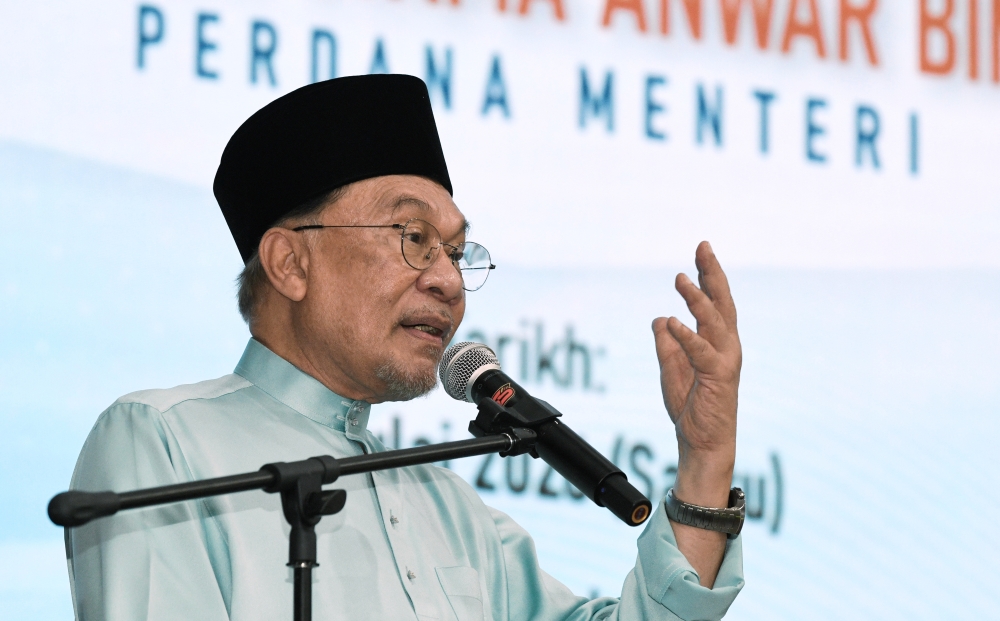
Prime Minister Datuk Seri Anwar Ibrahim has issued a forceful rebuke of Kedah Menteri Besar Muhammad Sanusi Md Nor, accusing the Perikatan Nasional-aligned leader of deploying inflammatory language that threatens national cohesion. Speaking in Seberang Perai on July 25, Anwar expressed deep concern over what he characterised as polarising rhetoric emanating from the state leadership, arguing that such commentary runs counter to the collaborative spirit needed to address Malaysia's pressing challenges.
The confrontation underscores simmering tensions within Malaysia's political landscape, where the governing Pakatan Harapan coalition and the opposition Perikatan Nasional maintain fundamentally different visions for the nation's direction. Sanusi's recent statements appear to have triggered the prime minister's intervention, signalling that Putrajaya views certain opposition utterances as sufficiently damaging to warrant public criticism at the highest level. This escalation reflects a broader pattern of increasingly heated exchanges between federal and state-level leaders representing competing political blocs.
Anwar's emphasis on unity resonates within a Malaysian context where religious and communal sensitivities remain pronounced, and where political leaders wield considerable influence over public sentiment. The prime minister's willingness to call out the Kedah chief by name suggests frustration with what federal authorities perceive as reckless disregard for national stability. Such direct confrontations, though occasionally necessary, also illustrate the fractured nature of contemporary Malaysian politics, where consensus on fundamental principles appears elusive across party lines.
The Kedah administration, under Perikatan Nasional governance since 2020, has positioned itself as offering an alternative political model to the federal coalition. This positioning sometimes manifests in rhetoric that emphasises state autonomy and challenges federal authority on various matters. Sanusi, in particular, has cultivated an image as a forthright leader willing to contest federal policies, which appeals to segments of the electorate seeking stronger regional voices. However, this approach has periodically generated friction with the federal government when commentary veers into territory deemed inflammatory or divisive.
For Malaysia's broader political ecosystem, the Anwar-Sanusi exchange carries implications extending beyond personal political rivalry. Citizens nationwide observe how federal and state leaders communicate with one another, and instances of public rebuttal can either escalate tensions or clarify red lines about acceptable political discourse. The prime minister's decision to address the matter publicly rather than through private channels suggests the statements in question crossed thresholds that federal leadership deemed intolerable.
The timing of Anwar's remarks is noteworthy, arriving at a moment when Malaysian politics confronts multiple simultaneous pressures: economic uncertainties, calls for institutional reforms, and evolving social dynamics particularly affecting younger voters. In such contexts, divisive rhetoric can distract from substantive policy discussions or exacerbate existing fractures within communities. Anwar's invocation of unity messaging attempts to redirect attention toward collaborative problem-solving, though whether such appeals resonate depends partly on whether opposing leaders reciprocate the sentiment.
Kedah's political trajectory since Perikatan Nasional assumed control has reflected broader national patterns, with the state becoming a testing ground for alternative governance models. The state administration has pursued certain policies diverging from federal approaches, sometimes generating constructive policy competition and at other times creating friction over jurisdictional clarity. The current dispute appears rooted in disagreement not merely over policy but over appropriate standards for political communication itself.
For Malaysian observers and regional analysts tracking Malaysian political development, this episode illustrates ongoing challenges to democratic maturity within the country. While political competition remains healthy, the nature and tone of that competition significantly influences whether competing visions can coexist within functional institutions. Anwar's intervention, therefore, serves partly as a reminder that federal authority still carries weight in setting expectations for how state-level leaders should conduct themselves in public discourse.
The broader context of Malaysia's federal system adds complexity to such confrontations. Menteri Besar positions confer genuine authority and represent direct accountability to state electorates, granting regional leaders legitimacy independent of federal approval. Yet federal governments retain significant constitutional powers and financial leverage, creating inherent asymmetries that can fuel resentment when power differentials translate into perceived intimidation. Balancing these structural tensions remains an ongoing Malaysian challenge.
Moving forward, how Sanusi responds will provide signals about whether political leaders across the spectrum recognise Anwar's unity appeals or whether polarisation continues deepening. The prime minister's willingness to engage in public criticism suggests patience with divisive rhetoric has limits, and that federal leadership expects state officials to exercise restraint regardless of partisan affiliation. Whether such expectations prove effective in shaping subsequent conduct, and whether opposition leaders reciprocate with their own unity messaging, will significantly influence Malaysia's political atmosphere in coming months.

