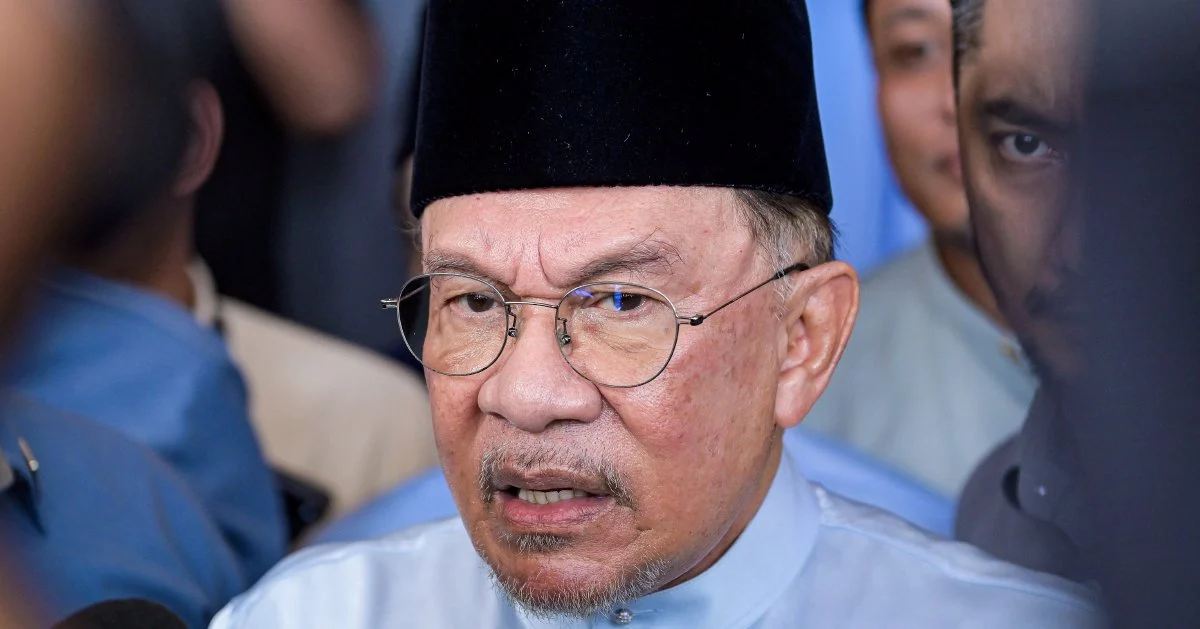
Prime Minister Datuk Seri Anwar Ibrahim has rejected allegations that caretaker Johor Menteri Besar Datuk Onn Hafiz Ghazi was barred from entering Felda settlements during an official function, asserting there was no such directive issued by his administration or officials acting under his authority.
The denial comes as suggestions circulated that the Menteri Besar faced restrictions at a Felda-related event, a claim that the Prime Minister moved swiftly to address during comments made in Dengkil. The episode highlights ongoing sensitivities surrounding inter-party dynamics within Malaysia's political establishment, particularly as Johor navigates its post-election environment and various state-level developments continue to unfold.
Anwar's statement underscores the federal government's position that access to such official functions and government-linked entities' operations should remain open to representatives of the state, regardless of current political configurations or rivalries. The clarification suggests that any perceived restriction may have been a matter of misunderstanding or localised protocol rather than a deliberate action by the Prime Minister's office or national leadership circles.
The Federal Land Development Authority (Felda) operates across multiple states and administers substantial land holdings originally designated for settlers. As a government-linked organisation, Felda events typically involve representatives from various political backgrounds and state administrations. Access to such functions is generally expected to follow standard protocol rather than be subject to political gatekeeping, particularly where state officials are concerned.
Onn Hafiz's position as caretaker Menteri Besar places him in a transitional administrative role following recent electoral contests in Johor. During such periods, maintaining institutional continuity and ensuring that state representatives can participate in activities affecting their constituencies becomes particularly important. Any actual restriction could have raised questions about the treatment of opposition or transitional officials within government-linked institutions.
The incident reflects broader patterns of scrutiny surrounding political access and institutional neutrality that have emerged in Malaysian politics over recent years. Questions about who gains entry to official functions, receives government resources, or participates in ceremonial occasions often carry symbolic weight beyond the immediate event, signalling broader messages about political inclusion or exclusion within the system.
Anwar's swift dismissal of the allegations also serves to reaffirm the federal government's commitment to maintaining institutional boundaries and preventing political considerations from influencing access to government-linked entities' functions. Such clarifications become necessary in Malaysia's polarised political environment, where claims and counter-claims about discriminatory treatment can rapidly escalate and shape public perceptions of administrative impartiality.
Felda settlements represent constituencies with distinct interests and substantial populations whose representatives, regardless of party affiliation, traditionally maintain engagement with the authority. Any systematic exclusion of state-level officials could undermine operational effectiveness and create friction between federal and state administrations, particularly in states where ruling coalitions differ between levels of government.
The Prime Minister's intervention suggests that his office takes such matters seriously enough to provide immediate public clarification rather than allowing allegations to persist unchallenged. This approach reflects lessons learned from past incidents where unclear messaging about official access created unnecessary political controversy and damaged public confidence in institutional neutrality.
For Johor specifically, the context matters considerably. The state has experienced significant political transitions in recent years, with various coalitions rotating through power. Maintaining functional relationships between state administrations and federal agencies, regardless of political alignment, remains essential for delivering public services and maintaining the effectiveness of development programmes such as those under Felda's purview.
The episode also underscores the challenges facing Malaysia's political system in distinguishing between legitimate administrative decisions and politically motivated restrictions. In an environment where trust between political opponents remains fragile, actions that could be interpreted as discriminatory—whether intentionally or not—require immediate clarification to preserve institutional credibility.
Moving forward, such incidents may prompt renewed attention to protocols governing access to government-linked entities' functions, particularly during periods of political transition or when officials from different political backgrounds need to interact at the institutional level. Clear guidelines and transparent processes could help prevent similar allegations and reinforce the principle that government institutions serve all legitimate stakeholders regardless of electoral fortunes.
Anwar's position reflects a broader commitment, articulated by his administration, toward rebuilding public trust in institutions and demonstrating that government agencies operate according to rules rather than political whim. Whether such commitments translate consistently into practice across all government-linked entities and federal agencies remains an ongoing test of the government's institutional reform agenda.

