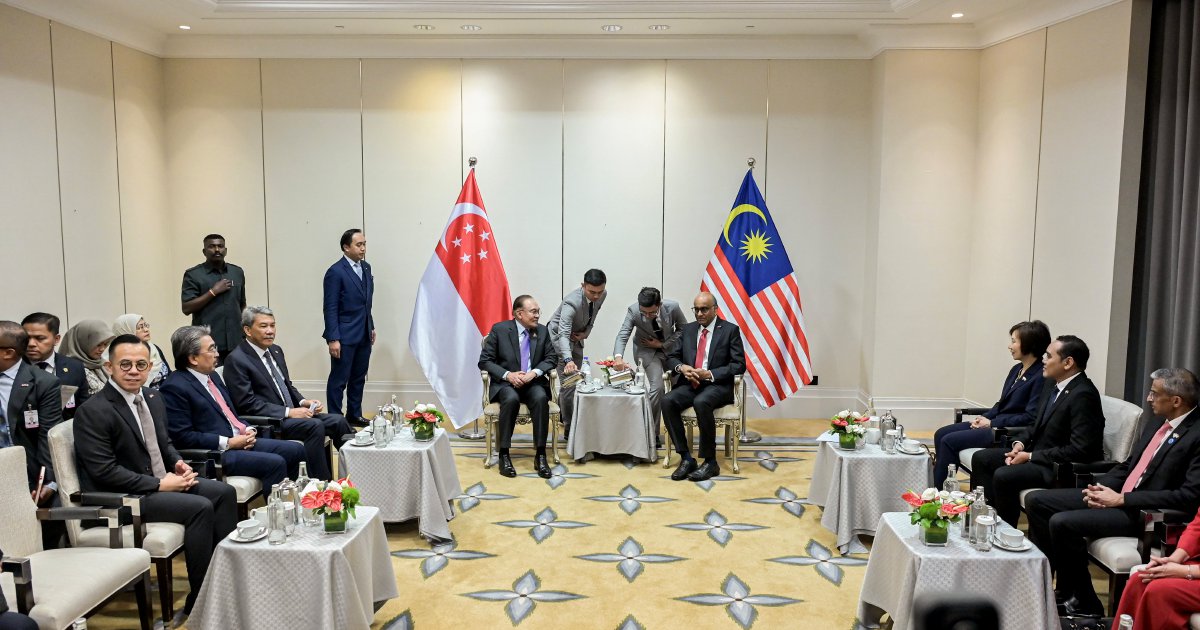
Prime Minister Datuk Seri Anwar Ibrahim welcomed Singaporean President Tharman Shanmugaratnam during an official three-day state visit to Malaysia, the two leaders meeting for extensive discussions on matters of mutual interest spanning economics, security and regional cooperation. The courtesy call, a ceremonial component of formal state visits between neighbouring countries, represents a continuation of the high-level engagement that has characterised Malaysian-Singaporean relations despite periodic disagreements on bilateral matters.
State visits between Malaysia and Singapore carry particular significance within Southeast Asia's regional architecture, as both nations function as key economic hubs and security anchors for the broader Association of Southeast Asian Nations (ASEAN) framework. The visit demonstrates the consistent diplomatic protocols observed between the two countries, irrespective of the political administration in either capital. Such visits typically serve as occasions for leaders to reaffirm commitments to shared interests whilst addressing outstanding issues in a structured environment.
The three-day itinerary reflects the comprehensive nature of engagement between Kuala Lumpur and Singapore, extending beyond ceremonial greetings to encompass substantive discussions on transnational challenges. Malaysia and Singapore maintain complex interdependencies spanning trade, maritime security, environmental management, and people-to-people connectivity. President Tharman's visit provided an opportunity to assess the trajectory of these relationships and identify areas requiring renewed attention or collaborative innovation.
Bilateral trade between Malaysia and Singapore has remained resilient despite global economic uncertainties, with both nations maintaining significant commercial interests in each other's markets. Singapore remains one of Malaysia's principal trading partners, whilst Malaysian companies and workers maintain a substantial presence in Singapore's economy. The visit likely encompassed discussions regarding trade facilitation, investment flows, and emerging opportunities within the digital economy and green transition sectors, all areas where regional cooperation could amplify competitiveness.
Security cooperation represents another critical dimension of Malaysian-Singaporean relations, with both nations sharing maritime boundaries and facing common threats including transnational crime, terrorism, and maritime piracy. The Strait of Malacca, which channels roughly a quarter of global maritime commerce, necessitates coordinated approaches to security maintenance. State visits provide the appropriate venue for security chiefs and intelligence officials to brief their leaders on strategic developments and agree upon enhanced cooperation mechanisms.
The visit also carries importance for ASEAN cohesion and regional stability. As two foundational ASEAN members with significant diplomatic and economic weight, Malaysia and Singapore's bilateral relationship indirectly shapes the grouping's internal dynamics and external engagement capacity. When relations between major ASEAN nations remain cordial and substantive, the regional body functions more effectively in addressing transnational issues and projecting coherence in international forums.
Historically, Malaysian-Singaporean relations have experienced periods of tension interspersed with pragmatic cooperation driven by geographic proximity and mutual vulnerabilities. Outstanding issues such as territorial disputes, water agreements, and maritime boundary delimitation have occasionally created friction, yet both governments have generally prioritised pragmatic problem-solving over confrontation. Presidential and prime ministerial visits serve as reset mechanisms where leaders can recalibrate relationships and demonstrate commitment to peaceful coexistence.
President Tharman's tenure has coincided with evolving regional geopolitical currents, including technological competition among major powers, climate change pressures, and pandemic-related economic disruptions. His visit to Malaysia allowed both leaders to coordinate positions on regional development priorities and discuss how Malaysia and Singapore might collaborate more effectively in responding to transnational challenges that transcend traditional borders and require cross-jurisdictional solutions.
The broader context of this visit includes Malaysia's role in balancing great power relations within the Indo-Pacific region. As both a non-aligned nation seeking strategic autonomy and a participant in various multilateral frameworks, Malaysia values strong relationships with economically dynamic and diplomatically influential neighbours like Singapore. The visit reinforced Malaysia's commitment to maintaining stable, forward-looking relations with immediate neighbours as a foundation for broader regional engagement.
Official state visits between Asian nations increasingly emphasise substantive outcomes beyond ceremonial dimensions, reflecting evolving expectations regarding high-level diplomatic engagement. During his three-day stay, President Tharman likely engaged not only with the Prime Minister but also with senior officials across multiple government agencies, allowing for deep-level discussions on sectoral cooperation spanning finance, technology, infrastructure, and human capital development.
Looking forward, the visit underscores the ongoing importance of maintaining robust diplomatic channels at the highest levels between Malaysia and Singapore, particularly as both nations navigate regional economic transition and respond to shifting international security dynamics. Enhanced coordination between the two nations on emerging issues such as artificial intelligence governance, supply chain resilience, and clean energy transition could generate positive spillover effects throughout Southeast Asia.
The reception extended to President Tharman demonstrates Malaysia's commitment to fostering stable, mutually beneficial relations with Singapore, recognising that the prosperity and security of both nations are fundamentally interlinked. Future engagement building on this visit will likely focus on translating diplomatic goodwill into concrete collaborative initiatives that address shared challenges whilst generating mutual economic and social benefits for both populations.

