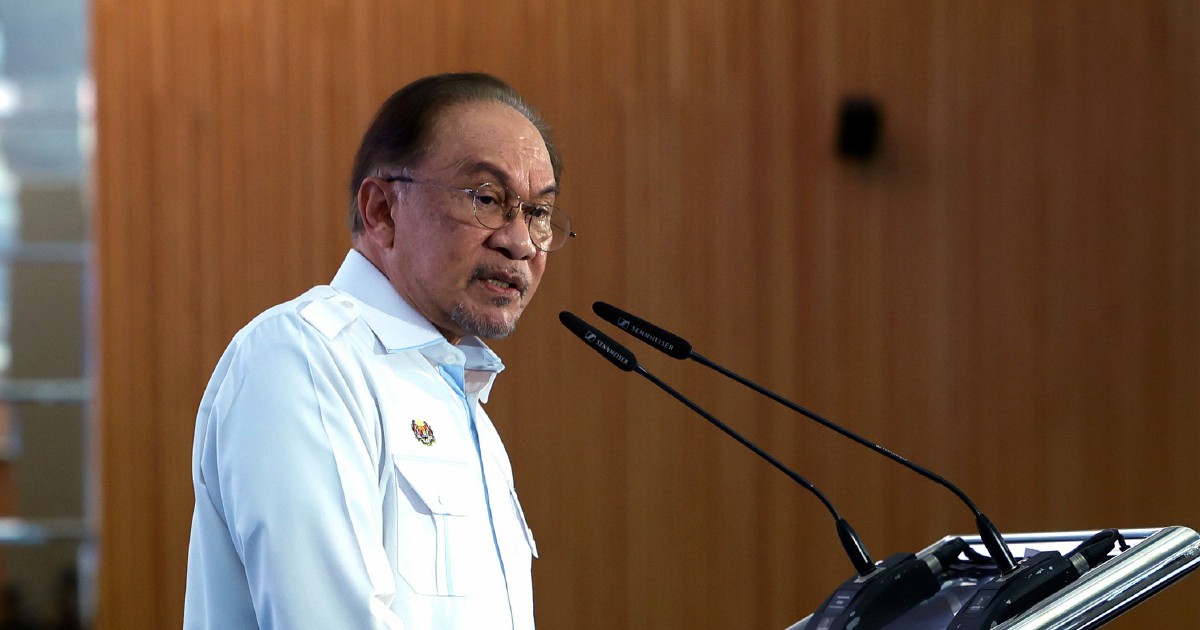
Prime Minister Datuk Seri Anwar Ibrahim has firmly denied persistent allegations that Putrajaya distributes development budgets in a manner that unfairly favours certain states over others, a sensitive political issue that has periodically surfaced in Malaysia's federal-state relations.
The matter of how federal resources flow to the various states represents one of the more contentious aspects of Malaysian governance, particularly among state governments governed by opposition parties who frequently contend they receive proportionally smaller allocations. This tension stems from the constitutional arrangement whereby the federal government controls a substantial portion of the nation's revenue sources and retains considerable discretion in determining development spending across different regions.
Anwar's dismissal of these allegations comes amid broader efforts by his administration to reshape how the federal government engages with states across the political spectrum. The Pakatan Harapan-led coalition government has sought to present itself as committed to equitable treatment of all states regardless of their political alignment, a pledge that carries particular weight given Malaysia's history of centre-periphery resource competition.
The distribution of development funds has historically been a flashpoint between federal administrations and state governments, especially in states controlled by opposition coalitions. Allegations periodically emerge that the ruling coalition directs disproportionate resources toward states governed by its allies while constraining allocations to opposition-controlled territories. These claims, whether substantiated or not, feed into broader narratives about partisan resource management and federal dominance in the Malaysian political system.
The Prime Minister's position reflects a technical reality that federal development allocations are typically determined through established formulae and planning frameworks rather than through purely discretionary means. These mechanisms take into account demographic factors, development indicators, and existing infrastructure gaps when determining how development funds are apportioned. However, critics argue that the criteria themselves can be manipulated to favour certain regions, and that implementation often deviates from stated principles.
From a Malaysian governance perspective, this issue intersects with deeper questions about intergovernmental relations and federal balance in a system where some states possess significantly greater economic resources and population than others. Wealthier states like Selangor and Johor generate substantial internally generated revenue and carry more economic weight in national deliberations, while smaller and less developed states depend more heavily on federal allocations. This structural asymmetry inevitably creates tensions over resource distribution.
The political dimensions of development allocation have become more pronounced in recent years as Malaysia's political landscape has fragmented into competing coalitions holding power in different states. When federal and state governments belong to opposing political camps, questions about resource equity become particularly contentious. Opposition-governed states have increasingly articulated grievances about supposed federal neglect, leveraging such allegations in their own political messaging to their constituencies.
Anwar's remarks should be understood within the context of his government's broader agenda of political renewal and institutional reform. The administration has signalled commitment to professionalizing federal-state relations and moving away from what it characterizes as the patronage-driven approach of previous governments. Whether this translates into tangible changes in how development funds are distributed remains to be assessed through budget allocations and implementation patterns over time.
Malaysian economists and policy analysts have long debated the optimal mechanisms for federal resource distribution. Some advocate for greater transparency in allocation criteria and more automated formulae that reduce discretionary elements. Others contend that development strategies should prioritize need-based assessments and targeted interventions in lagging regions, which might necessitate differential funding levels. These competing frameworks reflect genuine disagreements about how best to pursue national development objectives while maintaining political equity.
The sustainability of Anwar's position depends partly on demonstrating through actual budget outcomes that the federal government does indeed treat all states equitably. Opposition-governed states will likely scrutinize the forthcoming budget to verify whether development allocations align with stated principles, and discrepancies could reinforce existing allegations. This creates pressure on the administration to ensure that development spending patterns support its rhetorical commitments.
For Southeast Asian observers, Malaysia's experience highlights challenges that federal systems face in managing resource distribution across constituent units with asymmetric political power and economic capacity. How Putrajaya resolves these tensions may influence how other regional governments approach similar federalism questions, particularly as political competition intensifies across Southeast Asia.
Moving forward, meaningful progress on this issue would likely require both enhanced transparency mechanisms and possibly recalibrated formulae that explicitly address equity concerns. This might involve independent oversight of allocation decisions or more explicit legislative guidance on distributional principles. Until such measures are implemented, allegations of unequal federal treatment are likely to persist as a recurring feature of Malaysian political discourse, regardless of official denials.

