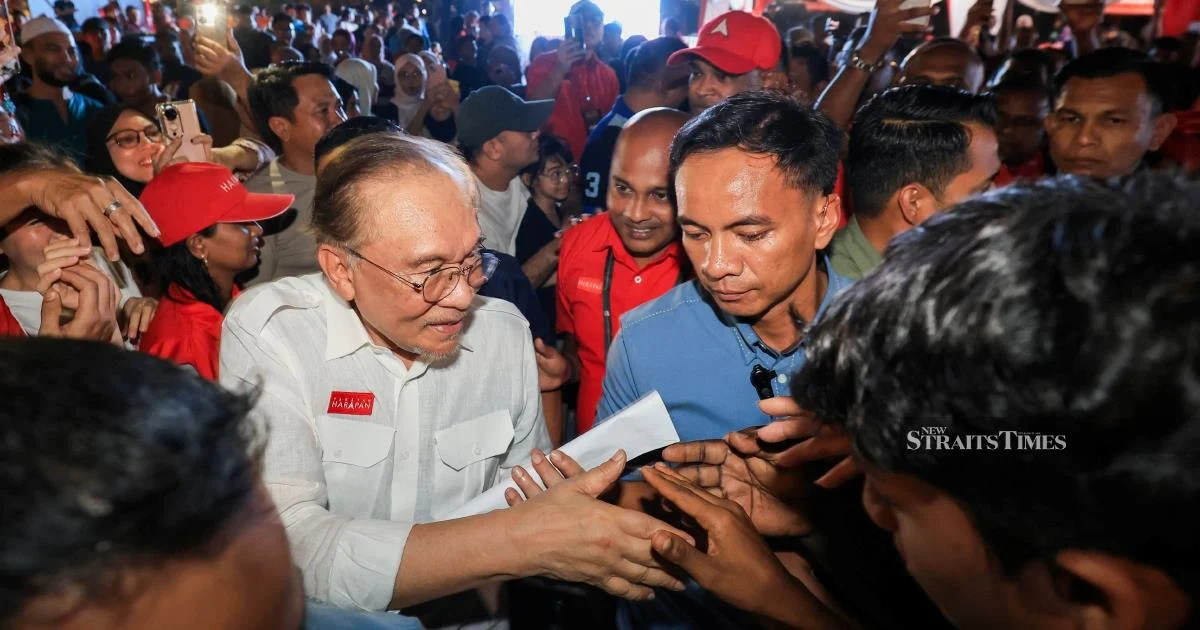
Prime Minister Datuk Seri Anwar Ibrahim has brushed aside mounting pressure from opposition figures calling for Parliament to be dissolved and early elections held, reasserting that the current administration maintains sufficient electoral legitimacy to govern effectively. The statement underscores his administration's determination to see through its legislative agenda despite ongoing political turbulence in the Malaysian parliament.
The prime minister's position reflects a broader strategy to stabilize governance during a period of political uncertainty. Since taking office, Anwar has navigated a complex coalition of multiple political parties with competing interests, a situation that has repeatedly tested the cohesion of his administration. The unity government, which spans parties across the political spectrum, was formed after the 2022 general election produced a fractured Parliament where no single coalition commanded a decisive majority.
Dissolving Parliament prematurely would trigger a cascading series of complications for the government's ongoing initiatives. Multiple legislative projects, including economic reforms and infrastructure developments, remain at various stages of implementation. An extended campaign period would inevitably interrupt these programs and redirect administrative focus toward electoral preparation rather than governance. The early election scenario has gained traction among certain opposition quarters as a potential mechanism to capitalize on perceived weaknesses in Anwar's coalition.
The constitutional threshold for dissolving Parliament and calling fresh elections rests with the prime minister's recommendation to the Yang di-Pertuan Agong. While Anwar technically possesses this power, exercising it would be a calculated political gamble given the unpredictability of electoral outcomes. The Malaysian electorate has demonstrated increasing volatility since 2018, with voters willing to dramatically shift support between consecutive elections. Such uncertainty has made early polls a genuinely risky proposition for any governing coalition currently in power.
The regional context adds another dimension to Anwar's position. Southeast Asia has witnessed several instances of political instability following premature elections, with governments losing power suddenly and destabilizing broader policy continuity. By maintaining that his government retains adequate authority to govern, Anwar signals to international observers and economic stakeholders that Malaysia remains politically stable and capable of executing long-term strategic plans critical to the nation's development.
The composition of the unity government itself contains inherent tensions that regularly surface in parliamentary deliberations. While the coalition has held together despite numerous tests, each partner organization maintains distinct constituency expectations and policy preferences. An early election would force these parties to compete separately for voter support, potentially fragmenting the current working arrangement and creating greater political uncertainty than exists at present.
Public commentary on early elections has become increasingly polarized, with supporters of the Anwar administration citing the need for continuity while opposition movements argue that public opinion has shifted sufficiently to warrant a fresh mandate. Polling data on voter sentiment remains contested, with different surveys producing divergent conclusions about the current government's popularity. This conflicting information itself represents a cautionary factor against rushing to electoral decisions.
Anwar's insistence on completing the government's full term also positions him strategically within his own coalition. Accepting pressure for early elections could be interpreted as weakness by junior partners, potentially emboldening them to make additional demands or conditional threats. By firmly rejecting such calls, the prime minister reinforces his authority within the governing structure and establishes that major decisions rest with his leadership rather than responding to external pressure.
The economic dimension cannot be overlooked when considering election timing. Malaysia faces recovery challenges following pandemic-related disruptions, with growth targets dependent on sustained policy implementation. Market confidence in the government's ability to execute economic plans would likely deteriorate during an extended election campaign, potentially impacting investor sentiment and foreign direct investment flows during a critical period for national financial stability.
Historically, Malaysian governments have typically sought to dissolve Parliament when internal coalition assessments suggested electoral victory was probable. The current government's reluctance to call early polls suggests that internal calculations do not favor taking such a risk at present. This pragmatic assessment reflects realistic evaluation of coalition strength and voter sentiment rather than merely ideological commitment to a particular governance term length.
Anwar's statement also carries implications for parliamentary procedure and legislative productivity moving forward. If opposition parties intensify calls for early elections while the government remains committed to completing its term, parliamentary sessions may become increasingly contentious. Managing this tension while maintaining sufficient focus on essential legislation will require skillful navigation of procedural rules and coalition discipline.
Looking ahead, the government faces the fundamental challenge of demonstrating tangible improvements in areas critical to Malaysian voters: economic opportunity, cost of living pressures, and service delivery quality. Should Anwar's administration successfully address key public concerns, the case for early elections would further diminish. Conversely, if public dissatisfaction deepens substantially, pressure for early polls would likely intensify regardless of the government's stated position, creating a potential future flashpoint in Malaysian politics.

