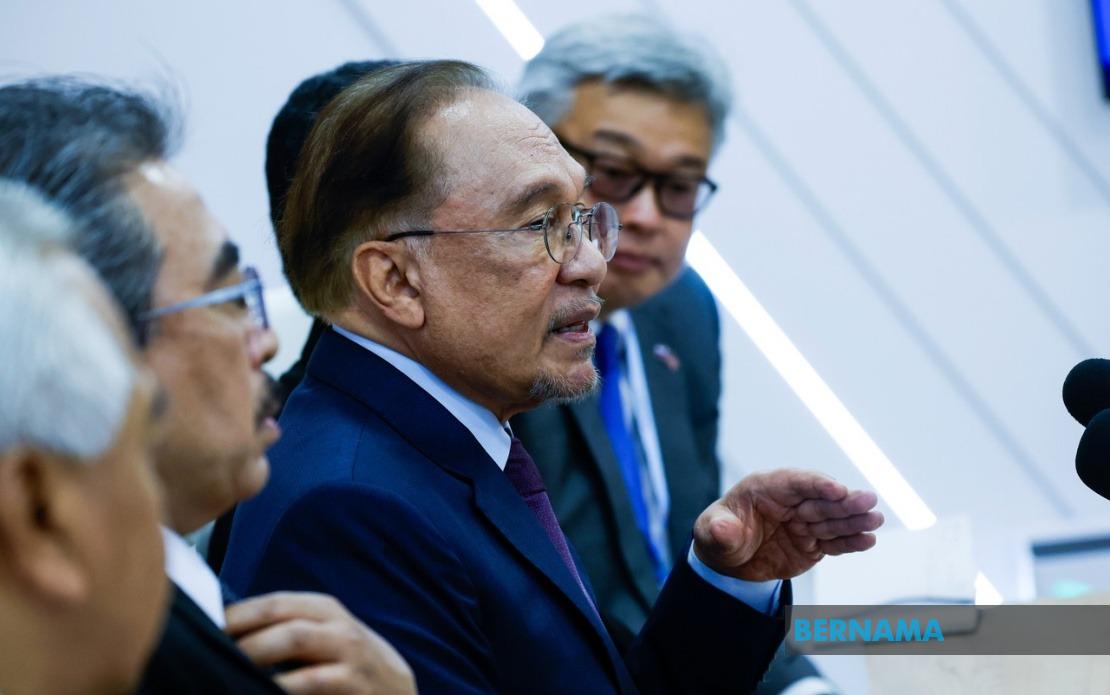
Prime Minister Datuk Seri Anwar Ibrahim's two-day mission to Kazan has yielded tangible gains for Malaysia's energy security strategy, with Russia pledging to anchor long-term petroleum and natural gas supplies rather than relying on the traditional cycle of annual or seasonal renewals. The breakthrough represents a strategic pivot for a nation increasingly conscious of global energy volatility and geopolitical unpredictability that could disrupt conventional supply chains. Speaking after the ASEAN-Russia Commemorative Summit, Anwar emphasised that the arrangement would provide Malaysia with the stability necessary to plan infrastructure investments and industrial expansion with greater confidence, fundamentally distinguishing this arrangement from transactional short-term procurement that leaves economies vulnerable to sudden price shocks or supply interruptions.
The mechanics of this energy partnership are already advancing toward formal conclusion. Anwar revealed that Russian company representatives have visited Malaysia, preliminary frameworks have been negotiated, and the groundwork for finalising the agreement is substantially complete. The iterative process now requires final review and signature from both delegations, which the Prime Minister indicated would accelerate upon his return to Kuala Lumpur. This procedural clarity suggests that what began as a geopolitical conversation has matured into detailed commercial negotiations, with both governments invested in expediting implementation rather than allowing bureaucratic machinery to slow momentum.
The energy diversification imperative driving Malaysia's overture to Russia reflects mounting anxiety about supply chain concentration. Global energy markets remain hostage to unpredictable geopolitical developments—conflicts in the Middle East, tensions in Eastern Europe, and sanctions regimes that can rapidly reconfigure trade flows. For Malaysia, an economy dependent on petroleum imports and facing competition from neighbouring refiners, locking in reliable Russian supplies mitigates exposure to these shocks. The transition from volatile seasonal contracts to multi-year frameworks transforms energy from a constant concern into a managed, predictable input, allowing policymakers to focus on value-added activities rather than perpetual supply negotiations.
Beyond hydrocarbons, the bilateral relationship is broadening substantially. During separate discussions with Rais Rustam Minnikhanov of Tatarstan, Anwar explored opportunities spanning trade, investment, education, tourism, the halal industry, and technological collaboration. Tatarstan's significance as one of Russia's major oil-producing regions means the regional relationship carries weight equivalent to bilateral engagement with Moscow itself. The explicit inclusion of downstream oil and gas activities, refining, and petrochemicals in these conversations indicates Malaysia's ambition to develop not merely as an importer of raw energy but as a processor and value-creator, mirroring the industrial strategy that transformed its position in electronics and automotive sectors.
The economic data underscores the relationship's growing materiality. Malaysia-Russia bilateral trade in 2025 reached RM8.72 billion, positioning Russia as the ninth-largest European trading partner, a ranking that obscures the upward trajectory and strategic importance of the relationship. Malaysian exports—primarily electrical and electronic goods alongside processed food—demonstrate the complementary nature of both economies. However, the trade balance heavily favours Russian energy exports, confirming Malaysia's structural dependency on Russian oil, gas, minerals, and chemicals. This asymmetry makes long-term supply agreements strategically prudent, as Malaysia lacks offsetting leverage to demand favourable pricing; instead, it must pursue supply security through predictability.
The broader Southeast Asian context amplifies Anwar's bilateral achievements. The ASEAN-Russia Strategic Programme on Trade and Investment Cooperation 2026-2035, finalised during the summit, establishes a regional framework that could multiply Malaysia's benefits through coordinated procurement, shared infrastructure investment, and collective negotiating strength. In 2024, total ASEAN-Russia trade reached US$18.1 billion, a figure that pales beside ASEAN-China or ASEAN-United States flows but reflects untapped potential. Russian foreign direct investment in ASEAN totalled only RM367.90 million, suggesting enormous room for capital inflows if the region can present itself as attractive, stable, and strategically aligned with Russian interests.
Anwar's framing of Malaysia's approach—calling for bolder, more proactive economic engagement rather than cautious isolationism—signals a deliberate repositioning in Malaysia's international economic strategy. This rhetoric implicitly critiques an older paradigm in which Malaysian policymakers avoided appearing too cosy with non-Western powers, fearing Western economic consequences or strategic complications. The Kazan visit demonstrates that such caution is now perceived as economically irrational. Diversification demands pragmatism: energy comes from Russia, capital from China, technology from the West, and tourists from everywhere. Strategic autonomy in Malaysia's lexicon increasingly means freedom to source energy, investment, and expertise from multiple partners rather than narrow dependence on traditional Western suppliers.
The logistical elements of this engagement—visa-free travel and direct flights between Malaysia and Russia—address real barriers to deepening ties. Commercial relationships flourish when executives, engineers, and traders can move freely; tourism multiplies when travel is convenient. These practical measures, though unglamorous, unlock the people-to-people exchanges that sustain long-term partnerships beyond the fluctuations of political cycles. For Malaysian businesses seeking to invest in Russia or establish joint ventures with Tatarstan enterprises, simplified visa procedures eliminate friction that currently directs entrepreneurial energy toward easier destinations.
The Central Asian trajectory of Anwar's journey reveals the comprehensiveness of Malaysia's energy strategy. From Kazan, the Prime Minister proceeded to Turkmenistan, another major hydrocarbon exporter with untapped capacity and strategic positioning along the corridor connecting the Caspian region to Asian markets. This sequential engagement—Russia then Turkmenistan—suggests Malaysia is methodically constructing a diversified energy portfolio that hedges against any single supplier's vulnerabilities. Turkmenistan's vast natural gas reserves and relative isolation from Western sanctions regimes make it an attractive partner, particularly if Malaysia can negotiate transit arrangements that provide stable long-term access independent of volatile spot markets.
The geopolitical undercurrents merit acknowledgment. Malaysia's deepening engagement with Russia and Central Asia occurs amid broader realignment in which ASEAN nations navigate between Washington, Beijing, and Moscow with increasing sophistication. The visit deliberately avoids confrontational posturing toward the West—Anwar expressed hope for US-Iran peace agreements—while pursuing practical cooperation with Russia unburdened by ideological constraint. This triangulation reflects the reality that a nation of Malaysia's size survives and prospers by managing great power competition rather than choosing sides, maintaining sufficient strategic distance from all to preserve autonomy.
The energy security architecture emerging from Anwar's diplomatic mission addresses a genuine structural vulnerability. Malaysia's historical reliance on Middle Eastern oil and gas has exposed the nation to regional instability, while competition from China and India for available supplies has tightened global markets. By establishing long-term supply relationships with Russia and exploring Turkmenistan's potential, Malaysia reduces vulnerability to any single regional disruption and gains predictable access to competitive supplies. For a nation where electricity generation and petrochemical industries form backbone sectors, this shift from episodic procurement to strategic partnership represents an inflection point toward greater economic resilience.
The negotiating framework that emerged in Kazan also establishes precedent for future engagement. By demonstrating that Malaysia can negotiate substantive, multi-year energy agreements with major suppliers, the government creates conditions under which other partners—whether in Central Asia, North Africa, or elsewhere—recognise Malaysia as a serious, creditworthy customer capable of executing complex arrangements. This reputation for reliability and follow-through will compound over time, making subsequent negotiations progressively easier and allowing Malaysia to shift from supplicant to partner in energy discussions.

