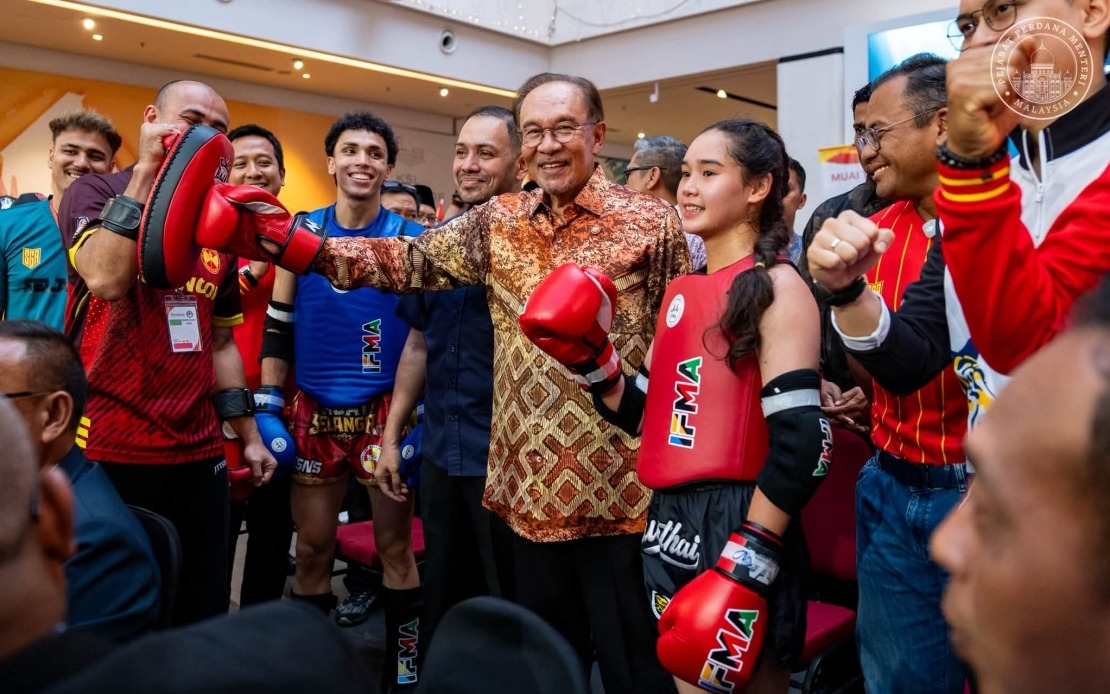
Prime Minister Datuk Seri Anwar Ibrahim has voiced optimism about Malaysia's future sporting talent after witnessing the calibre of competition at the 2026 Selangor Malaysia Games, with particular encouragement for young competitors to pursue international representation. Speaking after observing Muay Thai events at the biennial championship, Anwar commended the exceptional spirit and discipline displayed by the athletes, signalling the government's confidence in nurturing the next generation of national sports ambassadors.
The SUKMA Games, Malaysia's premier inter-state sporting competition, represents a critical development pipeline for identifying and cultivating elite athletes. The 2026 edition marks a significant milestone for Selangor, which is hosting the games for only the second time in nearly three decades. This return to the host role underscores the state's capacity to manage large-scale sporting events and its commitment to promoting athletic excellence across the nation's youth population.
The scale of this year's competition demonstrates the breadth of sporting talent distributed across Malaysia. With more than 5,000 young athletes converging on the state to contest 468 gold medals across 37 sporting disciplines through August 24, the games provide an unparalleled platform for emerging competitors to demonstrate their capabilities. The diversity of sports represented—from traditional martial arts like Muay Thai to mainstream Olympic disciplines—reflects the multifaceted nature of Malaysian athletic development.
Anwar's public acknowledgement of the athletes' qualities carries significance beyond mere ceremonial observation. As Prime Minister, his endorsement serves to elevate the status of grassroots sports development and signals governmental interest in translating domestic success into international achievement. The emphasis on young athletes progressing to represent Malaysia globally aligns with the country's broader sporting aspirations, particularly as it competes within Southeast Asia and on the world stage.
The Muay Thai events that Anwar attended hold particular relevance within the Malaysian sports context. Traditional combat sports have gained increasing prominence in Malaysia, with the nation developing notable competitors in various martial disciplines. The presence of Muay Thai at SUKMA reflects evolving attitudes towards combat sports as legitimate competitive pursuits worthy of official recognition and sponsorship at regional championships.
Selangor's hosting responsibilities extend beyond mere logistics. As the nation's economic powerhouse and most densely populated state, Selangor's ability to stage the games successfully has implications for how other states manage sporting infrastructure and athlete development programmes. The state's experience managing such a large contingent of young competitors and officials serves as a benchmark for future host states and contributes to building institutional knowledge about event management within Malaysia's sports system.
The pathway from SUKMA participation to international competition remains crucial for Malaysian athletic development. Success at the games has historically translated into opportunities at Southeast Asian Games, Commonwealth Games, and Olympic competitions. Anwar's explicit hope that these young athletes will eventually compete internationally acknowledges this pipeline and emphasises the government's recognition that domestic success must convert into sustained international performance to enhance Malaysia's sporting reputation.
The Prime Minister's engagement with athletes at grassroots level also reflects broader government strategy to maintain visibility within sporting communities. Political leaders often utilise such opportunities to demonstrate commitment to youth development and national pride, reinforcing the narrative that investment in young talent constitutes investment in Malaysia's future. Anwar's presence at the games and his subsequent public comments ensure media coverage extends the motivational impact beyond those physically present at the events.
Looking forward, the concentration of athletic talent at SUKMA creates opportunities for sports administrators to identify candidates for targeted development programmes and international representation. Coaching staff, sports medicine professionals, and talent scouts use such championships to assess which athletes merit additional investment and support. The 2026 games thus function as both a competitive arena and a recruiting ground for Malaysia's various national teams and sports bodies.
The competitive intensity at SUKMA also exposes young athletes to the pressures and demands of high-level sport at an earlier stage than would otherwise occur. Competing before large audiences, against fierce rivals from other states, and under intense media scrutiny mirrors the conditions they would face in international competition. This exposure helps identify not only technical ability but also psychological resilience and mental fortitude—qualities increasingly recognised as essential for international success.
Anwar's remarks also implicitly acknowledge that Malaysia's international sporting ambitions depend fundamentally on the quality of domestic talent development systems. Without strong grassroots competition and identification mechanisms like SUKMA, the nation struggles to produce consistently competitive performers at regional and world championships. By publicly valorising the athletes and the games themselves, Anwar reinforces the importance of sustained investment in domestic sports infrastructure and youth development programmes that feed the national system.

