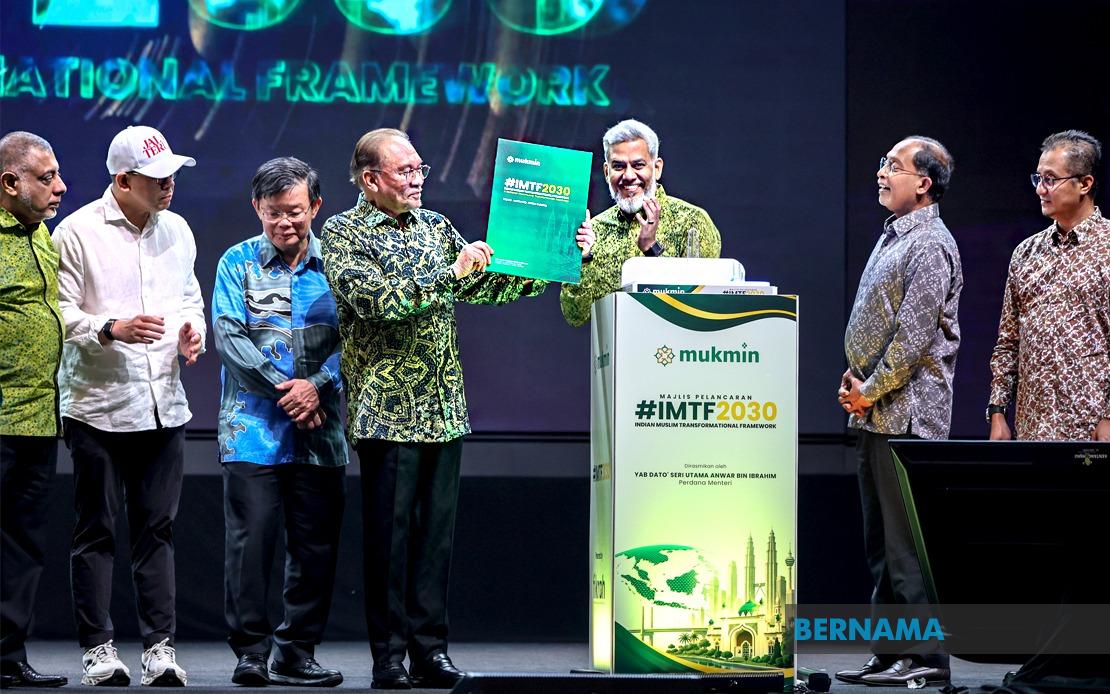
Prime Minister Datuk Seri Anwar Ibrahim has issued a firm ultimatum to the relevant government agencies, demanding that they resolve the mounting complications surrounding foreign worker hiring within a single month. Speaking at the launch of the Indian Muslim Transformational Framework 2030 in Butterworth on July 24, Anwar acknowledged the acute pressures facing Malaysia's hospitality sector whilst maintaining the government's commitment to regulated labour migration. The directive takes immediate effect from Monday, signalling the administration's intent to act decisively on an issue that has become increasingly urgent for businesses dependent on migrant labour.
The restaurant industry has emerged as a particular flashpoint in Malaysia's ongoing labour shortage crisis. Business owners have repeatedly petitioned the government for expedited approval of foreign worker applications, arguing that staffing deficits are hampering service quality and operational viability. Anwar's announcement reflects this reality, placing restaurants at the top of the government's resolution hierarchy. However, the Prime Minister's framing of the issue reveals the delicate balancing act facing policymakers—the need to fill genuine workforce gaps without opening Malaysia to uncontrolled migrant labour inflows that might undermine wages and working conditions for local citizens.
Anwar's statement underscores a fundamental tension in Malaysia's approach to foreign labour. The government remains acutely conscious that the country already hosts a substantial migrant workforce, including many individuals in unskilled positions, and simply expanding quotas risks exacerbating social and economic pressures. Anwar's reference to the nation having "too many foreign workers, including unskilled ones" suggests the administration is grappling with legacies of past hiring decisions that may have created structural dependencies on cheap migrant labour. Yet he simultaneously acknowledged that certain sectors face genuine, acute shortages that cannot be resolved through local recruitment efforts alone.
This policy review builds upon earlier Cabinet discussions led by Communications Minister Datuk Seri Fahmi Fadzil, who signalled that the government would examine foreign worker requirements across multiple sectors, not merely hospitality. Construction has also been flagged as a sector requiring attention, pointing to broader challenges facing Malaysia's labour market beyond restaurants. The scope of this review suggests that the administration recognises foreign worker policy requires comprehensive recalibration rather than ad-hoc sector-by-sector responses.
Malaysia's existing foreign worker framework establishes clear numerical constraints. The 12th Malaysia Plan stipulates that migrant employees cannot exceed 15 per cent of the national workforce, with the 13th Malaysia Plan (13MP) setting an ambitious target of reducing this to 10 per cent by 2030. This downward trajectory reflects government thinking about long-term labour force composition and the desirability of reducing structural reliance on foreign workers. However, achieving this reduction whilst simultaneously addressing sector-specific labour shortages presents a genuine policy puzzle that the one-month deadline is intended to help resolve.
The announcement comes as Anwar, wearing his parallel hat as Finance Minister, approved a RM2 million allocation to support MUKMIN's educational and welfare initiatives for children from disadvantaged families. This dual announcement—addressing both labour market pressures and educational equity—reflects a broader government philosophy attempting to balance immediate economic needs with longer-term social development. The allocation signals that whilst resolving foreign worker issues remains a priority, the administration simultaneously recognises that investing in local human capital development remains essential to reducing labour market imbalances over the medium to long term.
For Malaysian restaurant operators, the one-month timeline offers a glimmer of relief, though considerable uncertainty remains about whether bureaucratic processes can be genuinely accelerated. Many establishments have struggled with extended application processing times, staff retention challenges, and the operational disruptions caused by understaffing. The hospitality sector has been particularly battered by labour exodus, with workers seeking positions in higher-wage economies or alternative industries perceived as offering better working conditions. Fast-tracking foreign worker approvals represents a short-term pressure valve, but industry observers question whether temporary labour imports address underlying structural issues in Malaysia's hospitality employment landscape.
The regional implications of Malaysia's foreign worker policy shift merit consideration. As a major labour-importing nation within Southeast Asia, Malaysia's hiring practices influence migration patterns across the region and affect neighbouring countries' own labour market dynamics. Thailand, Indonesia, and the Philippines are significant sources of Malaysian workers, and shifts in Malaysian hiring priorities create ripple effects throughout these economies. A more selective, prioritised approach to foreign worker recruitment could redirect labour flows to other regional destinations or prompt sending countries to reassess their own labour export strategies.
Implementing the one-month resolution effectively will require genuine inter-ministerial coordination and willingness to streamline application processing without compromising security or worker protection screening. The Human Resources Ministry, in collaboration with industry regulators, must devise rapid evaluation mechanisms that maintain standards whilst accelerating approvals. This represents both an operational and philosophical challenge—demonstrating that expedited processes need not equate to diminished oversight. Success will likely hinge on whether government agencies can differentiate between genuinely urgent requirements and less critical applications, prioritising restaurants and construction whilst managing competing demands from other sectors seeking similar concessions.
Beyond the immediate one-month horizon, Malaysia faces broader questions about its labour market trajectory. The government's stated ambition to reduce foreign worker ratios to 10 per cent by 2030 requires substantial systemic change, including wage adjustments, working condition improvements, vocational training expansion, and productivity gains that reduce labour intensity across the economy. Simply restricting foreign worker inflows without addressing underlying labour demand dynamics risks creating acute shortages that harm economic competitiveness. The current crisis in hospitality services may presage broader challenges across multiple sectors unless complementary workforce development policies are aggressively pursued.
Anwar's deadline also carries implicit political messaging. The directive demonstrates prime ministerial responsiveness to business sector concerns whilst maintaining principled opposition to unlimited foreign labour migration. This positioning may help the government navigate criticism from both labour-intensive businesses demanding unrestricted hiring and local workers fearing wage suppression and employment displacement. By setting a specific, measurable timeline and emphasising regulatory discipline, Anwar signals that the government takes labour market management seriously rather than defaulting to ad-hoc solutions whenever industry pressure mounts.
The success of this initiative will be closely monitored by Malaysian business chambers, labour groups, and regional observers. A successful resolution within the timeframe would bolster government credibility on economic management, whilst delays would reinforce perceptions of bureaucratic dysfunction. For the restaurant sector specifically, the next month represents a critical test of whether policy directives from the top can translate into tangible improvements in hiring processes and labour availability.

