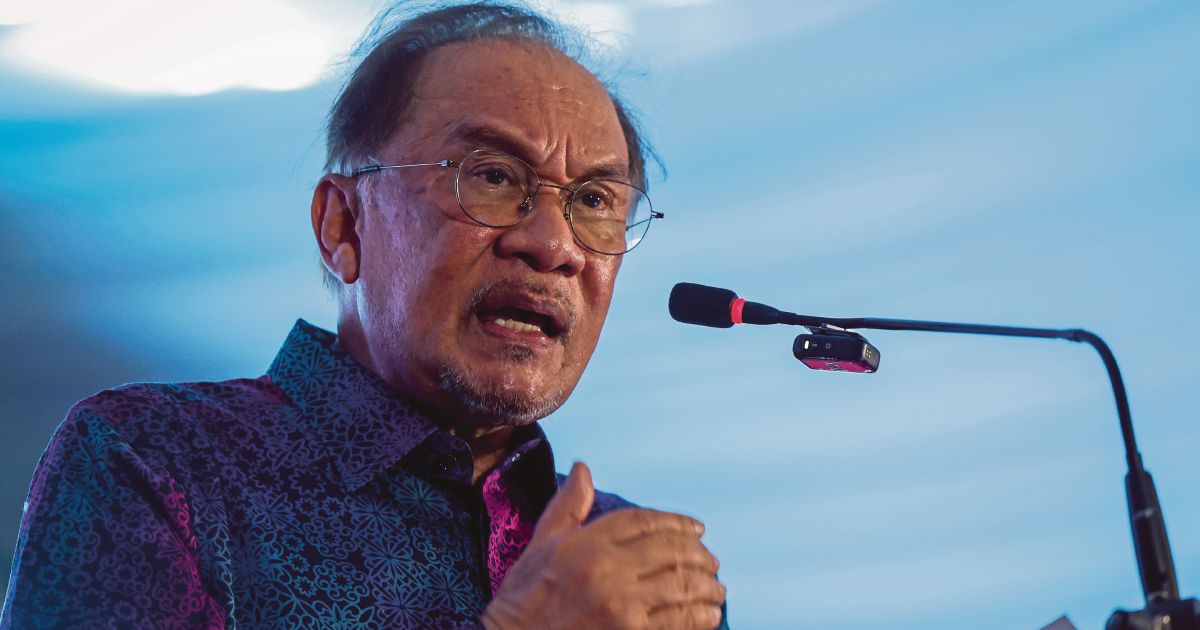
Prime Minister Datuk Seri Anwar Ibrahim has repositioned the parliamentary narrative surrounding the Royal Commission of Inquiry into Tabung Haji, maintaining that substantive discussion of the report's findings should take precedence over scrutiny of his own legislative attendance. In doing so, Anwar has attempted to steer debate away from the mounting questions about his absence from the House, choosing instead to emphasize what he frames as the more pressing issue of accountability within Malaysia's pilgrimage fund.
The Tabung Haji RCI has become a focal point of intense political and public interest, given the body's critical importance as a financial institution entrusted with the savings of millions of Malaysian Muslims preparing for the hajj pilgrimage. The inquiry's findings carry significant implications for confidence in the management of these religious endowments and for the broader credibility of institutions handling public funds. By elevating the discussion to institutional betrayal and the welfare of depositors, Anwar has positioned the matter as one transcending partisan politics and touching the lives of ordinary Malaysians who depend on Tabung Haji's services.
The Opposition's emphasis on Anwar's parliamentary absence represents a tactical shift in how opposition figures are conducting scrutiny of the government. Rather than engaging directly with Anwar's substantive policy positions or legislative record, they have sought to highlight what they characterize as dereliction of duty—the Prime Minister's failure to attend parliamentary sessions and thereby discharge the responsibilities incumbent on the head of government. This approach aims to undermine Anwar's moral authority and cast doubt on his commitment to parliamentary democracy and institutional norms.
Anwar's response indicates a strategy of deflection combined with reframing of the issue's moral and political significance. By suggesting that the Opposition's fixation on his absence represents a distraction from matters of genuine consequence to Malaysian citizens, he has attempted to reclaim the moral high ground. In his framing, the Opposition appears small-minded, focused on procedural matters of parliamentary attendance rather than the substantive institutional failures that have harmed the financial interests of millions of Muslim Malaysians who have entrusted their savings to Tabung Haji.
The Tabung Haji controversy encompasses questions of governance, fiscal management, and institutional accountability that resonate deeply within Malaysian society. For many Malays and Muslims, the fund represents not merely a financial instrument but a vehicle embodying religious duty and personal aspiration for the fifth pillar of Islam. Any suggestion that the institution has been mismanaged or that its resources have been misappropriated strikes at both material and spiritual interests. This emotional and social dimension explains why the RCI report has assumed such prominence in public discourse.
Anwar's choice to emphasize the interests of Tabung Haji depositors rather than defend his own parliamentary record reveals a calculation about what narrative will resonate most effectively with the Malaysian electorate. Polling and public sentiment suggest that concerns about governance failures and the protection of citizens' savings command significant voter attention, particularly among constituencies that form the political base most likely to hold accounts with Tabung Haji. By orienting the debate toward these concerns, Anwar positions himself as attentive to the material welfare of ordinary Malaysians and concerned with institutional integrity.
Yet the Prime Minister's deflection also highlights the underlying tension in contemporary Malaysian politics between parliamentary accountability mechanisms and executive authority. The question of whether a Prime Minister should maintain regular attendance in Parliament touches on fundamental constitutional principles regarding the separation of powers and the executive's accountability to the legislature. For the Opposition, Anwar's absence represents a broader pattern of diminishing parliamentary oversight, while for Anwar, the substantive work of governance may appear to supersede the ceremonial or traditional demands of parliamentary attendance.
The Tabung Haji RCI report itself demands examination on its merits, with consideration of what systemic failures it has identified and what remedial measures it recommends. Whether these touch on investment decisions, governance structures, regulatory oversight, or internal controls, the findings carry implications for how Malaysia manages similar institutions in the future. Public confidence in these bodies depends on transparent understanding of what went wrong and credible commitment to reform. In this context, Anwar's emphasis on the importance of addressing the report's substance rather than parliamentary theatrics carries some validity, even as his tactical motivation may be questioned.
The political dynamics surrounding the Tabung Haji controversy also reflect broader regional patterns in Southeast Asia, where questions of institutional governance and public financial accountability have become increasingly contested. Malaysia's experience mirrors challenges faced elsewhere in the region regarding how governments balance executive efficiency with legislative oversight, how they protect public confidence in financial institutions, and how they pursue accountability without allowing such investigations to become partisan political weapons.
Moving forward, the challenge for Malaysian political leadership will be demonstrating that both parliamentary accountability and institutional governance can be taken seriously simultaneously. This requires not merely debating the Tabung Haji RCI findings but also addressing the underlying questions about parliamentary attendance and executive responsibility that the Opposition has raised. Anwar's attempt to separate these issues may prove unsustainable if Malaysian voters increasingly expect their Prime Minister to discharge both executive functions and parliamentary duties with equal commitment.

