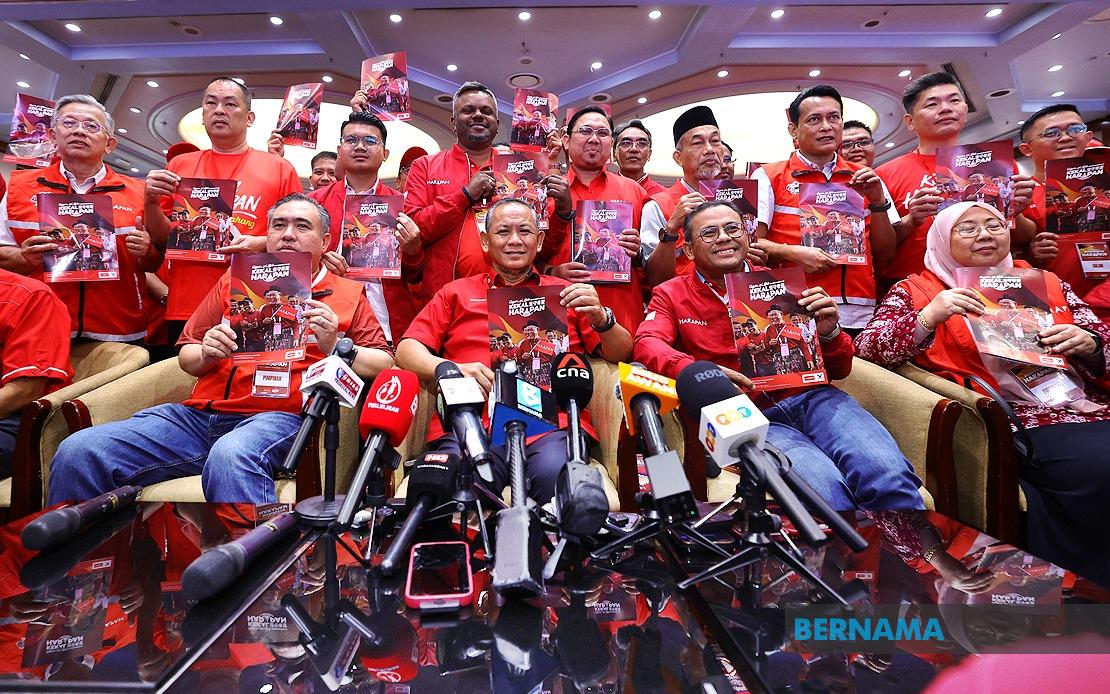
Prime Minister Datuk Seri Anwar Ibrahim is set to take to the campaign trail in Negeri Sembilan this Wednesday as Pakatan Harapan intensifies its push ahead of the state's 16th general election. The announcement came from PH Negeri Sembilan chairman Datuk Seri Aminuddin Harun following the coalition's manifesto launch in Seremban, with Anwar expected to participate in a series of major campaign events across multiple constituencies.
Amiruddin confirmed that Anwar will be present for coordinated campaign activities in Sikamat and Paroi, where he will appear alongside party leadership and ground machinery. The Prime Minister's scheduled visit underscores the strategic importance Pakatan Harapan places on the Negeri Sembilan contest, a state that has become a closely watched electoral battleground in Malaysia's fractured political landscape. His participation alongside senior coalition figures signals unified messaging and demonstrates the commitment of the federal administration to support state-level candidacies.
The timing of Anwar's campaign swing comes less than a week before early voting commences on July 28, with the main polling day set for August 1. This compressed campaign window means each public appearance by senior leadership carries heightened significance in shaping voter perception and mobilising grassroots support. Aminuddin dismissed suggestions that Anwar's absence from Tuesday's manifesto launch represented any internal discord, framing the schedule as a practical accommodation that allows the coalition to maximise his campaigning impact during the critical countdown phase.
Packatan Harapan's Negeri Sembilan manifesto, unveiled at Tuesday's launch event, encompasses ten major policy pillars designed to appeal across diverse voter segments. Administrative stability and governance efficiency head the platform, reflecting broader concerns about state-level competence and institutional reliability. The coalition has woven together promises spanning economic competitiveness, education reform, affordable housing initiatives, youth employment and skilling programmes, women's empowerment, tourism development, and preservation of customary heritage—a particularly sensitive issue in a state with significant indigenous and traditional communities.
The manifesto's emphasis on modern agricultural advancement and strategic infrastructure development signals PH's intention to position itself as forward-thinking while acknowledging Negeri Sembilan's economic foundations in plantation and smallholder farming. Social cohesion and interethnic harmony feature prominently, reflecting the state's diverse demographic composition and the coalition's broader narrative around inclusive governance. These policy commitments will form the backbone of Anwar's campaign messaging during his Wednesday appearances.
A constellation of senior coalition figures witnessed the manifesto presentation, reflecting the high-level attention devoted to this particular state contest. DAP secretary-general and Chennah seat candidate Anthony Loke, Selangor Menteri Besar and PH election director Datuk Seri Amirudin Shari, PKR secretary-general Datuk Dr Fuziah Salleh, and Amanah vice-president Datuk Dr Mohd Hatta Md Ramli all attended, signalling cross-party coordination within the coalition. Their collective presence underscores the seriousness with which Pakatan Harapan approaches this election and the determination to present an unified front to voters.
Amiruddin, who carries the additional responsibility of contesting the Linggi seat, drew particular emphasis to the coalition's preparedness and commitment to manifesto delivery. His rhetoric centred on converting stated promises into tangible outcomes, positioning PH as a coalition willing to be held accountable for its electoral pledges. This framing reflects lessons learned from previous electoral cycles where voter disappointment over unfulfilled commitments had eroded support, particularly among younger demographics and urban constituencies where expectations around governance reform remain elevated.
Negeri Sembilan represents a microcosm of Malaysian electoral complexity, with its mix of urban centres, plantation zones, and traditional rural communities creating a diverse voting bloc that refuses easy categorisation. The state has historically oscillated between different political coalitions, and recent federal-state political alignments have added additional layers of complexity to state-level contests. Pakatan Harapan's investment in senior-level campaigning suggests they view this election as potentially consequential for federal-state governance coordination and coalition morale heading into broader electoral cycles.
The decision to deploy Anwar at this particular juncture reflects both opportunity and necessity. Opportunity, in that his participation elevates campaign profile and media attention; necessity, because Pakatan Harapan faces pressure to demonstrate momentum and cohesion after a period of internal political turbulence affecting coalition unity. His presence on campaign platforms alongside representatives from DAP, PKR, and Amanah visually reinforces the fiction of harmonious inter-coalition cooperation, even as factional tensions continue percolating beneath the surface.
For Malaysian observers tracking political trends, the Negeri Sembilan election serves as an important litmus test of voter sentiment regarding the federal administration's performance and coalition dynamics. Results will provide early indicators of whether Anwar's government has successfully consolidated support or whether it faces electoral headwinds. The campaign activities scheduled for Wednesday will offer the first substantive glimpse of how effectively the coalition can translate policy promises into compelling electoral narratives during direct voter engagement.

