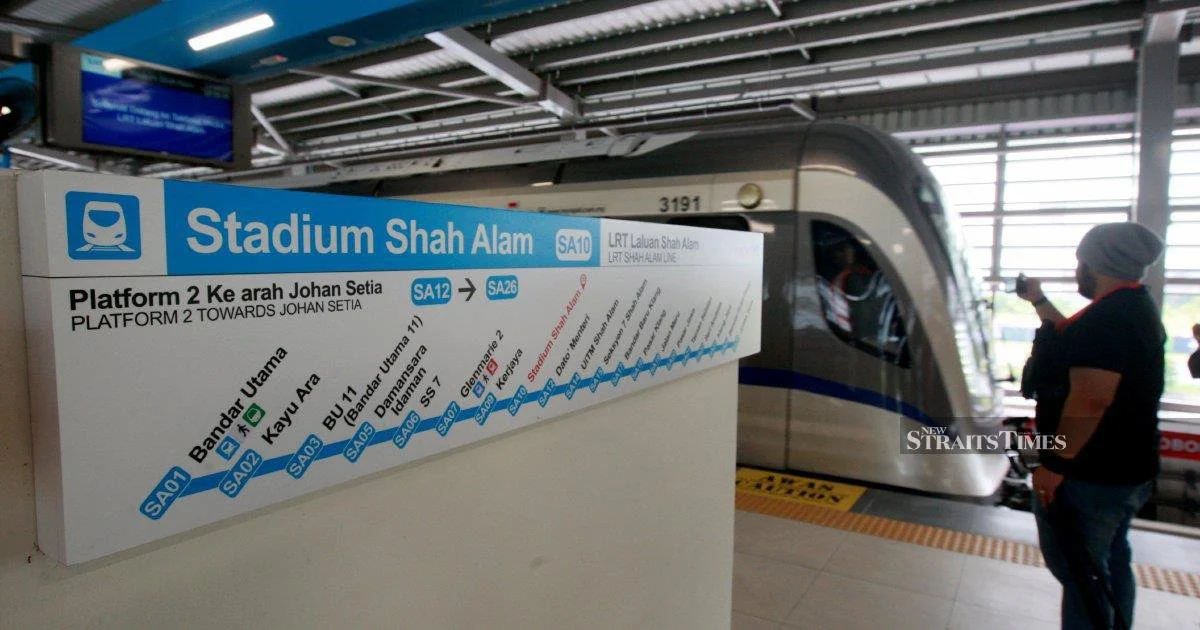
Prime Minister Datuk Seri Anwar Ibrahim is set to formally open the Light Rail Transit Line 3 (LRT3) Shah Alam extension this Sunday, marking a significant milestone in Malaysia's public transportation infrastructure development. The ceremonial launch will precede the line's entry into regular passenger service on Monday, when commuters can begin using the extension for their daily journeys across the Klang Valley.
The LRT3 Shah Alam line represents an important expansion of Malaysia's rapid transit network, designed to enhance connectivity between the capital's eastern suburbs and the industrial heartland of Selangor. The project has been developed to address growing transportation demands in one of the country's most densely populated and economically vibrant regions. The extension will serve numerous residential areas, commercial districts, and employment centres, potentially reducing road congestion and encouraging greater public transport adoption in the Klang Valley corridor.
This infrastructure project underscores the government's commitment to improving urban mobility and sustainable transportation options for Malaysian commuters. The timing of the launch during Anwar's tenure reflects the administration's focus on completing long-term capital projects that promise tangible benefits to ordinary citizens. For residents of Shah Alam and surrounding areas, the new line offers an alternative to car-dependent commuting, potentially saving time and reducing household transportation costs.
The LRT3 expansion forms part of a broader strategy to develop integrated public transit systems across the Klang Valley region. By linking Shah Alam with existing LRT networks, the extension enhances overall system connectivity and encourages multimodal journeys. Commuters can now transition more seamlessly between different transit lines, making it feasible for more people to rely entirely on public transport for their daily needs rather than maintaining private vehicles.
From an economic perspective, improved transit infrastructure typically stimulates development along transport corridors. The LRT3 Shah Alam line may catalyse property development, commercial activity, and job creation in strategic locations near stations. Property values in well-connected areas frequently appreciate as accessibility improves, benefiting existing residents and creating new economic opportunities for local businesses and entrepreneurs.
The official launch ceremony signals political attention to transport infrastructure, an area where delivery often faces delays and budget overruns. Successfully opening the LRT3 Shah Alam line on schedule demonstrates project management capability and provides the administration with a tangible infrastructure achievement to highlight. For the government, such launches offer opportunities to demonstrate responsiveness to public concerns about traffic congestion and air quality, issues that resonate strongly with urban Malaysian voters.
For Southeast Asian perspectives, Malaysia's continued investment in modern public transit systems positions the country competitively within the region. As other regional cities expand their transit networks, maintaining pace with infrastructure development helps sustain Malaysia's appeal to international investors and skilled workers who value quality urban amenities and efficient transportation options.
The transition from ceremonial opening to regular operations within a single day reflects careful coordination between various government agencies and the implementing authority. Such tight scheduling requires meticulous planning to ensure safety systems function properly, staff training is completed, and all infrastructure meets operational standards. The quick turnaround demonstrates confidence that the line is fully prepared for passenger service.
For residents along the LRT3 Shah Alam route, the opening addresses long-standing transportation challenges and represents tangible improvement in their daily lives. Commuters who have faced congestion during peak hours will gain an alternative option that may offer faster, more reliable journey times. Parents juggling school runs and work commutes, workers travelling to industrial areas, and students accessing educational institutions will all benefit from enhanced mobility options.
The launch also reflects broader urban planning considerations for the Selangor region, which continues rapid growth and urbanization. As more residents settle in Shah Alam and surrounding suburbs, public transportation must expand proportionally to prevent traffic gridlock and maintain livability standards. The LRT3 extension addresses these demographic pressures by providing infrastructure capacity for projected population growth and increased commuting demands.
Looking forward, the successful opening of the LRT3 Shah Alam line may build momentum for additional transit projects in the region. The demonstration that major infrastructure can be completed and opened to public use may strengthen political will for further public transport investments. For Malaysian cities beyond the Klang Valley, the project serves as a benchmark for what effective rapid transit expansion can achieve in supporting urban development and improving quality of life.

