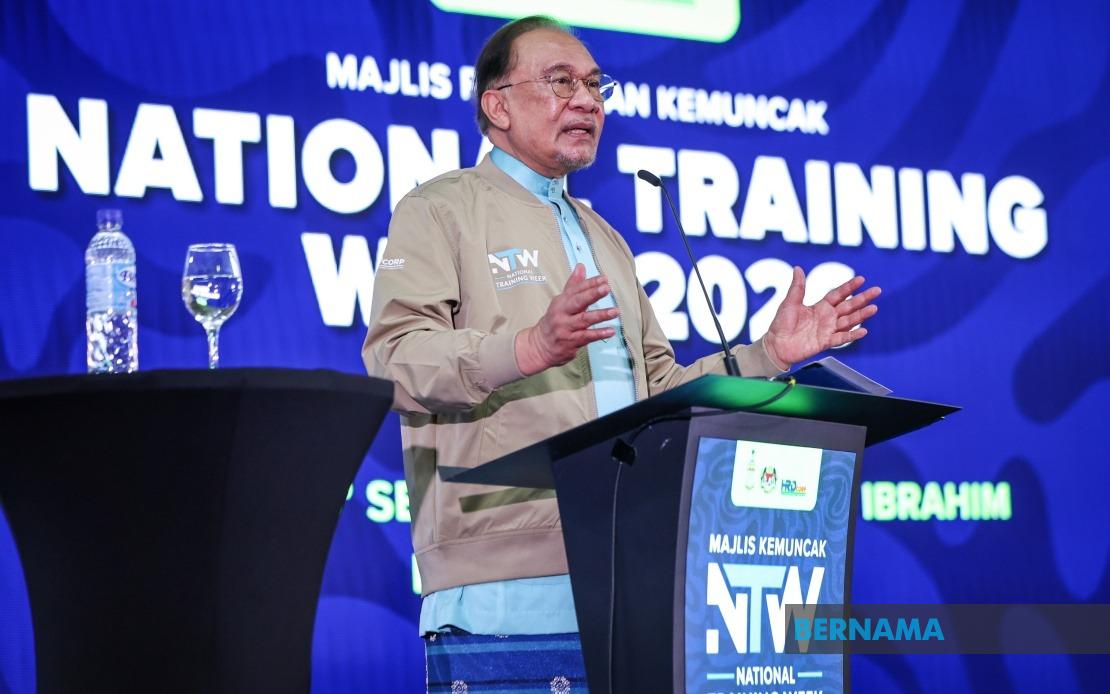
Prime Minister Datuk Seri Anwar Ibrahim has signalled his backing for making public the Royal Commission of Inquiry findings on Lembaga Tabung Haji, indicating he will bring the matter before his Cabinet for approval at this week's session. Speaking at the closing ceremony of the National Training Week 2026 at Universiti Teknologi MARA's Permatang Pauh campus near Bukit Mertajam, Anwar struck an optimistic tone about securing ministerial consensus to lift the veil on a report that has remained under wraps since its completion.
The question of why the Tabung Haji RCI report has not seen the light of day has become a recurring point of public curiosity and scrutiny. Anwar addressed this head-on, acknowledging the widespread interest in its release while maintaining that procedural propriety must be observed. He emphasised that although he personally harbours no reservations about disclosure, the government cannot unilaterally decide to publish such a significant document without cabinet endorsement and deliberation. This measured approach reflects the tension between transparency and institutional processes that often characterises governance decisions of this magnitude.
The earlier decision to withhold the report stemmed from Tabung Haji's own request for a deferral period. The fund management body, which administers savings for Malaysian pilgrims, had argued that it required additional time to implement the improvements and corrective measures identified in the RCI's assessment. This reasoning proved reasonable to policymakers at the time, as releasing critical findings without allowing the institution space to address underlying deficiencies could have sparked unnecessary panic among the millions of members whose contributions are held in trust.
Circumstances have now shifted materially. Tabung Haji has installed a fresh management leadership tasked with executing the institutional reforms that the RCI examination presumably recommended. With this new guard in place and demonstrable progress towards rectifying whatever systemic issues the inquiry uncovered, the original rationale for maintaining confidentiality has substantially weakened. Anwar's confidence that the Cabinet will greenlight release appears grounded in the changed operational environment rather than mere optimism.
For Malaysian stakeholders, particularly the millions of Tabung Haji members spread across the country, the forthcoming disclosure carries significant implications. The report will likely contain findings about operational inefficiencies, governance gaps, or investment management concerns that contributed to recent challenges faced by the institution. Understanding these issues through an official RCI document will furnish members with factual information about how their pilgrimage savings are managed and what systemic changes are underway to strengthen safeguards.
The timing of this transparency initiative also reflects broader evolving expectations regarding governmental and institutional accountability in Malaysia. Public discourse has increasingly demanded access to official investigative reports that shed light on organisations handling substantial public funds or serving essential national functions. By moving toward disclosure, the government demonstrates responsiveness to these demands while maintaining its procedural obligations.
From a regional perspective, Malaysia's willingness to make the Tabung Haji RCI findings public positions the country as reasonably committed to financial sector transparency—an attribute that matters for investor confidence and institutional credibility. Other Southeast Asian nations monitoring Malaysia's approach to accountability in fund management may view such disclosure as a positive signal regarding the maturity of local governance frameworks.
The Cabinet meeting scheduled for Wednesday will serve as the formal juncture at which the government's commitment to transparency gets tested. Anwar's pre-announcement of his support effectively signals to other ministers that the Prime Minister expects backing for the proposal, though Cabinet decisions remain technically open to debate and amendment. His public confidence reflects confidence in either prior consultations with key colleagues or the strength of the argument for disclosure.
Once the report becomes public, Tabung Haji will face the task of explaining its findings to members and the broader public. The fund's new management team will likely use the report's release as an opportunity to outline corrective actions already undertaken and future safeguards being implemented. This transparency, while potentially exposing uncomfortable truths about past performance, ultimately strengthens institutional legitimacy by demonstrating willingness to submit to external scrutiny and act on findings.
The RCI report's eventual publication will provide Malaysian pilgrims and their families with authoritative information about the governance and management practices affecting their funds. This aligns with principles of good governance and member protection that should underpin institutions entrusted with personal savings earmarked for the spiritual journey of Islam.

