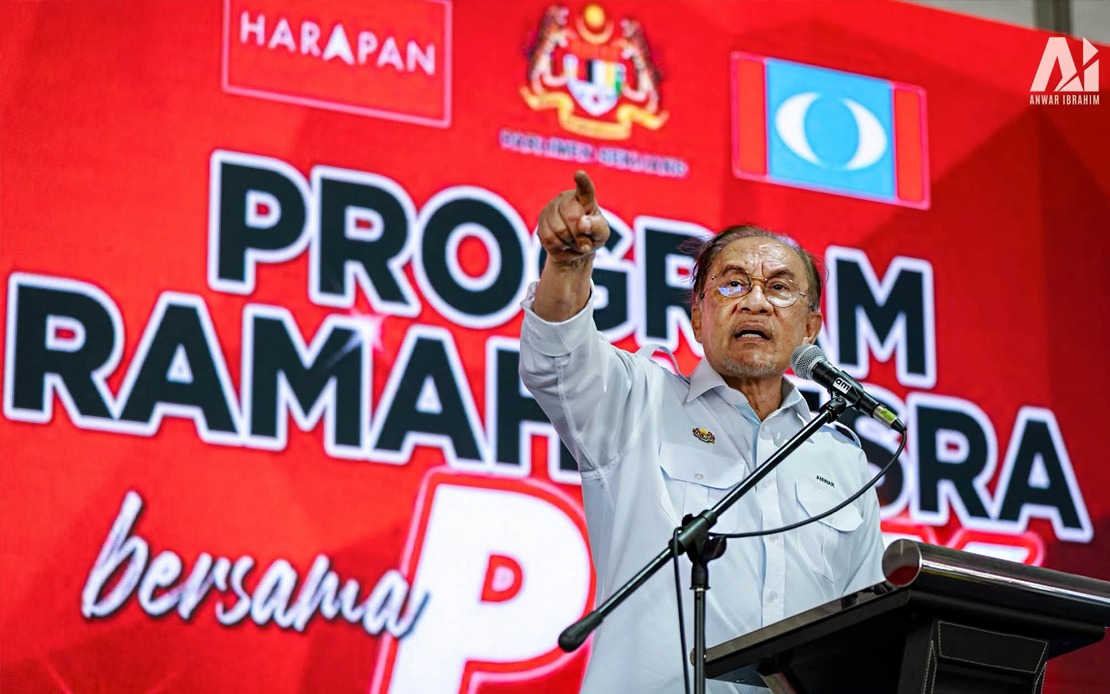
Prime Minister Datuk Seri Anwar Ibrahim has pledged direct intervention to address the financial squeeze facing Malaysia's durian farmers, whose incomes have been hit by a precipitous price collapse triggered by an unusually synchronised glut of harvests across Peninsular Malaysia. Speaking at a constituency gathering in Tangkak, Anwar committed to placing the matter squarely on the agenda during his upcoming visit to China next month, where he intends to discuss expanding trade pathways for Malaysian durian with Chinese Premier Li Qiang. The move reflects growing concern within government ranks about the sector's vulnerability to supply shocks and the need for strategic market diversification.
The core challenge confronting Malaysian durian producers stems from overlapping harvest cycles that have flooded domestic and international markets simultaneously, depressing prices and threatening farm viability across major growing regions. Rather than accepting this as an inevitable market outcome, Anwar framed the issue as a diplomatic opportunity, emphasizing that Malaysia-China bilateral relations should be mobilised to create more stable trading conditions for agricultural commodities. His willingness to personally champion the cause underscores how agricultural distress can rapidly escalate into a political priority, particularly in states like Johor where durian cultivation represents substantial economic activity and provides livelihoods for numerous farming families and supply chain workers.
Anwar acknowledged that negotiations will require substantive flexibility from Malaysia's side, given China's stringent quality and safety standards that already present formidable barriers to agricultural imports. Rather than dismissing these requirements as protectionist, he positioned them as constraints to be navigated through high-level dialogue and goodwill between friendly governments. The implicit recognition that China maintains rigorous screening protocols—and the Prime Minister's acceptance of this reality—suggests a pragmatic rather than combative approach to unlocking deeper market access. This diplomatic stance reflects broader regional patterns where Southeast Asian agricultural exporters must often accept importing nations' regulatory frameworks as non-negotiable prerequisites for market entry.
The durian pricing crisis illuminates a persistent structural vulnerability in Malaysian agricultural production: the sector's dependence on seasonal cycles that occasionally synchronise across different growing zones, creating periodic oversupply conditions that devastate farmer incomes. Unlike manufactured goods where production can be modulated more flexibly, tree crops present inherent rigidities—decisions made years earlier about planting density and variety selection lock in harvest patterns that cannot be easily adjusted when market conditions deteriorate. Small and medium-sized producers, who comprise a significant portion of Malaysian durian growers, typically lack the financial reserves to absorb prolonged price depressions without serious hardship. Government intervention through trade diplomacy thus becomes an alternative mechanism to stabilise returns when market mechanisms alone prove insufficient.
The timing of Anwar's initiative reflects awareness that China's enormous and affluent consumer base represents perhaps the most viable outlet for Malaysian durian volume during glut periods. Chinese demand for premium tropical fruits has expanded substantially over the past decade, driven by rising middle-class incomes and greater acceptance of durian among urban consumers. However, this market remains undersaturated relative to supply potential, particularly when compared to demand constraints in smaller consuming nations. Expanding Chinese market share for Malaysian durian would require not merely regulatory approval but active promotion and possibly price concessions that could improve net returns compared to attempting to sell into already-saturated regional markets during peak seasons.
Beyond the durian question, Anwar used the Tangkak gathering to defend the government's approach to fuel pricing, drawing a distinction between Malaysia's subsidised rates and international norms in ways that carry significant implications for public perception of economic management. The government currently shields consumers from global price pressures through substantial subsidies, maintaining RON95 petrol at RM1.99 per litre and diesel at RM2.10 per litre despite international retail prices substantially higher—currently RM3.37 and RM3.97 respectively without subsidy. Anwar's framing positioned this subsidy regime as evidence of government prioritising citizen welfare over orthodox economic principles, a narrative with considerable political resonance in a context where energy costs directly affect household budgets and business operations.
The subsidy structure reflects geopolitical realities beyond Malaysia's control, particularly instability in the Middle East that continues to roil global oil markets and amplify price volatility. Anwar explicitly attributed recent upward pressure on international crude prices to supply disruptions and tensions involving Iran and the United States, factors that would normally cascade into consumer prices absent government intervention. By highlighting that Malaysia alone maintains such low retail fuel rates, Anwar implicitly positioned subsidies as both politically difficult and economically costly measures that the government sustains through conscious policy choice rather than market accident. This rhetorical approach transforms what could be presented as unsustainable spending into evidence of principled commitment to ordinary Malaysians' economic interests.
The political significance of Anwar's fuel subsidy comments extends beyond mere price protection. In a region where fuel subsidies have historically triggered severe fiscal strain and occasional policy reversals, Malaysia's continued commitment—despite acknowledged economic pressures—suggests prioritisation of political stability and social cohesion over budgetary optimisation. This stance becomes especially relevant given Malaysia's fiscal position and the ongoing need to fund infrastructure, healthcare, and education. The implicit message to voters is that even constrained government resources can be directed toward their material concerns when leadership demonstrates sufficient political will, a powerful assertion in an electoral context where economic performance remains central to voter evaluation.
The convergence of agricultural support and fuel subsidy messaging in a single public appearance reveals how Anwar is framing government's role: as an active intermediary between Malaysian citizens and global market forces, negotiating better terms wherever possible rather than accepting market outcomes as inevitable. For durian farmers, this means diplomatic engagement with major trading partners; for consumers, it means absorbing fiscal costs to maintain affordable energy. Both messages emphasise government agency and responsiveness to constituency concerns, particularly significant in Johor where the state assembly elections and broader political competition continue to shape how voters assess incumbent performance.
The practical effectiveness of Anwar's durian initiative remains uncertain, contingent on whether Chinese negotiators perceive mutual benefit in expanded durian imports and whether regulatory obstacles can be satisfactorily resolved. However, the initiative signals to affected farming communities that their concerns have reached the highest levels of government and that resources are being deployed to address them. In Malaysian politics, such symbolic validation of constituent grievances often matters as much as the ultimate material outcome, particularly when visible government engagement demonstrates that petitions have not been dismissed or delayed in bureaucratic channels. The Tangkak meet-the-people session itself served partly as a platform for Anwar to publicly commit to action, thereby creating political accountability for follow-up.
Looking forward, the durian pricing stabilisation effort may establish a template for addressing similar agricultural crises where Malaysian production capacity temporarily outpaces market demand. Rather than treating such episodes as temporary market conditions requiring farmers to absorb losses, government intervention through strategic trade diplomacy offers an alternative framework that combines production-side support with demand expansion. This approach acknowledges that small and medium agricultural producers operate within constraints quite different from industrial enterprises, requiring different policy tools and different timing of intervention. For Malaysian agriculture more broadly, Anwar's commitment suggests openness to more proactive government engagement in smoothing market volatility when regional or international diplomacy might unlock additional demand.

