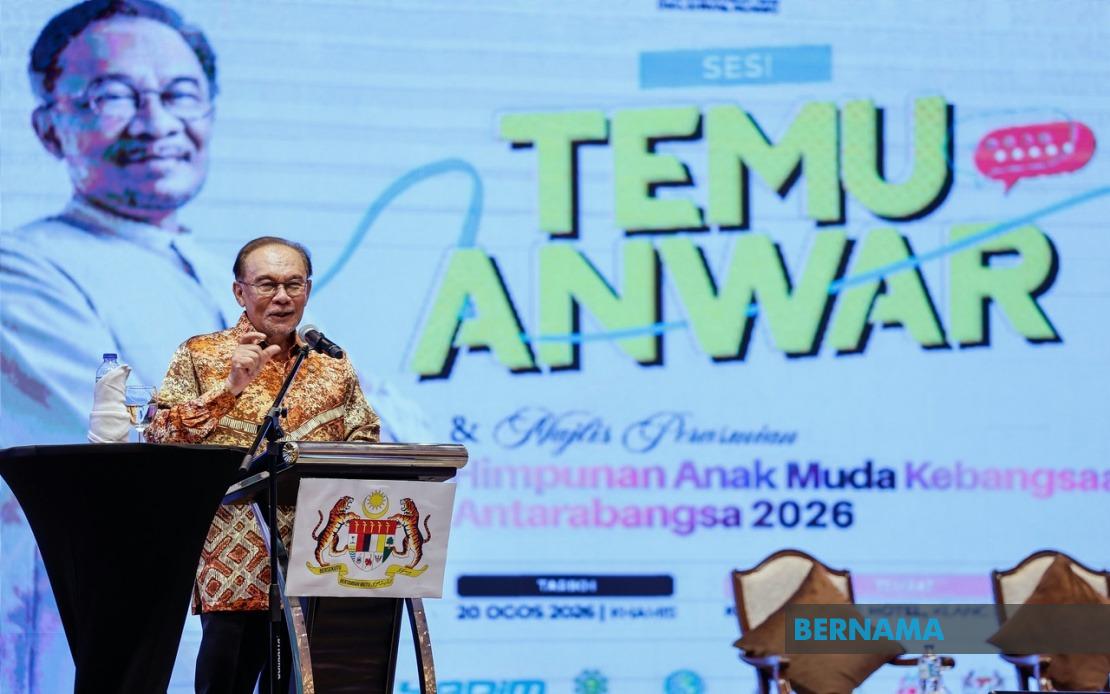
Prime Minister Datuk Seri Anwar Ibrahim has indicated his administration will roll out several substantive policy announcements timed strategically around Malaysia's national commemorative dates, beginning with a statement on the eve of National Day and continuing through Malaysia Day festivities. Speaking at a youth engagement session in Klang on Aug 20, Anwar refrained from detailing the specifics of these forthcoming declarations, maintaining an air of anticipation whilst sketching out his government's immediate timeline for legislative and administrative action. The announcements will bracket critical junctures in the nation's calendar, suggesting deliberate choreography designed to underscore the government's responsiveness to public concerns and its commitment to governance initiatives.
The Prime Minister's roadmap for announcements extends across three distinct occasions, each carrying symbolic weight. Following his consultations with stakeholders, Anwar committed to releasing an important statement by Aug 31, positioning it just as Malaysians prepare to mark their national identity on Merdeka Day. His second significant pronouncement will coincide with Sept 16 festivities in Kuching, when Malaysia commemorates the formation of the Malaysian federation. A third announcement is planned for early October when Parliament reconvenes to table the annual Budget, providing an opportunity to embed policy intentions within fiscal frameworks and resource allocations. This sequencing reflects a deliberate governance strategy where major policy shifts are anchored to moments of national significance.
The catalyst for these announcements emerged during a forum focused on youth welfare and economic security, where a student posed questions regarding government measures to protect workers engaged in the gig economy. This inquiry underscores growing anxiety among younger Malaysians about economic vulnerability in an increasingly casualised labour market, where traditional employment protections are absent. The gig economy has expanded substantially across Southeast Asia as ride-hailing, food delivery, and digital services platforms proliferate, yet regulatory frameworks and worker protections lag significantly behind market realities. Anwar's engagement with this topic signals recognition that his government must address this structural gap or risk alienating a demographic crucial to political and economic stability.
To address these concerns, the government has established the Malaysian Gig Economy Commission (SEGiM), a dedicated institutional body tasked with developing comprehensive protections for informal workers. Complementing this initiative is forthcoming legislation specifically targeting small business interests, indicating a legislative agenda focused on formalising and regulating economic arrangements that have traditionally operated in regulatory grey zones. These measures reflect an acknowledgement that the traditional social contract, anchored in formal full-time employment with employer-provided benefits, no longer encompasses significant portions of the Malaysian workforce. Young Malaysians increasingly cobble together income from multiple short-term engagements rather than pursuing single-employer careers, necessitating novel policy approaches.
Yet Anwar was candid in acknowledging that current assistance mechanisms remain inadequate in the eyes of their intended beneficiaries. Rather than defending existing programmes defensively, he articulated a posture of receptiveness and iterative improvement, declaring his willingness to listen and evaluate whether enhanced support could be implemented within budgetary constraints. This measured tone avoids unrealistic commitments whilst signalling genuine engagement with youth concerns. The implicit recognition that government capacity remains limited even as ambitions for youth welfare support are elevated reflects budgetary realities facing all Southeast Asian governments simultaneously managing inflation, debt servicing obligations, and infrastructure demands.
Parallel to gig economy protections, the government is targeting systemic barriers impeding youth entrepreneurship. The National Entrepreneurial Group Economic Fund (TEKUN) represents an existing avenue for aspiring entrepreneurs to access financing, yet its traditional requirements have created barriers for recent graduates lacking established business track records. Anwar flagged that these eligibility criteria warrant reconsideration in light of evolving economic conditions and employment patterns where younger Malaysians are increasingly turning to self-employment not as a freely chosen career path but as an adaptive response to inadequate job creation in formal sectors. Many Southeast Asian economies have confronted similar dynamics, where rapid technological change and globalisation have disrupted traditional pathways into stable professional careers.
The Prime Minister's indication that TEKUN's requirements should be reviewed acknowledges that previous policy frameworks were calibrated for different economic conditions. In earlier decades when manufacturing and large-scale employers dominated, young people could accumulate work experience before attempting entrepreneurship. Contemporary labour markets operate differently, with compressed career trajectories and frequent transitions between employment statuses. Graduates entering the market today cannot necessarily accumulate five or ten years of employment history before accessing entrepreneurial finance, making flexibility in eligibility criteria economically rational rather than merely compassionate.
Anwar's broader framing emphasises listening and capacity-constrained good faith engagement rather than expansive promises. This rhetorical stance differs markedly from populist commitments that often evaporate when budgetary reality intersects with campaign rhetoric. By repeatedly stressing government willingness to act subject to capacity constraints, he establishes expectations that policy improvements will be incremental rather than transformative. For youth audiences, this may register as insufficient commitment, yet it provides political cover should implementation prove partial or delayed. The repeated phrase "if we have the capacity, we will do our best" acknowledges limits whilst avoiding explicit rejection of youth demands.
The timing of announcements around National Day and Malaysia Day carries particular significance for messaging purposes. National Day celebrations invoke narratives of unity and shared purpose, providing psychological backdrop for announcements framed as benefiting all Malaysians. Malaysia Day's commemoration of federal formation resonates particularly in Sabah and Sarawak, where Anwar's scheduled Sept 16 visit to Kuching signals respect for constituent states' political importance. This geographic choreography ensures that major policy rollouts incorporate regional perspectives rather than projecting peninsular-centric governance. For these states, which maintain distinctive constitutional arrangements and greater autonomy, symbolic acknowledgement of their roles in the federation reinforces narratives of inclusive governance.
The Budget announcement framework for early October ties policy announcements to fiscal implementation, ensuring that declared intentions are embedded within concrete spending or tax allocations. This approach prevents announcements from drifting into rhetorical territory without budgetary consequence. Legislators and civil society can scrutinise whether announced commitments find adequate resource backing or represent unfunded mandates that government agencies must somehow accommodate within existing budgets. This transparency around the fiscal foundations of policy announcements represents a departure from announcements made in isolation from spending decisions.
For Malaysian youth and regional observers, these announcements will test whether the government can translate electoral mandates concerning youth welfare into substantive policy architecture. The gig economy commission and small business legislation suggest genuine institutional innovation rather than mere rhetorical repositioning. However, implementation capacity remains uncertain, particularly given Malaysia's bureaucratic constraints and competing spending priorities. Southeast Asian peers facing similar youth employment challenges will watch Malaysia's approach with interest, seeking evidence of whether region's democracies can effectively govern rapidly evolving labour markets or whether policy frameworks will continue lagging economic realities by years or decades.

