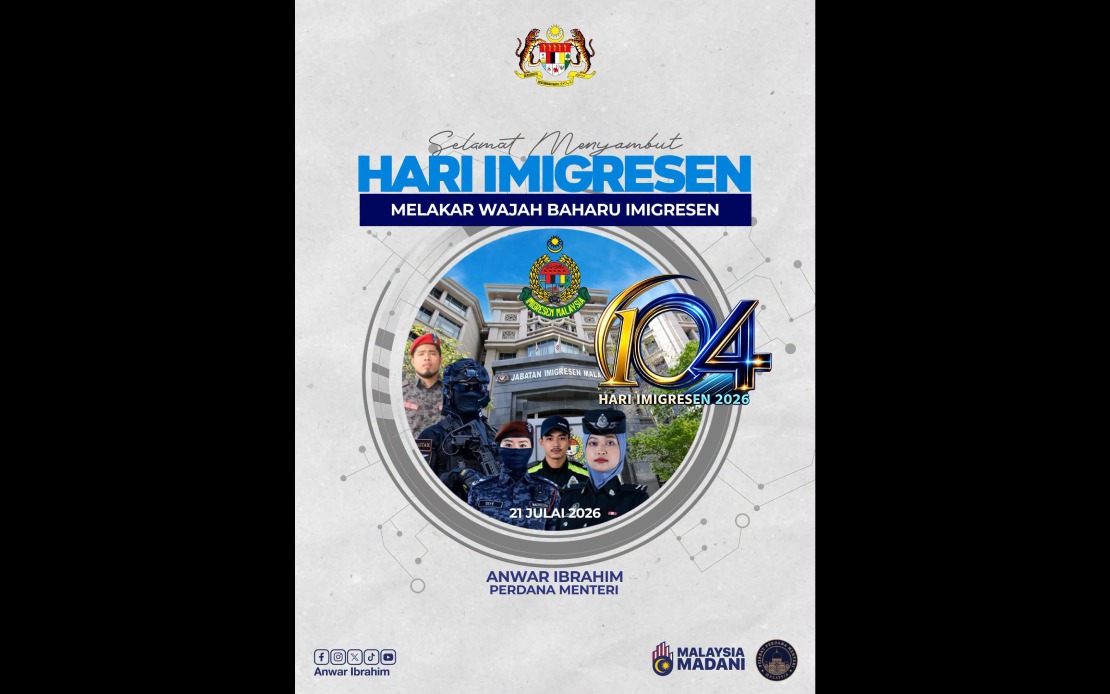
Prime Minister Datuk Seri Anwar Ibrahim has launched a direct appeal to all Immigration Department (JIM) personnel to execute their duties with absolute integrity while firmly resisting corruption and misconduct. Speaking during Immigration Day celebrations, Anwar underscored the fundamental importance of ethical conduct within one of Malaysia's frontline agencies, signalling renewed governmental commitment to stamping out dishonest practices within public institutions.
The Prime Minister's message, delivered through social media on July 21, carries particular weight given ongoing public concern about irregularities within immigration processes. By specifically invoking the concept of integrity alongside explicit rejection of corruption, Anwar has reinforced the administration's stance that border management agencies must function as models of probity rather than becoming conduits for illicit activity. This emphasis reflects broader pressure from civil society and international observers monitoring governance standards in Southeast Asia.
Beyond merely condemning wrongdoing, Anwar articulated a more nuanced vision for immigration services that balances enforcement with compassion. He emphasized that JIM personnel should integrate humanitarian values into their day-to-day operations, ensuring that efficiency and professionalism are matched by courtesy when engaging with travellers and applicants. This dual framework suggests an understanding that border security need not come at the expense of public dignity or reasonable access to services.
The overarching theme selected for the 2026 Immigration Day observance—"Charting a New Face for Immigration"—implies aspirational institutional reform. The phrase suggests the department is actively repositioning itself, potentially moving away from negative perceptions associated with bureaucratic opacity or procedural obstacles that have sometimes clouded Malaysia's immigration reputation internationally. Such rebranding efforts typically accompany practical reforms in training, accountability mechanisms, and technological modernisation.
Anwar's invocation of national sovereignty protection as a core JIM function places ethical conduct within a nationalist framework. By framing integrity as essential to safeguarding Malaysia's borders and defending national interests, the Prime Minister connects individual officer conduct to broader state security objectives. This rhetorical strategy emphasises that corruption does not merely represent individual moral failure but constitutes a threat to national wellbeing by potentially compromising border integrity and creating security vulnerabilities.
The Malaysian context makes such messaging particularly timely. Immigration services occupy a sensitive position within the Southeast Asian region, managing flows of migrant workers, tourists, and asylum seekers whilst simultaneously addressing sophisticated transnational criminal networks. Instances of document fraud, bribery, and collusion have periodically surfaced in Malaysian and regional media, occasionally involving immigration officials. Anwar's public statement signals that political leadership recognises these challenges and expects preventive action.
For frontline immigration officers, the challenge of reconciling enforcer and service-provider roles remains complex. Malaysia processes millions of border crossings annually, whilst simultaneously managing large migrant worker populations and tourism flows. Within such operational demands, maintaining consistency in ethical standards requires robust institutional support, including adequate training, clear procedures, appropriate compensation levels, and credible disciplinary frameworks. Officers require protection from perverse incentives that might otherwise encourage corner-cutting or corrupt arrangements.
The international dimension deserves consideration as well. Malaysia's immigration reputation affects its standing as a regional hub and tourist destination. Countries and international organisations increasingly scrutinise governance standards, including within border agencies. Enhanced transparency and genuine corruption prevention could strengthen Malaysia's positioning within ASEAN and global travel and trade networks, potentially unlocking economic benefits through improved investor and tourist confidence.
Implementation will determine whether this year's messaging translates into meaningful institutional change. Beyond rhetorical appeals, sustained improvement requires investment in anti-corruption infrastructure, protective mechanisms for whistleblowers reporting wrongdoing, and transparent accountability processes when violations occur. Technology deployment, from biometric systems to digital document verification, can reduce opportunities for corrupt practices by automating critical functions and creating audit trails.
Anwar's address also implicitly acknowledges that institutional culture matters. When leadership visibly champions integrity, it establishes normative expectations that filter through organisational hierarchies. Conversely, when corruption appears tolerated or punishments remain invisible, cynicism spreads and ethical standards deteriorate. The Prime Minister's public stance provides cover for honest officials and potentially strengthens their position when resisting pressure to participate in irregular arrangements.
Looking forward, observers will monitor whether JIM experiences measurable improvements in anti-corruption metrics, processing transparency, or public satisfaction surveys. Immigration agencies can leverage data analytics to identify problematic patterns, deploy undercover operations to detect corrupt networks, and implement rotation policies that disrupt established corrupt relationships. Such practical measures, supported by political backing, represent the operational complement to aspirational rhetoric about institutional reform.

