%22%2F%3E%3C%2Fpattern%3E%3C%2Fdefs%3E%3Crect%20width%3D%22100%25%22%20height%3D%22100%25%22%20fill%3D%22url(%23ph3cknzg)%22%2F%3E%3Crect%20width%3D%22100%25%22%20height%3D%22100%25%22%20fill%3D%22url(%23ph3cknzp)%22%2F%3E%3Ctext%20x%3D%2250%25%22%20y%3D%2250%25%22%20text-anchor%3D%22middle%22%20dominant-baseline%3D%22central%22%20fill%3D%22rgba(255%2C255%2C255%2C0.95)%22%20font-family%3D%22Georgia%2C%20'Times%20New%20Roman'%2C%20serif%22%20font-weight%3D%22700%22%20font-size%3D%22272%22%20letter-spacing%3D%22-0.02em%22%3EAnwar%3C%2Ftext%3E%3C%2Fsvg%3E)
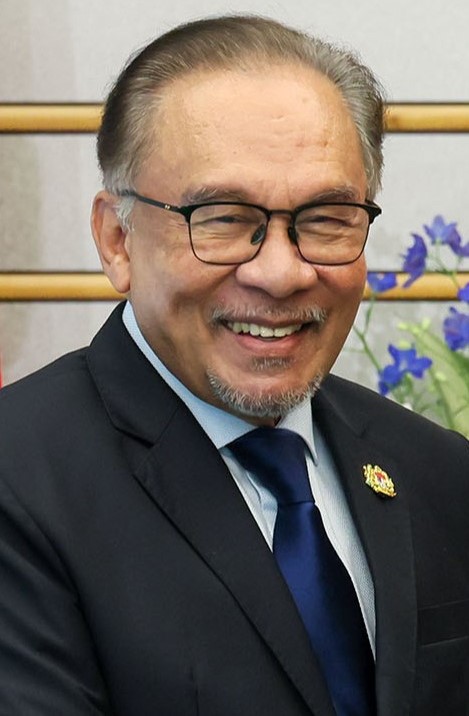
Prime Minister Datuk Seri Anwar Ibrahim delivered a pointed appeal to Johor voters during a Pakatan Harapan rally in Muar on June 15, urging them to elect representatives grounded in integrity and free from the arrogance that sometimes accompanies political power. Speaking ahead of the July 11 state election, the PH chairman stressed that the choice of leadership fundamentally shapes a state's trajectory and the wellbeing of its most vulnerable citizens. His remarks carried an implicit critique of rival factions that he suggested prioritize stoking divisive sentiment over delivering genuine improvements to people's lives once in office.
Anwar drew a stark distinction between two approaches to politics: one anchored in substantive problem-solving and respect for voters, the other rooted in emotional manipulation and abandonment of public duties. He cautioned against leaders who exploit racial or religious tensions as a pathway to electoral victory but neglect their obligations afterward. The Prime Minister's language suggested concern that certain political forces rely on stirring resentment rather than articulating coherent policy frameworks. He implored voters to think beyond immediate appeals and consider the broader implications of their choices for future generations, specifically mentioning schools, hospitals, and economic opportunity for their children and grandchildren.
A central thrust of Anwar's message centered on the necessity of alignment between Johor's state administration and the federal government led by his coalition. He positioned this coordination as essential for translating major infrastructure investments and economic initiatives into tangible benefits for ordinary citizens. The Johor-Singapore Special Economic Zone (JS-SEZ) and the expansion of the Port of Tanjung Pelepas emerged as key examples in his argument. While acknowledging that the state government had contributed to these projects, Anwar emphasized that the federal administration had taken the lead in negotiating and executing them. This framing underscored his case that PH's victory in Johor would enable more seamless coordination and ensure projects translate into grassroots prosperity rather than remaining confined to elite circles.
Anwar's emphasis on the distribution of economic benefits reveals deeper anxieties within the coalition about whether infrastructure megaprojects and growth statistics are reaching ordinary Malaysians. His call for state representatives and executive council members to prioritize "ordinary citizens below" reflected a political calculation that voters increasingly measure success by immediate improvements in their daily circumstances rather than aggregate economic indicators. By insisting that federal-level economic spillover effects depend on sympathetic state governance, he constructed an interdependency argument: without PH control in Johor, the fruits of national economic strategy would be poorly distributed. This positioning turned the state election into a referendum not merely on local governance but on access to national prosperity.
The Prime Minister also extended a targeted appeal to Johor voters living outside the state, urging them to return home to cast their ballots. This explicit call for diaspora participation reflected recognition that voter mobility and turnout patterns significantly influence electoral outcomes in Malaysia's contemporary political environment. Every vote, Anwar insisted, carries weight in determining whether policy frameworks shift and whether economic development benefits materialize comprehensively. The language suggested that PH strategists viewed the election as competitive enough to warrant mobilization of voters who might otherwise remain absent, and that success required activation of the broader Johor-origin electorate scattered across other states and potentially overseas.
Anwar's speech must be understood within the context of Malaysia's fractious post-2022 political realignment. Since the 2022 general election, the coalition has navigated internal tensions and external opposition while pursuing its development agenda. Johor represents a particular prize because of its economic significance and strategic location adjacent to Singapore, a crucial trading partner and investment source. The state's governance directly affects bilateral relations and regional economic integration. A PH-led Johor administration would remove a potential obstacle to the federal government's regional strategies and ensure policy consistency across Malaysia's wealthiest state and the federal center.
The July 11 election also tests whether PH can sustain electoral momentum beyond the 2022 general election victory that ended the Perikatan Nasional era. Johor voted decisively for BN and its allies in recent federal elections, meaning the state represents contested territory where coalition support cannot be assumed. Anwar's appeal to integrity and humility implicitly contrasted PH's approach with the governance record of previous administrations, suggesting that voters should evaluate not campaign rhetoric but demonstrated competence and ethical leadership. His emphasis on combating the exploitation of sentiment appeared designed to delegitimize opposition messaging while positioning PH as the choice for voters prioritizing substantive governance over divisive politics.
The reference to federal-state coordination also signals PH's recognition that modern governance requires integrated policymaking across multiple administrative levels. Infrastructure projects, economic zones, and port expansion initiatives cannot succeed if state and federal authorities work at cross-purposes. By making alignment a central campaign theme, Anwar framed the election as a choice between coherent national development and fragmented, inefficient administration. This argument holds particular resonance in a state like Johor, where economic dynamism depends on seamless coordination between multiple jurisdictions and levels of government, including cross-border arrangements with Singapore.
Anwar's assertion that PH will "look after" major projects regardless of the state election outcome contained both a promise and an implicit warning. It reassured voters that federal infrastructure investment would continue, but it also suggested that state governments could either facilitate or hinder the implementation and local distribution of these benefits. This framing transformed the state election into a choice about whether citizens would fully enjoy national economic gains or whether misalignment between administrations would create friction and inefficiency. For voters evaluating candidates and parties, Anwar positioned PH victory as the pathway to maximum personal economic benefit.
The broader message combined idealistic appeals to ethical leadership with pragmatic arguments about economic self-interest and administrative efficiency. Anwar called voters to reject leaders prone to arrogance and exploitative politics while simultaneously arguing that PH governance would deliver more concrete prosperity through superior coordination and implementation. This dual appeal addressed both the aspirational and material dimensions of political choice. By emphasizing that the election determines not just immediate policy but the trajectory of Johor's development over coming years, he elevated the stakes and encouraged voters to think strategically about the long-term implications of their July 11 decisions.
The Prime Minister's intervention in Johor's state campaign reflects the coalitional stakes involved in controlling multiple administrative levels. Federal-state dynamics increasingly shape Malaysia's political economy, particularly in wealthy states whose governance decisions affect national economic performance. Anwar's presence and message underscored that PH views the Johor election not as a local matter but as integral to implementing its national vision for equitable, coordinated development. Success on July 11 would consolidate PH's position as Malaysia's dominant governing force, while defeat would revive questions about the coalition's durability and regional appeal beyond its traditional strongholds.