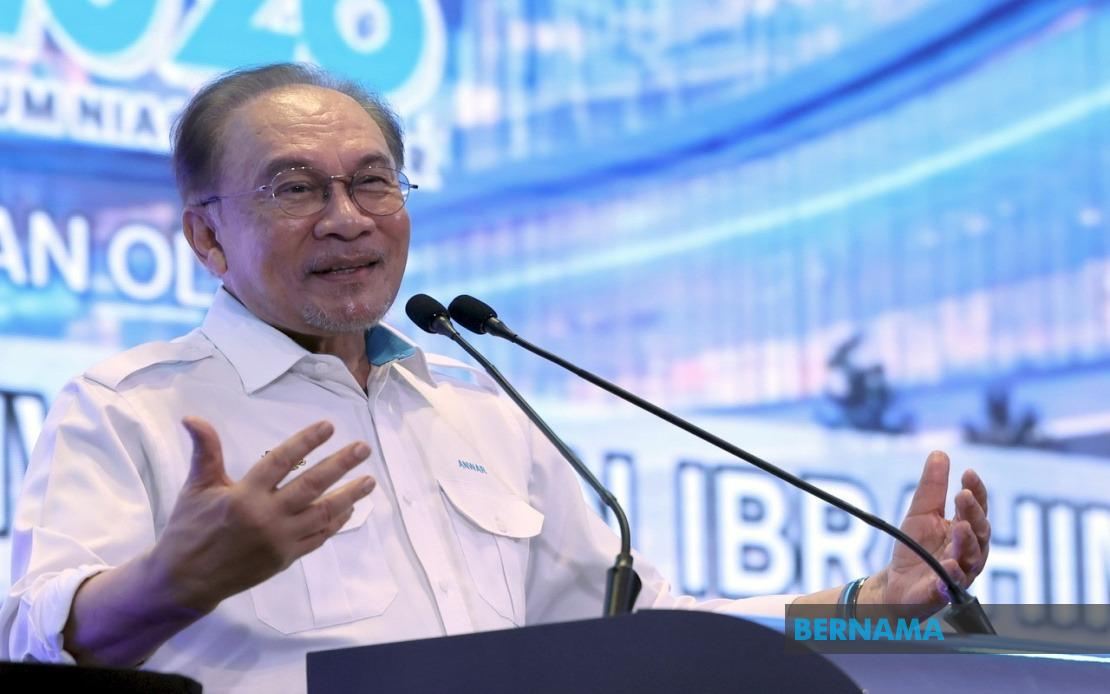
Prime Minister Datuk Seri Anwar Ibrahim has made a significant call for a fundamental shift in how Malaysia develops Bumiputera entrepreneurs, moving away from centralised government directives towards a peer-mentorship model rooted in practical business experience. Speaking at the launch of SPaRK 2026 in Putrajaya on July 4, Anwar emphasised that successful business leaders possess knowledge that far exceeds what can be conveyed through formal instruction or theoretical frameworks, making them invaluable guides for the next generation of enterprises.
The Prime Minister's critique of "top down" approaches reflects a broader recognition that entrepreneurial development cannot be effectively imposed through bureaucratic channels. Instead, he advocated for a collaborative ecosystem where seasoned business operators actively engage with emerging companies, sharing the hard-won insights gleaned from navigating markets, managing cash flow, and responding to competitive pressures. This represents a departure from traditional models where government agencies function as the primary architects of business policy, positioning successful entrepreneurs as the real educators in matters of commerce and strategy.
Anwar's philosophy centres on the distinction between motivation and instruction. He characterised government and policy bodies as motivators rather than teachers, acknowledging that those operating in actual markets understand working capital requirements, input costs, and customer demand in ways that policy makers cannot replicate from offices. This pragmatic recognition addresses a longstanding challenge in developing economies: the gap between aspirational policies and the messy realities of running a business in competitive and often resource-constrained environments.
The mentorship framework Anwar proposed extends beyond informal guidance. He explicitly recommended that accomplished entrepreneurs be invited as speakers to share their journeys and be engaged as collaborative partners with nascent companies, creating formal structures for knowledge transfer. This two-pronged approach—combining inspirational storytelling with hands-on partnership—offers a mechanism for embedding practical wisdom into the entrepreneurial ecosystem rather than relying solely on government training programmes or generic business education.
Concurrently, the government announced the SPaRK 2026 initiative, Perbadanan Usahawan Nasional Bhd (PUNB)'s flagship platform designed to mobilise substantial financial resources for Bumiputera business development. The programme targets RM2.25 billion in financing approvals over the 2026 to 2030 period, representing a significant commitment to capital formation for indigenous entrepreneurs. This financing framework operates within the broader R30 Strategic Framework, which sets ambitious objectives for accelerating Bumiputera commercial growth and scaling capabilities across the economy.
The timing of SPaRK 2026's launch reflects Malaysia's continued focus on ensuring that indigenous communities benefit substantively from economic growth and wealth creation. Beyond mere access to capital, the initiative aims to strengthen supply chain participation and generate quality employment opportunities, addressing systemic challenges in how Bumiputera enterprises integrate into the broader economy. The RM2.25 billion allocation signals government recognition that insufficient financing has historically constrained growth potential within this entrepreneurial segment.
The R30 Strategic Framework, within which SPaRK 2026 operates, underscores a comprehensive approach to Bumiputera economic empowerment. Rather than treating enterprise development as isolated from broader economic objectives, the framework explicitly links Bumiputera growth to national supply chain resilience and employment creation. This systemic perspective acknowledges that isolated pockets of Bumiputera success do not translate into meaningful economic transformation without strategic integration into larger commercial structures and value chains.
For Malaysian readers and policymakers, Anwar's emphasis on mentorship carries significant implications. The approach suggests that government's role should shift from being the primary driver of entrepreneurial capacity towards creating enabling environments where experienced operators can transmit knowledge to aspirants. This reduces dependency on government training institutions, which often struggle to maintain currency with rapidly evolving market conditions, and leverages the private sector's inherent incentive to support ecosystem health and growth.
The SPaRK 2026 initiative also reflects evolving thinking about how to deploy public financing for development purposes. By channelling funds through PUNB rather than direct government disbursement, the programme creates institutional buffers and potentially encourages more rigorous assessment of business viability. The five-year horizon and substantial capital commitment suggest confidence in sustained demand for Bumiputera enterprise financing and a recognition that meaningful economic transformation requires patient, long-term capital availability rather than episodic injections.
Regionally, Malaysia's renewed emphasis on peer-led mentorship and targeted financing for indigenous entrepreneurs may resonate across Southeast Asia, where similar questions about inclusive economic development persist. Several neighbouring countries grapple with comparable challenges regarding minority or indigenous business participation, making Malaysia's policy experimentation potentially instructive for regional observers and policymakers seeking alternatives to purely regulatory or subsidy-based interventions.
The interaction between mentorship philosophy and substantial financing capacity creates an interesting policy combination. Financial capital alone cannot substitute for business acumen, while mentorship without access to working capital offers limited practical value. By advancing both simultaneously, the government and PUNB are attempting to address multiple constraints that have historically limited Bumiputera entrepreneurial scaling. The effectiveness of this integrated approach will likely depend on how rigorously both mentorship relationships and financing decisions are structured and monitored.
Looking forward, the success of SPaRK 2026 will partly hinge on whether experienced entrepreneurs genuinely embrace mentorship roles or treat them as secondary to their primary commercial activities. Government policy cannot compel authentic knowledge transfer or sustained engagement. However, by explicitly valuing and positioning entrepreneur-mentors as central to the development process rather than peripheral supporters, Anwar's framing may encourage greater participation and commitment from the business community in building the next generation of Bumiputera enterprises.

