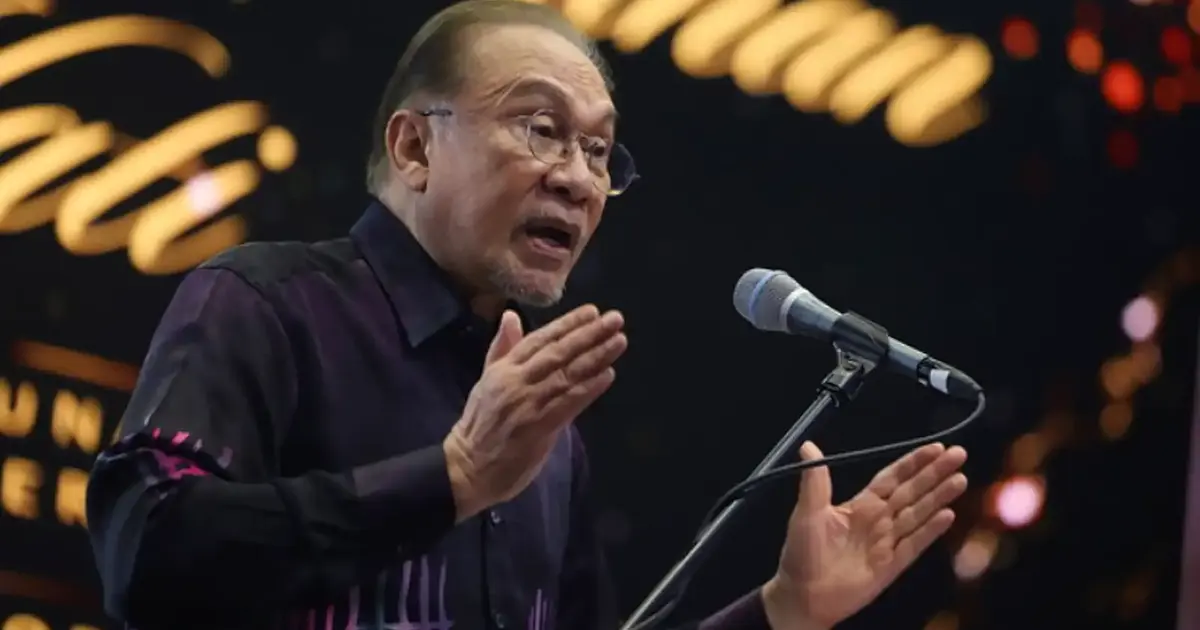
Prime Minister Anwar Ibrahim has made an impassioned appeal for Malaysians to transcend divisive messaging being circulated by some political figures, positioning the country's rich ethnic tapestry as fundamental to its progress and resilience. His remarks come at a time when Malaysia continues to grapple with polarising rhetoric in the political arena, with Anwar framing the battle against such discourse as essential to preserving social cohesion and national stability.
The prime minister's intervention reflects growing concern within the federal government about the corrosive effects of hate speech on Malaysia's multicultural fabric. By publicly calling out those who peddle divisive messages, Anwar is attempting to establish a clear ethical boundary in political discourse while signalling that his administration views such rhetoric as fundamentally contrary to national interests. This positioning places Anwar at odds with factions within Malaysian politics that have historically relied on communal messaging to mobilise electoral support.
Anwar's emphasis on ethnic diversity as a strategic asset rather than a liability represents a deliberate reframing of a perennial debate in Malaysian public life. Where some politicians have weaponised questions of ethnic and religious identity to drive wedges between communities, the prime minister is advancing the argument that Malaysia's multicultural composition is instead a source of competitive advantage—a perspective increasingly relevant as the nation seeks to attract global investment and talent in knowledge-based sectors.
The timing of these remarks is noteworthy given the volatile state of Malaysian politics. Recent years have witnessed the ascendancy of identity-based politics across the region, with politicians in various Southeast Asian nations employing divisive rhetoric to consolidate voter bases. Anwar's public stance suggests an effort to chart a different course, though success will depend heavily on whether his cabinet colleagues and party structures embrace this vision consistently or whether factional interests within ruling coalitions continue to exploit communal anxieties.
Historically, Malaysia has weathered periods of ethnic tension through elite consensus-building and constitutional arrangements designed to balance community interests. The post-independence social contract, while often criticised for entrenching certain privileges, created a framework within which diverse groups could coexist. What Anwar appears to be advocating for is a renewed commitment to this underlying principle—that Malaysian democracy functions most effectively when political actors choose unity over division, even when such restraint may carry electoral costs in certain constituencies.
The implications for Malaysia's international standing are substantial. Regional and global observers increasingly view the health of multicultural democracies as a bellwether for broader geopolitical stability. A Malaysia wracked by communal conflict or governed through divisive rhetoric risks losing its reputation as a relatively stable multiethnic nation in a region where such models remain uncommon. This reputational consideration has practical consequences for foreign direct investment, tourism, and Malaysia's soft power in regional forums like ASEAN.
Within the domestic context, Anwar's message carries particular significance for younger Malaysians and urban constituencies where multicultural coexistence has become normalised. These demographics have generally shown less tolerance for overt communal politics and more interest in issues like economic opportunity, environmental sustainability, and good governance. By framing the rejection of hate speech as patriotic rather than partisan, Anwar is attempting to align his administration's messaging with the values of these constituencies while putting pressure on opposition parties to justify any continued use of divisive rhetoric.
However, the effectiveness of such rhetorical positioning depends on institutional follow-through. Malaysians have grown accustomed to leaders articulating lofty principles regarding unity while permitting—or even tacitly endorsing—divisive behaviour by allies and subordinates. For Anwar's intervention to carry credibility, it must be accompanied by consistent action through government institutions, law enforcement, and party discipline mechanisms that demonstrate zero tolerance for hate speech regardless of which political faction perpetrates it.
The challenge ahead is substantial. Certain political actors continue to view divisive messaging as electorally advantageous, particularly in constituencies where communal anxieties remain acute or where economic grievances have been channelled into identity-based grievances. Shifting this calculus requires not just rhetorical leadership from the prime minister but also sustained pressure from civil society, media scrutiny, and electoral consequences that punish parties and politicians who resort to hate speech. Without these reinforcing mechanisms, even forceful statements from the top may prove insufficient to alter the trajectory of political discourse.
Anwar's intervention also implicitly acknowledges that the struggle against divisive rhetoric is ongoing rather than settled. Unlike some post-conflict societies that have reached firm settlements regarding political norms, Malaysia remains in a continuous negotiation over what types of political messaging are acceptable. This reflects deeper questions about the country's identity—whether it views itself primarily as a Malay-Muslim nation that accommodates minorities, or as a truly multicultural nation where no single community dominates the social or political narrative.
For regional observers and policymakers, Malaysia's trajectory in this regard matters considerably. The Southeast Asian region faces mounting pressures from globalisation, climate change, and geopolitical competition, challenges that are best addressed through inclusive governance rather than divisive politics. If Malaysia can establish and maintain stronger norms against hate speech while maintaining democratic vibrancy and political competition, it would provide a valuable model for other diverse societies in the region wrestling with similar tensions.

