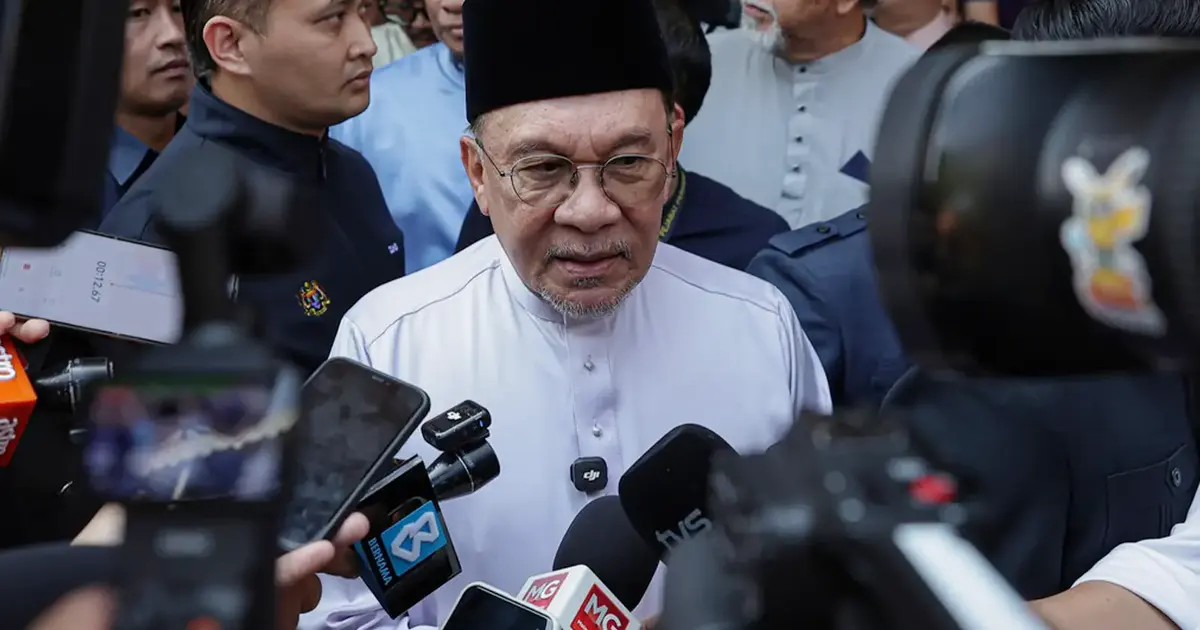
Prime Minister Anwar Ibrahim has used the Merdeka Center's latest public confidence survey as motivation rather than justification for the government to rest on its laurels. The polling results, which placed his administration at the top of recent approval measurements, have prompted Anwar to emphasise that positive feedback demands greater commitment to delivery and reform, not a retreat into satisfaction with current standing.
The Merdeka Center survey represents one of Malaysia's most respected independent measures of public sentiment toward political leadership and government performance. Its findings carry particular weight in domestic policy circles and among analysts tracking the trajectory of Malaysia's political climate. High approval ratings typically signal public receptiveness to government initiatives and confidence in the administration's direction, yet Anwar's response demonstrates awareness that such metrics can easily mask underlying concerns or emerging dissatisfaction if not addressed proactively.
Anwar's framing of the survey results as a call to action rather than validation reflects a strategic understanding of Malaysian politics. Public approval, while valuable, remains volatile in a nation where economic conditions, development outcomes, and perceptions of fairness in governance shift rapidly. The Prime Minister's insistence on maintaining momentum and avoiding complacency suggests his government recognises the precarious nature of political mandate, particularly given Malaysia's history of rapid swings in electoral fortunes and public mood.
The context matters significantly for regional observers. Malaysia's government has faced sustained criticism over economic management, cost-of-living pressures, and concerns about institutional integrity. In this environment, positive polling data could either signal genuine improvement in public confidence or reflect temporary relief from previous turbulence. Anwar's cautionary stance suggests the latter interpretation—that approval ratings represent a window of opportunity rather than a foundation for reduced effort.
For Malaysian readers, the Prime Minister's message carries practical implications. Government efficiency, policy implementation speed, and visible outcomes in areas like infrastructure, education, and healthcare will determine whether current approval translates into sustained support. The administration's ability to convert public confidence into tangible improvements will test whether Anwar's pledge to work harder remains rhetoric or manifests in concrete governance improvements.
The survey also contextualises broader regional political dynamics. Across Southeast Asia, newly elected or reformed administrations frequently experience honeymoon periods where public patience and optimism remain elevated. Malaysia's experience under Anwar's leadership follows a transitional political moment and various coalition adjustments. How the government leverages current goodwill to implement structural reforms will influence not merely domestic politics but regional perceptions of governance capacity.
Anwar's emphasis on continued effort aligns with contemporary governance challenges facing most developing economies. Rising inflation, employment concerns, and demands for improved public services create constituencies with high expectations despite general satisfaction with leadership. The Prime Minister's acknowledgment that survey results should not diminish governmental focus reflects mature understanding that approval ratings are lagging indicators, measuring past performance rather than predicting future capability.
Within Malaysia's political ecosystem, such statements also carry internal messaging value. They signal to coalition partners, government agencies, and the civil service that complacency will not be tolerated despite favorable public positioning. In a coalition government environment, where multiple parties hold ministerial portfolios and compete for credit, explicit statements maintaining performance pressure help align fragmented administrative structures toward common objectives.
The implications extend to opposition parties and critics as well. Anwar's framing pre-emptively addresses potential accusations that the government might use positive polling to justify inaction or reduced responsiveness to public concerns. By establishing higher performance benchmarks for his own administration, the Prime Minister shifts discourse ground and complicates opposition messaging that relies on claims of governmental complacency or deteriorating service delivery.
Looking ahead, Malaysia's development trajectory over coming months will test whether Anwar's words translate into accelerated governance improvements. Economic indicators, infrastructure project completion rates, and measurable progress in priority policy areas will determine whether the Merdeka Center's next survey shows sustained or declining approval. The Prime Minister has essentially committed his administration to maintaining upward momentum, setting expectations that satisfaction with current standing represents failure rather than success.
For business communities and investor confidence, such rhetoric matters substantially. Government commitment to continuous improvement and rejection of complacency signals policy stability and focus on long-term institutional development rather than short-term political positioning. This can influence capital allocation decisions and corporate planning across the Malaysian economy and among regional firms assessing investment opportunities.
Ultimately, Anwar's response to the Merdeka Center survey reveals a government conscious of both its opportunities and vulnerabilities. Positive polling provides political capital for implementing potentially unpopular reforms or pursuing ambitious development agendas. The Prime Minister's determination to channel this capital into intensified effort rather than consolidation demonstrates political maturity and realistic assessment of Malaysia's developmental challenges and citizens' expectations for improved governance and tangible progress across economic and social domains.

