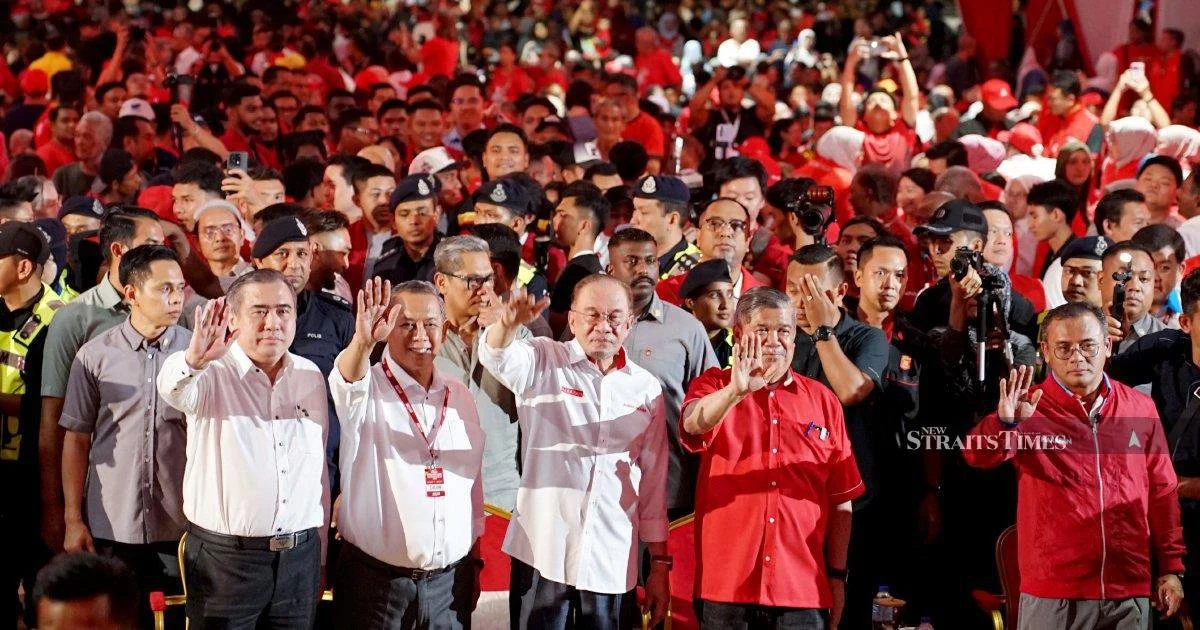
Prime Minister Datuk Seri Anwar Ibrahim has called on political leaders and parties across the spectrum to refrain from instrumentalising the royal institution for electoral advantage as Negri Sembilan gears up for its state election. Speaking in Kuala Pilah, Anwar underscored the critical importance of maintaining institutional boundaries between the monarchy and partisan political campaigning, signalling his concern that the sanctity of constitutional structures could be compromised by overzealous electioneering.
The warning reflects an enduring tension in Malaysian politics between the revered constitutional role played by the country's royal institutions and the competitive pressures inherent in democratic electoral contests. Negri Sembilan, like all Malaysian states, maintains a sophisticated constitutional arrangement whereby the Sultan exercises ceremonial authority whilst elected representatives govern through Westminster-style parliamentary processes. This dual structure has historically required careful navigation to preserve both democratic legitimacy and royal prerogative.
Anwar's intervention carries particular weight given his position as Prime Minister and leader of the Pakatan Harapan coalition, which has historically positioned itself as a reformist force dedicated to institutional accountability and constitutional propriety. His explicit admonition suggests that campaign managers and party operatives across multiple factions may have been tempted to invoke royal patronage or authority as a means of lending legitimacy to their political platforms or undermining opponents.
The Negri Sembilan state election represents a consequential electoral contest in one of Malaysia's smaller but politically significant states. Situated in the country's west-central region, Negri Sembilan has been a traditional stronghold of UMNO and the broader Barisan Nasional coalition, though recent years have witnessed competitive contests that have tested the dominance of established political machinery. How the electorate responds to competing campaign messages will carry implications for the broader Malaysian political landscape and the durability of the current federal government's coalition arrangements.
Historically, Malaysia's royal institutions have occupied a complex position within the nation's democratic framework. The constitutional monarchy provides ceremonial and symbolic functions whilst elected representatives exercise executive and legislative authority. This arrangement requires political actors to demonstrate respect for institutional boundaries and constitutional conventions. When political campaigns begin to leverage royal symbolism or invoke the monarchy's authority to gain partisan advantage, the delicate equilibrium undergirding these arrangements faces potential strain.
Anwar's caution also reflects broader international concerns about democratic backsliding and the erosion of institutional norms during election cycles. Democratic theorists have long documented how competitive pressures can incentivise politicians to transgress established procedural boundaries when electoral stakes feel sufficiently high. By issuing a preemptive warning, the Prime Minister sought to establish explicit expectations regarding acceptable campaign conduct and to forestall escalatory dynamics that might emerge if one faction believed competitors had violated implicit understandings about respecting royal distance from partisan contests.
The Malaysian context makes such warnings particularly salient. Unlike established Westminster democracies where institutional norms have calcified through decades of largely uncontested practice, Malaysia's democratic institutions remain subject to considerable interpretive variation and contestation. The relationship between federal authority, state governments, and royal institutions has periodically become a flashpoint for political conflict, particularly when state-level actors have sought to circumvent federal oversight or when federal authorities have challenged state prerogatives.
Negri Sembilan's Sultan plays a ceremonial role in the state's governance structures whilst wielding certain constitutional functions, particularly regarding the appointment of religious officials and custodianship of Islam in the state. The state's elected representatives govern through the state assembly, currently comprising 36 constituencies. These institutional arrangements create multiple points where political actors might theoretically invoke royal authority or symbolism to enhance their electoral positioning or legitimacy.
Anwar's warning also signals broader efforts by the federal government to establish clear red lines regarding appropriate campaign conduct as Malaysian electoral politics grow increasingly competitive and polarised. The Pakatan Harapan coalition has traditionally emphasised institutional reform and democratic consolidation as central policy objectives, creating expectations that federal leadership would actively police normative boundaries during campaigns. Anwar's intervention demonstrates fidelity to these stated commitments whilst simultaneously attempting to constrain behaviour by rival coalitions that might be tempted to exploit royal associations.
The timing of Anwar's statement proved strategically significant, arriving ahead of intensive campaign activities and establishing expectations that would be understood by all participants before grassroots mobilisation accelerated. Early norm-setting can prove far more effective than post-hoc criticism in constraining escalatory political behaviour, particularly when issued by authority figures whose power extends across multiple constituencies.
For Malaysian observers, Anwar's warning illustrates the enduring challenge of balancing democratic competition with institutional respect in a context where traditional authority structures intersect with modern democratic processes. How effectively this cautionary message constrains actual campaign behaviour will reveal important truths about the maturity and resilience of Malaysian democratic norms. The Negri Sembilan election will provide a real-time test of whether political actors across the spectrum possess sufficient institutional commitment to observe boundaries that protect the monarchy's constitutional standing whilst permitting vigorous democratic competition.

