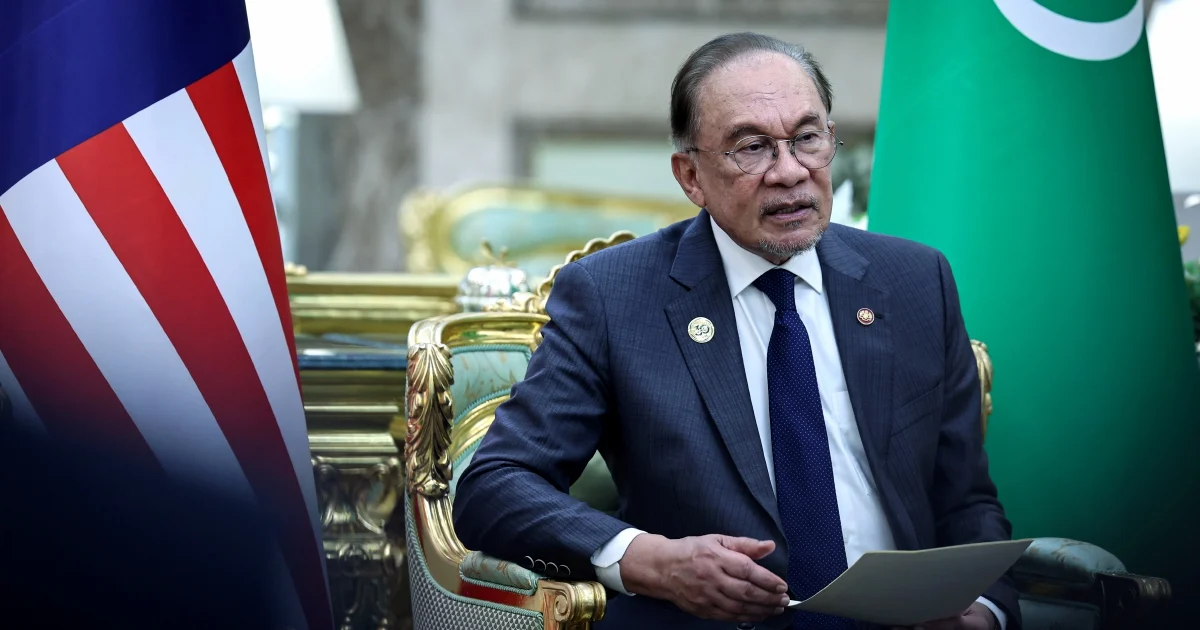
Prime Minister Datuk Seri Anwar Ibrahim has expressed optimism about early indications of diplomatic progress between the United States and Iran, characterizing the reported understanding as a constructive development with potential implications extending beyond the two nations. Speaking in Batu Kawan, Anwar emphasized that any meaningful dialogue between Washington and Tehran should be viewed as a positive step for the wider world, particularly given the historical tensions and geopolitical complexities that have defined their relationship.
The Malaysian leader's cautious welcome reflects a broader Southeast Asian perspective on US-Iran tensions. The region has consistently advocated for peaceful resolution of international disputes through diplomatic channels, a principle embedded in the ASEAN Way and Malaysia's own foreign policy doctrine. For countries like Malaysia that depend on global stability and uninterrupted maritime trade, sustained conflict between major powers creates uncertainty that reverberates through regional economics and security arrangements. Anwar's comments signal Malaysia's interest in de-escalation and constructive engagement between adversarial parties.
The timing of Anwar's remarks carries significance in the context of Malaysia's standing in international affairs. As a non-aligned nation with substantial economic interests in both Western and Islamic contexts, Malaysia has consistently sought to position itself as a bridge-builder in international disputes. By publicly endorsing diplomatic breakthroughs between the US and Iran, Malaysia reinforces its credentials as a nation genuinely committed to multilateralism and peaceful conflict resolution, principles that carry weight in regional institutions and global forums.
Iranian-American tensions have cast a long shadow over Middle Eastern stability for decades, with occasional military confrontations and persistent economic sanctions shaping the relationship. Any thawing of this relationship carries implications for multiple regions, including Southeast Asia. A reduction in Middle Eastern instability could ease pressure on international oil markets—a matter of direct concern to Malaysia and other regional economies dependent on crude imports. Additionally, improved US-Iran relations might reduce the risk of proxy conflicts and sectarian tensions that have destabilized parts of the Middle East and created humanitarian crises affecting global migration patterns.
For Malaysia specifically, better US-Iran relations could enhance predictability in international markets and reduce the likelihood of military escalation that might affect shipping lanes and maritime security in the Indian Ocean and beyond. These waters are critical for Malaysian trade and regional commerce. Anwar's implicit recognition of this interconnection between distant conflicts and Malaysian interests reflects sophisticated understanding of how geopolitical developments in one region cascade through interconnected global systems.
The Prime Minister's hope that any initial agreement might crystallize into a lasting, comprehensive settlement demonstrates awareness that preliminary understandings frequently fail to mature into durable treaties. The complexity of US-Iran disagreements extends far beyond bilateral issues—they encompass regional proxy conflicts, nuclear proliferation concerns, human rights questions, and competing spheres of influence. Skepticism about whether early progress can survive implementation challenges is warranted based on historical precedent.
Southeast Asian nations have learned from experience that grand international agreements require sustained political will from all parties and often necessitate compromises that prove unpopular with domestic constituencies. Malaysia itself has participated in complex multilateral negotiations where initial breakthroughs proved fragile when subjected to domestic political pressures. Anwar's emphasis on the need for lasting peace suggests recognition that durability, not merely achievement of initial accord, represents the true measure of diplomatic success.
The statement also reflects Malaysia's broader foreign policy orientation under Anwar's leadership, which has emphasized renewed engagement with international institutions and restoration of Malaysia's diplomatic standing after earlier isolation. By weighing in positively on significant international developments, Malaysia signals its return to active participation in global affairs and its commitment to supporting diplomatic solutions over confrontational approaches.
Any US-Iran rapprochement would necessarily touch on regional partnerships and alliance structures. Both powers maintain varying degrees of influence and cooperation with nations across the Middle East, South Asia, and beyond. These shifts in Washington-Tehran relations could prompt realignments affecting countries far from the immediate bilateral relationship. For Malaysia and ASEAN, the critical consideration is ensuring that any restructuring of regional power dynamics does not destabilize existing frameworks or undermine the principle of non-interference in internal affairs that underpins regional cooperation.
Anwar's welcoming remarks also carry domestic political significance. They position Malaysia as a rational actor on the world stage that celebrates peace and stability, contrasting with any perception of Malaysia as a peripheral player in international affairs. This rhetorical positioning supports Malaysia's aspirations for enhanced international standing and participation in discussions affecting global governance.
Moving forward, Malaysian policymakers will likely monitor the trajectory of US-Iran negotiations closely, assessing how developments might influence regional security architecture, maritime stability, and economic prospects. The Prime Minister's cautious optimism represents an appropriate posture—endorsing genuine diplomatic progress while maintaining realistic expectations about the profound challenges that remain in achieving comprehensive, durable reconciliation between nations with deeply entrenched strategic interests and competing regional ambitions.

