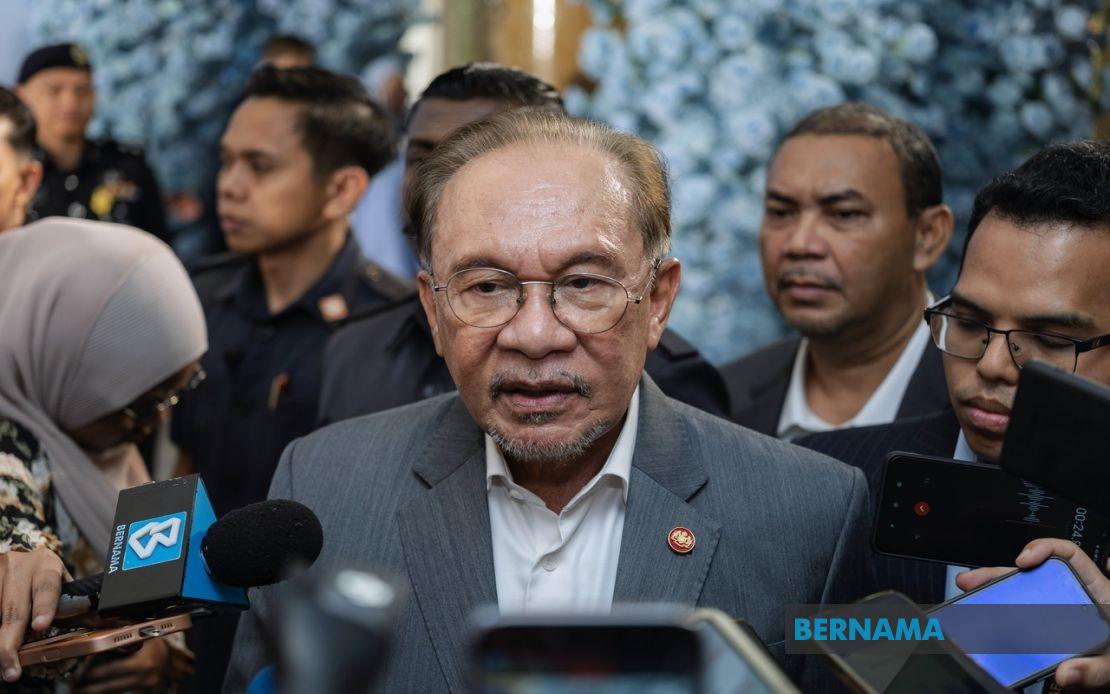
Prime Minister Datuk Seri Anwar Ibrahim has not yet received a briefing regarding the circumstances that led four Melaka DAP state assemblymen to withdraw from the state government, he said on July 15 in Kuala Lumpur. Speaking to reporters, the Pakatan Harapan chairman indicated that the coalition's senior leadership would initiate follow-up discussions on the controversial decision in the coming days, though he did not specify a timeline for these deliberations.
The four assemblymen in question—Allex Seah Shoo Chin from Kesidang, Low Chee Leong from Kota Laksamana, Leng Chau Yen from Banda Hilir, and Kerk Chee Yee from Ayer Keroh—announced their departure the previous day following a pivotal legislative development. The Melaka State Legislative Assembly had just passed amendments to the state constitution that would permit the appointment of nominated assemblymen, a provision that appears to have triggered the resignations from the state executive council.
The constitutional amendment represents a significant shift in Melaka's governance structure, introducing a mechanism that allows for the direct appointment of assemblymen rather than their election through the democratic process. This development has proven contentious within Pakatan Harapan circles, with the timing of the four DAP lawmakers' withdrawal suggesting their opposition to the constitutional change. The amendment effectively expands the legislature beyond elected representatives, raising questions about accountability and democratic representation in the state.
Interestingly, Anwar had publicly appealed to the Melaka DAP branch to reconsider its withdrawal decision on the same day the announcement was made. In his statement, the Prime Minister urged the party to postpone the move, framing the withdrawal as potentially detrimental to state-level governance and public welfare. He argued that DAP should maintain its focus on developmental initiatives and the general well-being of Melaka residents, positioning the retention of government seats as essential to these objectives.
The divergence between Anwar's public appeal and his lack of a detailed briefing underscores the complexity of managing internal coalition dynamics within Pakatan Harapan. As both Prime Minister and chairman of the broader coalition, Anwar occupies a delicate position requiring him to mediate between the national agenda and the specific interests of component parties like DAP. The fact that he had not yet received formal briefing materials suggests either that communication channels within the coalition operate slowly, or that deliberate space was being given for lower-level discussions before escalating to top leadership.
The Melaka situation reflects broader tensions that have periodically surfaced within the Pakatan Harapan alliance since its formation. Component parties maintain significant autonomy in state-level decision-making, yet their actions have consequences for the coalition's overall cohesion and public image. The withdrawal of four legislators simultaneously sends a strong signal of principled dissent within DAP's Melaka delegation, though it simultaneously weakens the coalition's presence in the state government where every seat matters for legislative majorities.
For Malaysian observers, the episode illustrates the continuing challenge of managing multi-party coalitions in a Westminster-influenced system where governments depend on narrow legislative majorities. The constitutional amendment enabling nominated assemblymen had presumably been supported by other Pakatan Harapan partners in Melaka, creating internal friction over the appropriate balance between democratic principles and practical governance considerations. The nominated representative mechanism, while providing flexibility, introduces an anti-democratic element that independent lawmakers found objectionable.
The DAP assemblymen's principled stand also raises questions about whether their withdrawal might have been preventable through better internal consultation before the constitutional amendment was tabled. The speed with which the four legislators announced their departure—immediately following the amendment's passage—suggests they had not been adequately consulted or that their concerns had been dismissed in earlier discussions. This breakdown in coalition communication at the state level has now escalated to require attention from Anwar and the national leadership.
From a regional perspective, this episode demonstrates how Southeast Asian coalition governments frequently struggle with the tension between maintaining unity and allowing component parties to preserve their distinct identities and policy positions. The Malaysian case is instructive for other nations managing multi-party arrangements, showing how governance structures that dilute electoral accountability can provoke principled departures even within allied parties. The nominated representative system, while not uncommon in the region, remains controversial among constituencies that prioritize representative democracy.
Anwar's commitment to follow-up discussions at the coalition leadership level signals that the matter will not be allowed to fester unresolved. However, the absence of immediate corrective action also suggests that the Prime Minister and his team may be proceeding cautiously, perhaps mindful that heavy-handed intervention could further fracture the coalition. The coming weeks will determine whether Pakatan Harapan's top brass can engineer a resolution that preserves coalition unity while addressing the DAP representatives' democratic concerns.
The resolution of this Melaka situation will carry implications beyond the state's borders, potentially influencing how other coalition partners view their role and autonomy within Pakatan Harapan. It also tests whether the coalition, which has faced numerous internal challenges since assuming federal power, can manage differences through dialogue and consensus-building. For residents of Melaka, the immediate concern centres on whether the government can continue functioning effectively with four fewer assemblymen from one coalition partner, and whether the departure presages further instability in state politics.

