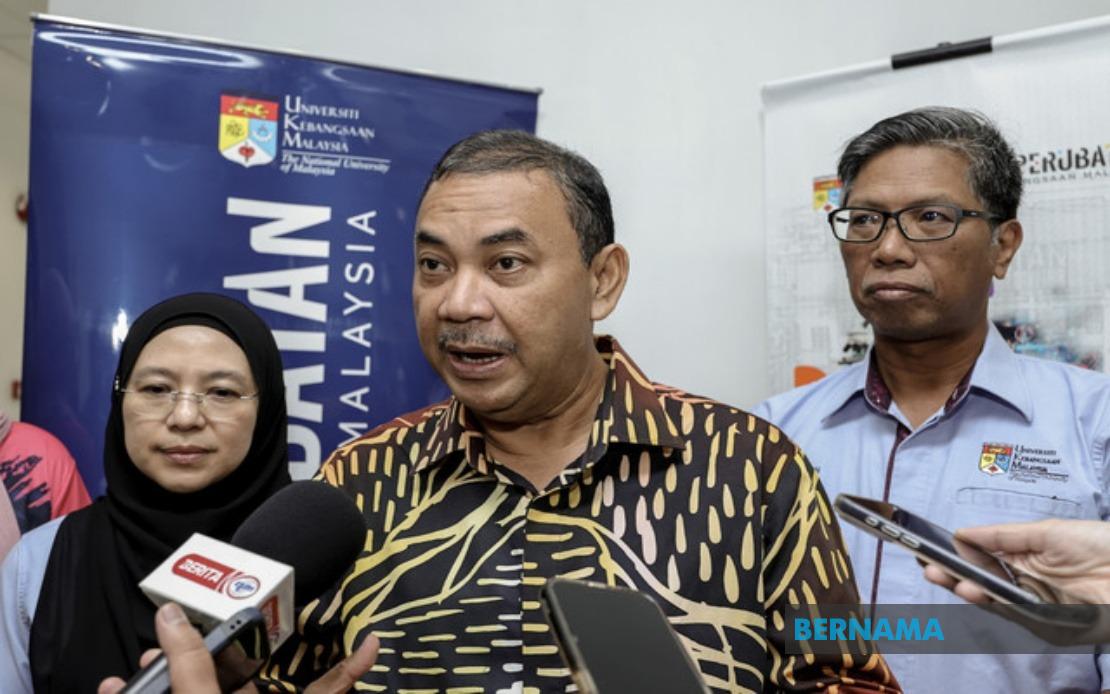
Prime Minister Datuk Seri Anwar Ibrahim's leadership of the MADANI Government has garnered acknowledgement across multiple quarters for its tangible economic achievements, according to his political secretary Datuk Azman Abidin. Speaking at an educational event in Kuala Lumpur, Azman highlighted three key performance indicators that have strengthened the administration's standing: improved investment flows into Malaysia, economic management outcomes, and the stability demonstrated by the national currency. These metrics, he suggested, form a compelling narrative for voters evaluating the government's readiness to govern for an additional term.
Azman's remarks reflect a broader pattern of commentary from political analysts who have assessed the MADANI Government's first term as substantive and reform-oriented. The political secretary framed the government's achievements not merely as administrative accomplishments but as evidence of Anwar's demonstrated capacity to steer the country through complex economic terrain. By invoking recognition from "various quarters," Azman sought to establish that the government's performance transcends partisan approval and has earned credibility among external observers and stakeholders typically expected to maintain analytical distance from sitting administrations.
The emphasis on economic metrics is strategically significant for Malaysian politics. Currency stability and investment confidence are often invisible to ordinary citizens navigating daily concerns about cost of living and employment. By elevating these indicators, the government is making a case that stability underpins the material conditions necessary for broad-based prosperity. This approach attempts to shift the terms of electoral debate toward macroeconomic management, where the MADANI Government can point to concrete indicators of performance, rather than toward areas where voters might experience disappointment or unfulfilled expectations.
Azman indicated that the government intends to sustain momentum through a series of announcements timed around Malaysia's upcoming national celebrations and the presentation of Budget 2027. This sequencing suggests a deliberate strategy to maintain visibility and demonstrate continued commitment to reform ahead of the next general election. The political secretary's confidence that Malaysians will "assess the government's performance and achievements wisely" carries an implicit hope that voters will privilege stability and economic competence in their electoral calculus, particularly given the volatility that characterised Malaysia's political landscape in recent years.
During the same event, Azman placed particular emphasis on science, technology, engineering and mathematics education, officiating the STEM Exploration 2.0 programme at Universiti Kebangsaan Malaysia. The initiative represents the government's engagement with long-term nation-building priorities alongside its immediate electoral positioning. The programme, now in its second iteration, engaged 200 secondary students from the Klang Valley and Negeri Sembilan, exposing them to practical applications of scientific knowledge through experiments, microbiology activities and advanced medical technology demonstrations including three-dimensional printing capabilities.
The expansion of STEM education reflects Malaysia's acknowledgement of its vulnerability to technological disruption and the necessity of cultivating skilled workforces capable of competing in advanced sectors. Azman's assertion that STEM education should transition from optional enrichment to essential curriculum signals recognition that Malaysia's economic future depends on developing home-grown talent in high-value sectors rather than relying solely on foreign expertise or investment. This connects the administration's microeconomic reforms to a macroeconomic imperative: positioning Malaysia as a hub for innovation-driven industries in Southeast Asia.
Azman's framing of STEM education as foundational to national survival in the face of "global technological advancement" articulates a genuine policy anxiety shared across the region. Southeast Asian economies, including Malaysia, occupy a precarious position in global value chains—sufficiently developed to face competition from automation and artificial intelligence, yet not uniformly positioned to lead technological innovation. By emphasising science education for young people, the government signals awareness that Malaysia's prosperity depends on developing comparative advantages in knowledge-intensive sectors.
The political secretary's remarks to students—that "statesmen and scientists are not made in a day, but begin with the first step"—carry implicit messaging beyond their surface meaning. In a political context where governments face pressure to deliver immediate results, Azman's invocation of long-term development processes suggests that some achievements require patience and sustained commitment. This framing implicitly asks voters to judge the MADANI Government not solely on what has been accomplished in its first term but on the trajectory it has established and the foundations it has laid for future prosperity.
The integration of education promotion with political messaging reflects a sophisticated understanding that electoral politics in Malaysia increasingly concerns itself with generational issues and long-term economic positioning. While opposition parties might emphasise cost of living grievances or corruption allegations, the government's strategy involves demonstrating forward-looking governance that addresses structural economic challenges. By associating the MADANI Government with STEM education and technological advancement, Azman attempts to position Anwar Ibrahim as a leader concerned with Malaysia's future competitiveness rather than merely managing present circumstances.
For Southeast Asian observers and Malaysian business stakeholders, the government's emphasis on investment and currency stability carries particular significance given the region's exposure to capital flow volatility and currency fluctuations. Malaysia's experience during previous financial crises has made policymakers acutely aware that investor confidence is fragile and easily disrupted by political uncertainty or governance concerns. Azman's repeated invocation of recognition for economic management represents an attempt to reassure markets and investors that political continuity under Anwar's leadership remains the most probable and desirable outcome.
The broader context of the MADANI Government's positioning involves navigating complex coalition dynamics while building public confidence in its economic stewardship. Malaysia's coalition-based governance structures create inherent tensions between reform ambitions and political compromise. By highlighting concrete achievements in investment and economic indicators, Azman seeks to demonstrate that the government has successfully managed these tensions and delivered results notwithstanding the constraints of multiparty coalition governing. This narrative becomes particularly important if internal coalition pressures intensify or if individual component parties pursue objectives that might conflict with the administration's reform agenda.
As Malaysia approaches its next election cycle, the government's emphasis on economic performance and long-term nation-building initiatives will likely intensify. The MADANI Government's strategy appears to rest on the proposition that voters will value demonstrated economic competence, policy continuity and credible engagement with structural challenges facing the nation. Whether this emphasis on macroeconomic achievements and education investment will prove sufficient to overcome localized grievances or opposition messaging remains an open question, but the government's current positioning suggests confidence in the salience of economic management to electoral outcomes.

