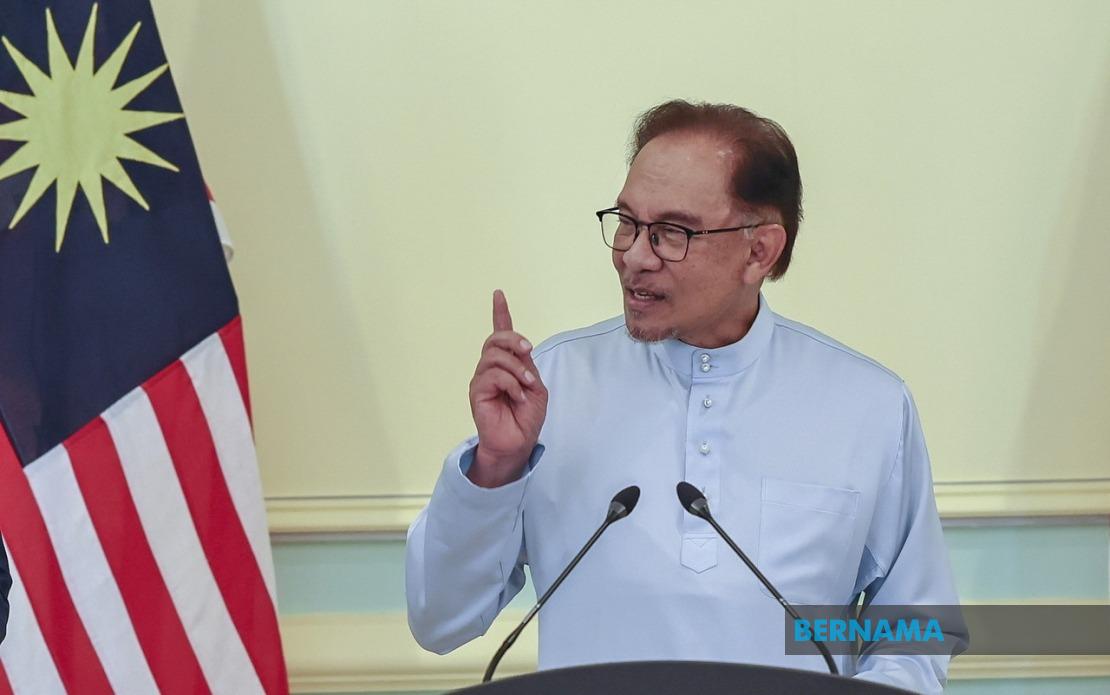
Prime Minister Datuk Seri Anwar Ibrahim's handling of the Gaza crisis demonstrates a principled and multidimensional approach worthy of support, blending humanitarian concern, legal arguments and sustained diplomatic engagement, according to Universiti Pertahanan Nasional Malaysia's Honorary Professor Dr Mizan Aslam. The scholar characterises the Premier's strategy as transcending conventional diplomatic posturing by anchoring Malaysia's response in established international legal frameworks while simultaneously maintaining pressure through various diplomatic channels and tangible resource commitments.
The Gaza situation has evolved far beyond a bilateral Israeli-Palestinian dispute into a broader indictment of institutional failure on the global stage, Mizan argues. The collapse of international mechanisms to safeguard civilians reflects inadequacies in the international legal order, the ineffectiveness of multilateral institutions and the unwillingness of major powers to enforce humanitarian protections. This analysis provides crucial context for Malaysia's diplomatic positioning, suggesting that Kuala Lumpur's intervention addresses not merely a regional conflict but a systemic breakdown in global governance structures.
The humanitarian toll illuminates why Malaysia's engagement carries such urgency. After 1,000 days of conflict, Gaza has recorded 73,066 deaths, 173,514 injured persons, and 5,400 individuals suffering disabilities and amputations across 8,922 affected families. The casualties among children prove particularly devastating, with 21,730 killed, 45,113 injured and 59,054 orphaned. These figures underscore the civilian dimension of the crisis, transforming abstract diplomatic debates into concrete human suffering demanding immediate response. Beyond immediate casualties, the infrastructure destruction reveals a territory approaching total devastation, with over 90 percent of buildings damaged or demolished, 92 percent of residential structures affected, nearly 90 percent of water and sanitation systems compromised and 91 percent of households experiencing severe water shortages. This systematic destruction creates cascading humanitarian emergencies encompassing civilian protection, public health infrastructure collapse and widespread vulnerability.
Malaysia's support for South Africa's genocide case against Israel at the International Court of Justice exemplifies Anwar's strategy of leveraging legal mechanisms alongside diplomatic advocacy. This approach distinguishes Malaysia's position from rhetorical condemnation, instead directing energy toward institutional accountability structures and establishing documented legal precedent regarding alleged crimes against humanity. The move reflects sophisticated understanding that sustainable pressure on belligerent parties requires multiple reinforcing channels rather than isolated statements.
Anwar has elevated the Gaza question through multilateral forums, particularly the Arab-Islamic Extraordinary Summit, where he advocated for intensified collective action, strengthened support for the United Nations Relief and Works Agency for Palestine Refugees in the Near East and increased international scrutiny of arms suppliers perpetuating the conflict. This approach recognises that middle-power countries like Malaysia can amplify influence through coordinated international positioning rather than unilateral pronouncements. The coalition-building dimension of Anwar's diplomacy demonstrates awareness that substantive outcomes require leveraging collective weight against entrenched interests.
Beyond advocacy, Malaysia has allocated RM100 million toward humanitarian assistance to Gaza, addressing immediate survival needs within a territory where 1.97 million people face acute food insecurity including 641,000 experiencing famine-level deprivation. The commitment gains significance when contextualised against documented malnutrition crises, with 466 deaths linked to nutritional deficiency, 17,800 cases of child malnutrition under age five recorded in 2025 and 68,996 severe malnutrition cases in the same cohort by May 2026. This allocation translates solidarity rhetoric into concrete resource flows addressing preventable death and disability.
Gaza's healthcare system has suffered catastrophic deterioration through deliberate targeting and systematic dysfunction. Forty hospitals and 158 primary health centres have faced direct attacks, with 825 documented healthcare facility strikes resulting in 1,723 healthcare worker deaths and 362 detained personnel. This destruction of medical capacity compounds the humanitarian emergency by eliminating capacity to treat casualties, manage chronic diseases and prevent infectious disease outbreaks. Malaysia's emphasis on humanitarian access and medical support acquisition addresses this critical gap in civilian protection mechanisms.
Anwar's framework extends beyond ceasefire advocacy to encompass comprehensive political settlement through establishment of a sovereign and viable Palestinian state. This position reflects the concept of 'active non-alignment', a foreign policy doctrine enabling Malaysia to adopt stances grounded in principles, values and national interests rather than great power allegiance. The approach prioritises civilian protection, humanitarian access, legal accountability and Palestinian self-determination rights, positioning Malaysia as defending universal principles rather than narrowly construed strategic interests.
The practical implications of Anwar's diplomacy acknowledge Malaysia's structural limitations while maximising available influence. While Malaysia cannot unilaterally resolve the Gaza crisis, it can ensure sustained international visibility through international courts, global forums, diplomatic channels and appeals to global conscience. This strategy translates solidarity from emotional expression into institutionalised pressure operating across multiple jurisdictions and mechanisms. The approach recognises that meaningful accountability requires redundant pathways ensuring that no single institutional failure prevents the question from remaining before global decision-makers.
Anwar's Gaza diplomacy ultimately represents a coherent translation of stated values into actionable policy combining legal argumentation with humanitarian resource deployment and systematic diplomatic positioning. The strategy avoids false choices between principle and pragmatism, instead integrating moral conviction with institutional mechanisms and tactical engagement. For regional observers, Malaysia's positioning demonstrates how middle powers can exercise meaningful influence on intractable global crises through sophisticated combination of legal support, humanitarian action and diplomatic coalition-building grounded in established international frameworks rather than ad hoc political positioning.

