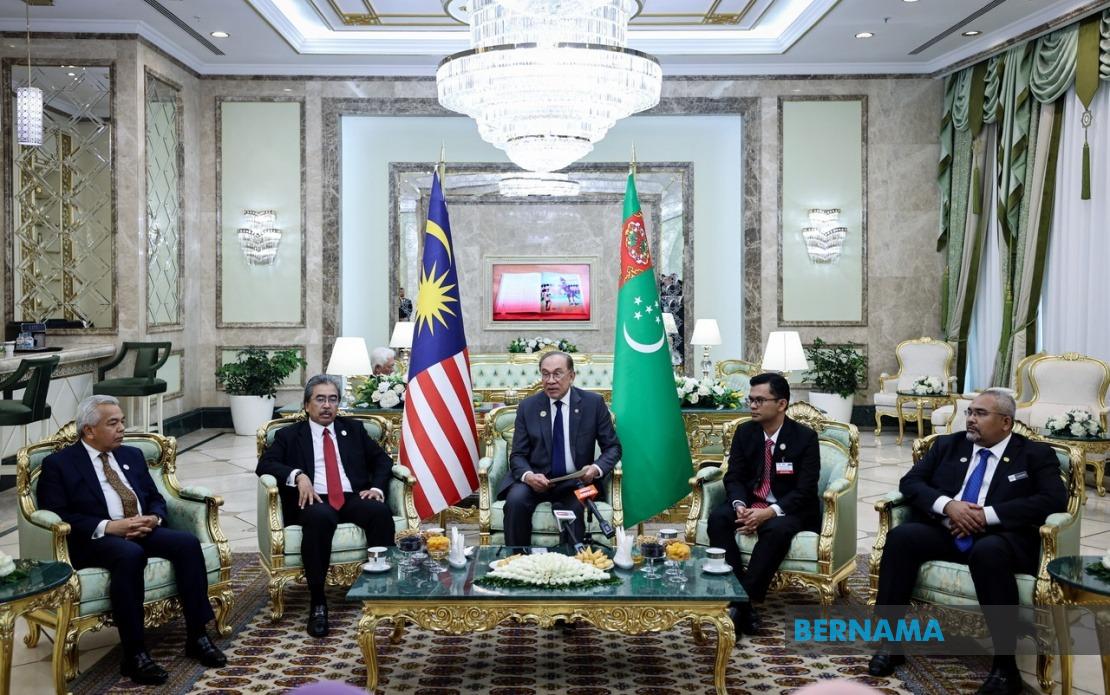
Prime Minister Datuk Seri Anwar Ibrahim has concluded his first official working visit to Turkmenistan since assuming office, characterising the engagement as a pivotal moment for advancing Malaysia's strategic interests in Central Asia. The two-day journey, which commenced on June 18 and was undertaken at the invitation of Turkmenistan President Serdar Berdimuhamedov, represents a significant diplomatic initiative by Malaysia to strengthen its presence in a region increasingly central to global energy markets and geopolitical calculations.
In remarks shared through social media on June 19, Anwar emphasised that the visit had successfully accomplished its core objectives whilst initiating a fresh phase in the development of bilateral relations between Kuala Lumpur and Ashgabat. The Prime Minister particularly highlighted the potential for deepening cooperation across multiple sectors, with the energy domain emerging as the most promising avenue for mutual benefit. This focus reflects Malaysia's strategic pivot towards diversifying its energy partnerships and reducing dependency on traditional suppliers in the Middle East and Southeast Asia.
Turkmenistan's vast hydrocarbon reserves, including among the world's largest natural gas deposits, position the Central Asian nation as a valuable partner for Malaysian energy security aspirations. The recognition of this potential carries implications beyond simple commercial transactions, as energy partnerships often serve as anchors for broader diplomatic engagement and economic integration. For Malaysia, establishing stronger ties with energy-rich Central Asian states could enhance its negotiating position in regional forums and provide alternative supply pathways for future energy needs.
Anwar extended formal gratitude to President Berdimuhamedov and the Turkmen government for the cordial reception extended to the Malaysian delegation, underscoring the importance placed on the courtesy and cooperation demonstrated throughout the visit. Such diplomatic courtesies, whilst appearing ceremonial, establish the goodwill foundation necessary for more substantial negotiations on trade agreements, investment frameworks, and joint ventures. The warm welcome received by Anwar's team suggests receptiveness from Turkmenistan towards closer engagement with Southeast Asian partners, potentially reflecting Ashgabat's own strategic diversification efforts beyond traditional Russian and Chinese spheres of influence.
The Prime Minister's delegation encompassed several key economic and policy figures, reflecting the visit's importance to Malaysia's development agenda. Minister of Investment, Trade and Industry Datuk Seri Johari Abdul Ghani and Minister of Economy Akmal Nasrullah Mohd Nasir accompanied Anwar, bringing expertise in commercial negotiations and economic policy respectively. This composition suggests that discussions extended beyond ceremonial exchanges to encompass substantive matters concerning investment opportunities, trade logistics, and joint economic projects that could yield tangible outcomes for Malaysian businesses and the national economy.
The involvement of PETRONAS, Malaysia's national petroleum corporation, in the delegation underscores the primacy of energy sector engagement in the bilateral agenda. PETRONAS represents Malaysia's technical and commercial capacity in energy exploration, production, and trading, making its participation essential for translating political commitment into feasible business arrangements. The presence of PETRONAS officials alongside government ministers signals to Turkmen counterparts that discussions carry institutional backing and can progress from policy statements to investment commitments and operational frameworks.
Malaysia's diplomatic engagement with Turkmenistan also reflects broader geopolitical realignments in Central Asia. As regional powers jostle for influence and developing nations seek to establish independent foreign policies, Malaysia's outreach demonstrates its intent to be a constructive player in Eurasian affairs rather than exclusively focused on Southeast Asian concerns. This expansion of diplomatic horizons aligns with Malaysia's stated aspirations to play a more prominent role in global affairs and to secure its economic interests across multiple regions and supply chains.
The timing of Anwar's visit, nearly two years into his tenure as the nation's 10th Prime Minister, suggests a deliberate scheduling to consolidate Malaysia's international standing and pursue long-term strategic partnerships. First official visits to major partners typically carry symbolic weight, signalling priority and commitment. Turkmenistan's position as a linchpin in Central Asian energy markets and as a crossroads between Europe, Russia, and Asia elevates its strategic importance beyond its bilateral relationship with Malaysia, potentially positioning it as a useful partner for broader Southeast Asian economic aspirations.
Energy cooperation frameworks established during such visits often extend across decades, creating stable partnerships that weather short-term political fluctuations. For Malaysia, securing reliable access to Turkmen gas reserves through exploration partnerships or supply agreements could support its energy-intensive industries and provide competitive advantages in manufacturing sectors dependent on stable energy pricing. The exploration of such possibilities during high-level visits creates pathways for subsequent technical teams to develop specific proposals and negotiate detailed terms.
The delegation's composition, including officials from the Prime Minister's Office and Foreign Ministry alongside economic ministers, indicates that Malaysia views this engagement through both immediate commercial and longer-term strategic lenses. The Foreign Ministry's participation suggests attention to broader diplomatic implications, including potential contributions to regional stability, participation in multilateral forums, and alignment on international issues of mutual concern. Energy partnerships often spawn collaborations in other domains, from security cooperation to people-to-people exchanges and educational initiatives.
Anwar's acknowledgment of the Malaysian Embassy in Ashgabat, security personnel, and media contingent reflects the comprehensive nature of diplomatic operations. Embassies serve as critical infrastructure for implementing bilateral agreements and providing ongoing support to business communities, whilst security and media management ensure that visits proceed smoothly and that outcomes receive appropriate international visibility. The Prime Minister's specific recognition of these contributors underscores how successful diplomatic engagement depends on meticulous preparation and coordination across multiple government agencies.
Looking forward, the success attributed to this inaugural official visit establishes a foundation for escalated engagement. Subsequent missions from economic delegations, technical teams, and potentially reciprocal high-level visits can build upon the political capital and relationship groundwork established during Anwar's journey. The articulation of shared commitment to exploring energy cooperation provides a tangible objective around which future interactions can be structured, moving bilateral relations from symbolic gestures towards substantive economic collaboration that benefits both populations and contributes to Malaysia's long-term prosperity.

