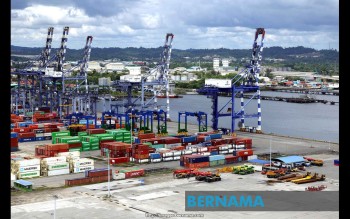
Apex Securities Bhd has significantly raised its export growth forecast for Malaysia in 2026, revising the figure upward to 26.2 per cent from its earlier projection of 16.3 per cent. The bullish reassessment comes on the back of vigorous export performance during the opening seven months of the year, signalling that Malaysia's trade-dependent economy is firing on multiple cylinders. This optimistic revision carries substantial implications for the nation's economic trajectory and regional competitiveness, particularly as global supply chains continue to realign in the aftermath of prolonged geopolitical and pandemic-related disruptions.
The securities firm's confidence extends beyond exports alone, with the broader economic outlook equally positive. Apex Securities anticipates Malaysia will achieve gross domestic product growth of 5.0 per cent this year, a pace that would underscore the country's resilience amid shifting global economic conditions. This dual optimism—both on trade volumes and headline growth—suggests that policymakers and investors can expect a reasonably buoyant economic environment, though external vulnerabilities remain a persistent concern requiring careful monitoring.
The electronics and electrical sector emerges as the principal engine driving this export momentum, a finding consistent with Malaysia's historical strengths in semiconductor manufacturing and component assembly. Looking ahead to the latter half of 2026, Apex Securities expects this sector to maintain its resilience and serve as the primary catalyst propelling overall export gains. More significantly, the firm identifies structural tailwinds that should sustain this trajectory well into the medium term, including burgeoning demand linked to artificial intelligence applications, the accelerating global transition to electric vehicles, and associated industrial supply chains. These technological shifts represent long-term secular trends rather than cyclical phenomena, meaning Malaysia's electronics exporters stand to benefit from durable demand increases rather than temporary boosts.
Beyond the high-technology sectors, commodity exports present an equally compelling opportunity for Malaysian exporters in the latter half of the year. The outlook for crude oil is particularly favourable, underpinned by persistently elevated global petroleum prices and the potential for trade diversion stemming from disruptions within the Strait of Hormuz. This critical chokepoint, through which roughly one-third of seaborne traded oil passes annually, remains vulnerable to escalation in Middle Eastern tensions, a dynamic that could artificially inflate prices and benefit oil exporters like Malaysia. Such geopolitical premiums, while benefiting producers, also underscore the fragility of global energy markets and the risks posed by regional instability.
Palm oil, Malaysia's signature agricultural commodity, is anticipated to enjoy strengthened demand dynamics throughout the remainder of 2026. Indonesian demand for B50 biodiesel, a blend incorporating 50 per cent palm oil-derived biofuel, should provide a reliable floor under palm oil consumption, particularly as Southeast Asian governments progressively implement renewable energy mandates. Furthermore, meteorological forecasts pointing toward intensified El Niño conditions, characterised by hotter and drier weather patterns expected between October and December, should support firmer palm oil prices by constraining global supply and elevating production costs across competing regions. Already, palm oil prices have advanced 16.8 per cent to RM4,596 per metric tonne since the beginning of the year, reflecting the confluence of supportive factors.
However, this upbeat assessment comes with critical caveats that investors and policymakers must weigh carefully. Apex Securities cautions that exports may encounter mounting headwinds as 2026 progresses toward year-end, primarily owing to the unwinding of front-loaded demand that materialised from earlier stockpiling activities. Companies and traders who accelerated purchases earlier in the year to circumvent anticipated tariffs or secure supplies ahead of production shutdowns may now pause ordering, creating a demand cliff effect that could deflate export volumes in the final quarter. Compounding this cyclical concern is an unfavourable comparison base from the corresponding year-ago period, when export levels were already elevated, rendering year-on-year growth calculations mathematically more challenging.
The geopolitical dimension represents perhaps the most acute threat to the export forecast. Escalation of tensions within the Middle East could precipitate a sharp reversal in global demand, undoing the positive momentum accumulated through much of the year. Beyond immediate war-risk premiums, any sustained regional conflict could disrupt shipping lanes, inflate insurance costs, and dampen business confidence globally, thereby contracting demand for Malaysian goods across electronics and other sectors. These risks extend beyond the narrow confines of oil markets and threaten the entire export ecosystem.
Trade policy uncertainty emanating from the United States constitutes an equally material source of concern. Malaysia remains particularly exposed to potential tariff escalations, as the US Section 301 investigation into excess capacity in targeted industries continues without resolution. This investigation mechanism has historically preceded punitive tariffs, and Malaysia's substantial exports of semiconductors, electrical components, and downstream products position the country as a potential target. An adverse ruling could fundamentally reshape the economics of Malaysian export operations and necessitate rapid repositioning of production and supply chains. The ambiguity surrounding US trade policy thus creates a drag on business confidence and investment planning, particularly among export-oriented manufacturers contemplating capacity expansion decisions.
For Malaysian stakeholders, the revised export forecast presents a paradox: genuine near-term buoyancy masked by gathering storm clouds on the medium-term horizon. The window of opportunity created by favourable commodity prices, robust semiconductor demand, and structural shifts toward electric vehicles and artificial intelligence offers a finite window to capture gains, invest in productive capacity, and build operational resilience. Yet simultaneously, the mounting risks from geopolitical escalation and protectionist trade measures demand prudent hedging strategies and contingency planning. This balancing act between capitalising on current momentum and preparing for potential adversity will define Malaysia's economic trajectory through the remainder of 2026 and into 2027.

